Bay Area Lyme Leading the Way series
A behind-the-scenes look at how Wauchita Green and Pauline Lui help turn patients’ tissue donations into research that is changing the future of Lyme disease.
Lyme Disease Biobank, a program of Bay Area Lyme Foundation, partners with the National Disease Research Interchange (NDRI) to help advance Lyme disease research. Together, they enable patients to contribute tissue samples, collected during surgery or after death, which the Biobank shares with approved scientists studying infection and immune response. NDRI’s nationwide recovery network ensures these precious donations are handled with care and respect. This partnership helps turn patient generosity into real progress, accelerating the search for better diagnostics, treatments, and ultimately, a cure.
When families whose lives have been impacted by Lyme disease call to talk about donating tissue, they’re often overwhelmed. But thankfully, the NDRI private donor team is standing by 24/7/365 to help. Patients and families typically want to know:
“How much does this cost?”
“What actually happens?”
“Is this going to be complicated?”
For Wauchita Green, Manager, Organ and Tissue Source Sites, and Pauline Lui, Senior Manager, Hospital Tissue Source Sites, these are conversations they have every day. And they always start in the same place: reassurance. “The first thing we tell people,” says Green, “is that there is no cost because Lyme Disease Biobank funds this program. Families are not responsible for anything related to the donation itself.”
Working closely with Bay Area Lyme Foundation’s Lyme Disease Biobank, the conversation then deepens into something more than a simple exchange about logistics; it becomes an explanation of a carefully designed 10-year partnership program that is benefiting other Lyme patients in profound ways.
“Your legacy means a lot. You’re helping people across the world.”
– Wauchita Green, Manager, Organ and Tissue Source Sites, NDRI
What Tissue Donation Really Means
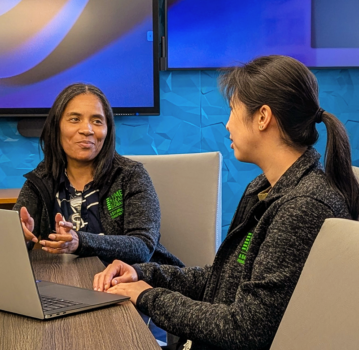
One of the biggest misconceptions, Lui explains, is that donating tissue to medical science is the same as a whole-body donation. “It’s not,” she says. “We’re not taking the whole body. This is about specific tissues that researchers need.” That could mean a small sample, sometimes just a one-centimeter cube of tissue or, in some cases, an entire organ, depending on what the donor and their family have approved. “We want to maximize each donation,” Green adds. “Nothing is taken unnecessarily. It’s very intentional.”
Those tissues, whether brain, heart, skin, nerves, or muscle, among others, are then used by researchers trying to answer some of the most urgent questions in Lyme and tick-borne disease: where the bacteria persist, how the body responds, and why symptoms can continue long after infection.
Two Paths to Donation
As Green and Lui walk families through the process, they explain the two ways to contribute tissues to Lyme Disease Biobank:
1) During Surgery
Sometimes, a donation happens during a planned medical procedure. “If someone is already having surgery, like a joint replacement or a gallbladder removal, we can work with the surgical team to collect tissue that would otherwise be discarded,” Lui explains.
From the surgical patient’s perspective, the process is very simple:
- Provide consent
- Share details of the surgical team
- Let NDRI handle the rest
“We take the guesswork out of it,” Green says. “We coordinate everything.” Still, it’s important to note that not every surgical donation is possible. Timing, geography, hospital policies, and research needs all play a role. That’s why, as Lui explains, “the earlier people reach out, the better.”
2) After Death
The second pathway for tissue donation is post-mortem (after death) donation. This is something Lyme patients may plan as part of their legacy. If a donor is pre-registered through NDRI, the process is straightforward for families. “They just call us,” says Green. “Even in a very emotional moment, all the family needs is a name. We take it from there. If a donor is not pre-registered, we work with the family/next of kin to register the donor. To make it easier for families, this paperwork can even be completed over the phone.”
From coordinating recovery specialists across the country to working with funeral homes, the NDRI team manages every step of the process. And for families who want updates, the team stays in touch. “We always thank them,” Green says. “Because it truly is a gift.”
What Happens After Tissue is Collected
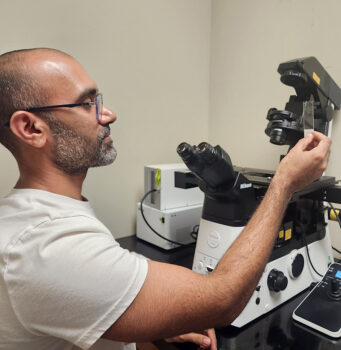
Once tissue is recovered, it’s preserved—either frozen or fixed—depending on Lyme Disease Biobank’s protocols, which are based on the understanding of researchers’ evolving needs as the field advances. From there, tissue may be:
- Sent to specialized labs, including neuropathologists studying brain tissue
- Stored in Lyme Disease Biobank’s secure biorepository
- Shared with approved researchers across the US
Yet Lui is careful to set expectations. “This is research,” she says. “It takes time. It’s not something where results come back quickly, or sometimes at all, for individual cases.” Instead, each donation becomes part of a much larger effort, one that is steadily building knowledge that is transforming how Lyme disease will be diagnosed, treated, and understood.
Understanding a disease at its deepest level requires looking beyond blood samples to the tissues where infection and immune responses actually unfold. Tissue, which is a group of similar cells working together to perform a specific function, forms the building blocks of every organ in the body.
Through Lyme Disease Biobank, researchers can access tissue collected in two critical ways: during planned surgeries, such as cartilage from knee replacements, and post-mortem, when organs like the brain and heart can be studied. “These samples allow scientists to search directly for evidence of infection and inflammation, offering rare insight into how pathogens persist and how the immune system responds, insight that is essential to advancing diagnosis and treatment,” explains Liz Horn, PhD, MBI, Principal Investigator, Lyme Disease Biobank.
“These samples allow scientists to search directly for evidence of infection and inflammation, offering rare insight into how pathogens persist and how the immune system responds, insight that is essential to advancing diagnosis and treatment.”
– Liz Horn, PhD, MBI, Principal Investigator, Lyme Disease Biobank
The Importance of Pre-Planning and Being Heard
If there’s one message both Green and Lui emphasize, it’s this: plan early, and talk to your family. “We’ve seen cases where someone really wanted to donate,” Green says, “but they didn’t have the support they needed.”
“We’ll always do everything we can, but planning earlier gives us the best chance to make it happen.”
– Pauline Lui, Senior Manager, Hospital Tissue Source Sites, NDRI
In some cases, family members may not fully understand Lyme disease or may not appreciate how important donation is to their loved one. “That’s why choosing someone you trust to carry out your wishes is so important,” Lui adds. Even in the best circumstances, logistics can sometimes be complex. But early planning makes a critical difference. “We’ll always do everything we can,” she says, “even in last-minute situations. But planning earlier gives us the best chance to make it happen.”
How Can You Participate?
Eligibility is largely based on medical history, especially evidence of Lyme or other tick-borne diseases. Both Green and Lui note that many patients today are coming forward with more detailed records than ever before, thanks to newer diagnostic tools. “We do see that,” Green says. “People are very informed. They keep their records.”
For those without confirmed testing, both Green and Lui encourage patients to advocate for themselves and seek updated diagnostics where possible. “Testing helps tell the story,” Lui notes. “And that matters for research.”
More Than a Process
Spend even a few minutes talking to the NDRI private donor team, and one thing becomes clear: this is not just a technical process. It’s deeply human. “I don’t think there’s any case that isn’t difficult in its own way,” Green reflects. “Every family, every story, stays with you.” Many donors have endured years of uncertainty, misdiagnosis, and suffering. For them, donation is not just about science; it’s about meaning. “They want to make a difference,” she says. “They don’t want anyone else to go through what they did.”
“Every family, every story, stays with you.”
– Wauchita Green, Manager, Organ and Tissue Source Sites, NDRI
A Legacy That Lives On
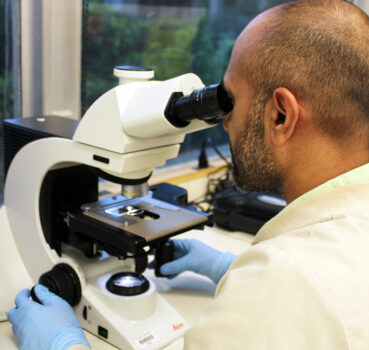
At its core, the tissue donation program is about connection: between patients, families, researchers, and clinicians. Each tissue recovered becomes part of something larger than any one person: a growing body of knowledge that could one day make Lyme disease easier to diagnose, simple to cure, and ultimately preventable. Each donation is a connection to a future where Lyme disease is understood and treated appropriately.
As Green adds thoughtfully: “Your legacy means a lot. You’re helping people across the world.”
Quick links: Learn More About Tissue Donation for Lyme Disease Research
- About Lyme Disease Biobank and Tissue Donation
Learn how Lyme Disease Biobank collects and provides samples to approved researchers, and how patient donations help accelerate breakthroughs in diagnosis and treatment. - Understanding the Tissue Donation Process
Get an overview of how tissue donation works through National Disease Research Interchange (NDRI), including what to expect for both surgical and post-mortem donations. - A Patient’s Story: Donating to Advance Research
Read Lyme patient Meghan Bradshaw’s story and why she chose to donate tissue from her surgeries to support Lyme disease research. - How Patient Donations Power Discovery
Explore how contributions to Lyme Disease Biobank directly fuel the research programs we fund and support, and bring us closer to better diagnostics and treatments. - MyLymeData: Advancing Research Through Patient Participation
Learn how patient-powered information from MyLymeData helps researchers better understand Lyme disease by connecting the tissue you donate to Lyme Disease Biobank with a MyLymeData profile.
The National Disease Research Interchange (NDRI) is a not-for-profit organization with over 40 years of experience providing human organs and tissue from a diverse pool of normal and diseased donors to advance biomedical research.NDRI’s experienced recovery staff specializes in the procurement of organs, cells, and human tissue supporting research across the full spectrum of disease, to include Lyme and other tick-borne related illnesses. NDRI can be reached 24/7/365 at (800) 222-NDRI (6374), option 1, or at privatedonor@ndriresource.org
This blog is part of our Bay Area Lyme Leading the Way series. If you require a copy of this article in a bigger typeface and/or double-spaced layout, contact us here. Bay Area Lyme Foundation provides reliable, fact-based information about Lyme and tick-borne diseases so that prevention and the importance of early treatment are common knowledge. For more information about Bay Area Lyme, including our research and prevention programs, go to www.bayarealyme.org.