Bay Area Lyme Spotlight Series
“Science drives our mission, but patient stories remind us why the science matters.”
– David Walsey
As David Walsey steps into his new role as Executive Director of Bay Area Lyme Foundation, he brings more than professional expertise. He brings lived experience of diagnostic uncertainty, immune dysfunction, co-infections, and the long arc many families travel before answers emerge. For patients, caregivers, and supporters of Bay Area Lyme, David’s leadership signals both continuity and momentum: a future rooted in rigorous science, compassionate leadership, and hope grounded in progress. “It’s been a long journey to get here,” David says. “We’ve spent nearly a decade navigating tick-borne disease as a family. That experience changed everything for us.” Dana Parish interviewed David as part of our Ticktective™ video podcast series. Watch or listen to the complete interview.
When Symptoms Don’t Fit the Textbook
Nearly ten years ago, David’s son began experiencing a constellation of symptoms that defied easy explanation. Despite multiple medical evaluations, no unifying diagnosis emerged. When Lyme disease was finally identified, the family initially felt relief. “I thought this was a solvable, short-term problem,” David recalls. “You treat it, and life goes back to normal.”
Instead, the symptoms continued, expanding rather than resolving. Over time, additional infections were identified, including Bartonella and Babesia, along with a diagnosis of PANS (Pediatric Acute-onset Neuropsychiatric Syndrome), a condition increasingly linked to immune dysregulation following infection. “I went back recently and counted,” David says. “There were at least 50 distinct symptoms.”
These ranged from severe fatigue, joint and muscle pain, and gastrointestinal dysfunction to seizures, sleep-wake cycle disruption, anxiety, OCD, derealization, and cognitive impairment. The fluctuating, multi-system nature of the illness made diagnosis and belief especially difficult. “You never have all the symptoms at once,” David explains. “They cycle. That’s part of what makes tick-borne disease so confusing, for patients and for physicians.”
The Cost of Being Misunderstood
Even with early Lyme diagnosis, the absence of validated diagnostics for co-infections delayed effective treatment. Like many families, the Walseys saw dozens of specialists and exhausted conventional explanations. “We ruled out everything: neurology, oncology, endocrinology,” David says. “And when we finally treated the infections appropriately, particularly Babesia, we saw real improvement.”
“It’s time for Lyme and tick-borne disease patients to benefit from the same scientific urgency we apply elsewhere.”
– David Walsey
The journey carried enormous emotional and financial strain, much of it unsupported by insurance. Just as challenging was the stigma surrounding Lyme and associated neuropsychiatric symptoms. “There’s a perception that these symptoms can’t all be driven by infection,” David says. “But when treatment leads to improvement, it validates what patients and families have been saying all along.” Today, his son is doing dramatically better, regaining independence, stability, and milestones once thought out of reach. “We’re amazed,” David says. “And we’re optimistic that he’ll make a full recovery.”
Why Bay Area Lyme, and Why This Moment Matters
David’s 25-year career in biotechnology has given him firsthand insight into how focused funding, high-quality samples, and translational research can change patient outcomes. Bay Area Lyme’s science-first approach, cultivated so capably by former Executive Director Linda Giampa, particularly its investment in Lyme Disease Biobank, stood out. “Biobank took on the hard, foundational work,” he says. “Well-characterized samples are essential for developing reliable diagnostics and understanding disease mechanisms.”
That infrastructure and Giampa’s expert stewardship of the Foundation for almost 12 years are now paying off. Diagnostics supported by Bay Area Lyme are beginning to move out of research settings and toward clinical use, offering the promise of earlier detection and more precise treatment. “We’re starting to see the fruits of that investment,” David says. “But we need to keep going, especially in understanding co-infections, immune responses, and therapeutic pathways.”
A Solvable Problem, If We Commit to Solving It
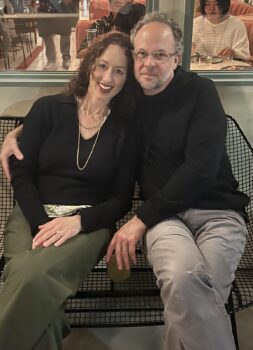
David is direct about the systemic barriers that have slowed progress: underfunding, polarization, and risk aversion within medicine and research institutions. “When a disease becomes controversial, it creates a cycle of avoidance,” he explains. “That affects physician education, research funding, and ultimately patient care.”
Yet he remains optimistic.
“There is now enough solid science to translate into better diagnostics and treatments,” David says. “The question is whether we choose to invest in that translation.” His message to patients is one of validation and resolution. “You’re not imagining this,” he says. “And you’re not alone.”
To donors and supporters, his call is equally clear. “This is a solvable problem,” David emphasizes. “If we can make breakthroughs in cancer and other complex diseases, we can do the same for Lyme and tick-borne diseases, with focus, resources, and leadership.”
“This is a solvable problem. If we can solve complex cancers, we can solve Lyme.”
– David Walsey
Leading with Empathy, Guided by Science
As Bay Area Lyme Foundation enters its next chapter, and Giampa moves into her role as a board director of Bay Area Lyme and Managing Director of the new Bay Area Lyme Venture Fund, David Walsey brings a leadership style shaped by both data and lived experience. “Science drives our mission,” he says. “But patient stories remind us why the science matters.” His vision centers on accelerating research, improving diagnostics, reducing stigma, and ensuring that discoveries reach patients faster. “This has gone unsolved for far too long,” David says. “It’s time for Lyme and tick-borne disease patients to benefit from the same scientific urgency we apply elsewhere.”
Bay Area Lyme Foundation is excited to welcome David Walsey as Executive Director, and to move forward with a leader who understands the science, the struggle, and the stakes.
David Walsey joined Bay Area Lyme Foundation as Executive Director in 2025. He is a strategic biotech leader with 25 years of experience advancing corporate objectives through strategy, communications, financing, and investor initiatives for public companies. Most recently, David served as Senior Vice President, Corporate Affairs at MEI Pharma, leading programs spanning corporate strategy, investor relations, and corporate communications. He previously held senior roles at Alder Biopharmaceuticals, Optimer Pharmaceuticals, Sarepta Therapeutics (formerly AVI BioPharma), Arena Pharmaceuticals, and Maxim Pharmaceuticals, and worked at agencies including Real Chemistry (formerly W20 Group), The Ruth Group, and Noonan Russo. He began his career as an attorney in private practice in New York City and holds an LLM in Taxation from New York University School of Law, a JD from Brooklyn Law School, and a BA from Franklin and Marshall College.
This blog is part of our Bay Area Lyme Spotlight series. If you require a copy of this article in a bigger typeface and/or double-spaced layout, contact us here. Bay Area Lyme Foundation provides reliable, fact-based information about Lyme and tick-borne diseases so that prevention and the importance of early treatment are common knowledge. For more information about Bay Area Lyme, including our research and prevention programs, go to www.bayarealyme.org.
Congrats on your new role! Looking forward to seeing the changes you drive! Wishing you and your family good health.