The Long and Winding Road: The Story of Bay Area Lyme’s Multi-Year Quest to Identify Treatments for Lyme Patients

West Coast Clinical Trial Story

BAL Leading the Way Series


“The opening of a network of Lyme disease clinics is the culmination of many years of tireless work and the vision of a small group of determined women over 10 years ago. We are extremely optimistic that the Lyme Clinical Trials Network will accelerate the development of new treatments for patients with post-treatment and persistent Lyme disease.”

—Linda Giampa, Executive Director, Bay Area Lyme Foundation


When Bay Area Lyme Foundation (BAL) was formed a decade ago, its mission was clear: to make Lyme disease easy to diagnose and simple to cure. “And that’s still our goal,” emphasizes BAL co-founder Bonnie Crater, as she reflects on the last 10 years. However, appreciating the magnitude of the Foundation’s audacious mission requires an understanding of two complex—yet inextricably linked—medical domains: the world of diagnostics, and the world of therapeutics.
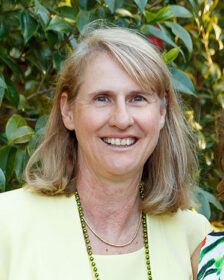
Bonnie Crater
Bay Area Lyme Co-Founder Bonnie Crater

The ‘Holy Grail’ for Lyme disease is an accurate diagnostic test—or better yet a suite of specifically designed tests for the different stages of acute and persistent Lyme disease. Although great strides are being made in understanding the infection and the disease’s progression, the ‘silver bullet’ of accurate diagnostic tests continues to elude us. The current diagnostics for acute Lyme (a two-step process with an ELISA either followed by a Western blot or another ELISA) are fraught with problems. These tests may miss up to 70% of acute Lyme cases or deliver false negative results. They are unreliable for detecting acute Lyme and are ineffective indicators for anyone with a persistent/chronic tick-borne infection. (Watch or listen to our Ticktective with Brandon Jutras, PhD, to learn why the current direct detection tests for Lyme are so inaccurate.)

Add to this the fact that FDA-approved therapeutics—or ‘cures’—have not evolved much in 10 years either and foment controversy. A quick internet search on ‘How to treat Lyme disease’ will offer information from the IDSA (Infectious Diseases Society of America) stating that a 10-14-day course of oral antibiotics, such as amoxicillin or doxycycline, will do the job for someone with an EM (Erythema migrans) rash who has early/acute Lyme. But anyone who has had Lyme disease, been treated, and then experienced a continuation of symptoms knows that this recommended course of intervention often fails to clear the infection, leaving some persistent Lyme patients in limbo, and health care providers without an approved treatment protocol. Simply put, this is the continuing underlying treacherous terrain of Lyme, throwing up challenges in both diagnostics and therapeutics.
On the Front Lines of Lyme Treatment: A Conversation with Pioneer Kenneth Liegner, MD

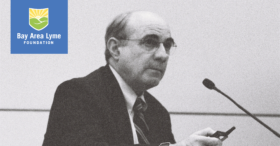
Kenneth Liegner, MD

Ticktective Podcast Transcript


In this conversation between Ticktective™ host Dana Parish and pioneering physician Kenneth Liegner, MD, the discussion focuses on how Dr. Liegner, frustrated and perplexed by the lack of options for persistent/chronic Lyme, came to prescribe disulfiram—a drug intended to treat alcoholics—as an off-label therapeutic for his Lyme patients. He recounts what happened next, and reflects on the impact of his bold experiment, plus they touch on how a Covid infection may impact Lyme patients, causing a resurgence of latent symptoms. They also explore the history of tick-borne diseases and the lack of recognition among clinicians, the government, and insurance companies for these insidious infections that cause chronic suffering for many. Note: This transcribed podcast has been edited for clarity.

Dana Parish: Welcome to the Ticktective Podcast, a program of the Bay Area Lyme Foundation, where our mission is to make Lyme disease easy to diagnose, and simple to cure. I’m your guest host today, Dana Parish. I’m the co-author of the book Chronic, and I’m on the advisory board of Bay Area Lyme Foundation. This program offers insightful interviews with clinicians, scientists, patients, and other interesting people. We’re a non-profit foundation based in Silicon Valley, and thanks to a generous grant that covers a hundred percent of our overhead, all of your donations go directly to our research and our prevention programs. For more information about Lyme disease, please visit us at bayarealyme.org.

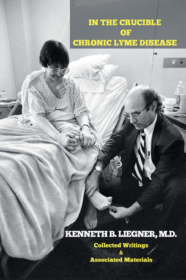
In the Crucible of Chronic Lyme Disease, Collected Writings and Associated MaterialsDana Parish: I’m so thrilled to be guest hosting Ticktective for you today on behalf of Bay Area Lyme Foundation. I’m here with a dear friend and a brilliant Lyme physician, internist, author, Dr. Kenneth Liegner. Dr. Kenneth Liegner is a board-certified internist with additional training in pathology and critical care medicine, practicing in Pawling, New York. He’s the author of an extraordinary documentarian history of Lyme called In the Crucible of Chronic Lyme Disease, Collected Writings and Associated Materials. We’ll talk about that more later. Dr. Liegner is also the first to apply disulfiram in the treatment of Lyme, and he published his experience in the peer-reviewed journal Antibiotics. Thank you so much for being here with me today, Dr. Liegner.

Bay Area Lyme Foundation Celebrates Department of Defense CDMRP Tick-borne Disease Awardees

CDMRP

Bay Area Lyme Foundation Celebrates Department of Defense CDMRP Tick-borne Disease Awardees

Projects of three awardees to be enabled by Lyme Disease Biobank samples

PORTOLA VALLEY, Calif., March 23, 2023—Bay Area Lyme Foundation, a leading sponsor of Lyme disease research in the US, announces that two projects it has previously funded have now received Department of Defense Congressionally Directed Medical Research Programs (CDMRP) Tick-Borne Disease awards. Three of the six recently announced CDMRP awardees will be using biological samples from Bay Area Lyme Foundation’s Lyme Disease Biobank to enable their research into diagnostics and therapeutics for tick-borne diseases, including Lyme disease—which infects half a million people each year. 

“Government awards like CDMRP help propel much needed research on tick-borne illnesses forward, and, with three diagnostics projects using Biobank samples, we are honored to play a part in making this important research possible,” said Liz Horn, PhD, MBI, Principal Investigator, Lyme Disease Biobank, which provides researchers with access to reliable biological samples to enable research toward better diagnostics and treatments for these complex diseases. “If researchers don’t have access to well-characterized blood samples with robust testing and medical information, they can’t build the necessary research programs to develop better diagnostics, which are urgently needed for these complex diseases,” added Dr. Horn.

ALL ABOUT KIDS WITH LYME, PANS, MOLD ILLNESS

DAna Parish interviews Dr Charlotte Mao

Ticktective Podcast Transcript


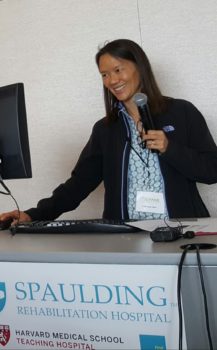
Charlotte Mao, MDIn this conversation between Ticktective™ host Dana Parish and Harvard-trained pediatric infectious diseases specialist Charlotte Mao, MD, the discussion focuses on how Dr. Mao gradually moved away from the narrow view of Lyme disease and began to champion understanding and therapeutics for children suffering from persistent Lyme. They explore tick-borne diseases and their connection to other chronic illnesses that are often misunderstood and misdiagnosed by conventional medicine. Note: This transcribed podcast has been edited for clarity.

Dana Parish: Welcome to the Ticktective Podcast, a program of the Bay Area Lyme Foundation, where our mission is to make Lyme disease easy to diagnose, and simple to cure. I’m your guest host today, Dana Parish. I’m the co-author of the book Chronic, and I’m on the advisory board of Bay Area Lyme Foundation. This program offers insightful interviews with clinicians, scientists, patients, and other interesting people. We’re a non-profit foundation based in Silicon Valley, and thanks to a generous grant that covers a hundred percent of our overhead, all of your donations go directly to our research and our prevention programs. For more information about Lyme disease, please visit us at bayarealyme.org.

Dana Parish: Hi I’m so excited to guest host the Ticktective podcast today. I want to introduce you to a very dear friend of mine, one of the most brilliant, curious, interesting, funny, and dearest people. Please welcome Dr. Charlotte Mao. She is a pediatric infectious diseases physician with a special focus on Lyme disease and associated infections. She received her medical degree at Harvard Medical School and did her pediatric and infectious diseases training at Boston Children’s Hospital. The first 25 years of her career were focused primarily on pediatric HIV clinical care and clinical research, serving as a site co-investigator for numerous NIH funded multi-center pediatric HIV clinical trials at Boston Children’s Hospital. She turned her focus to Lyme and associated diseases after gaining extensive clinical experience with pediatric Lyme patients in Boston children’s hospital’s referring ID clinic. Then she joined the Pediatric Infectious Disease Department at Mass General Hospital and Spaulding Rehab Hospital Dean Center for Tick-borne Illness, where she was the pediatric IG specialist in a multidisciplinary clinic for children with complex Lyme disease. She is currently curriculum director for Invisible International. She most recently served on a tick-borne disease working group subcommittee for prevention and treatment and co-organized a Cold Spring Harbor Laboratory Banbury Conference on perinatal transmission of Lyme Disease. She’s also on the Bay Area Lyme Foundation’s Science Committee. Welcome, Charlotte. It’s so great to see you!

One Lyme Patient’s Challenging Quest to Donate Her Body to Science in Her Final Days

Cornell University 1997

BAL Spotlight Series


In Puerto Rico, Donating Your Body to Science is Almost Impossible

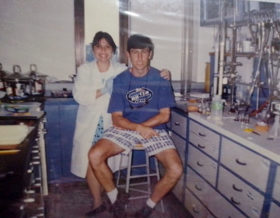
Luisette Mauras Rodriguez working in the lab at Cornell
Working in the lab at Cornell in 1997

Luisette Mauras Rodriguez is lying in bed at home in Guyana, Puerto Rico, waiting to die. She’s 46 years old, her body ravaged by Lyme, numerous tick-borne coinfections, and a multitude of other hits caused by environmental exposure to toxins like black mold, fungus, mycoplasma, and chikungunya virus. Family members do not understand her illness and laugh at her ‘exaggerations.’ Her husband left her because he fears getting sick and his religious convictions cause him to question the validity of her condition. Her mother, formerly a registered nurse, has abandoned her to her fate. Whenever Luisette gets desperate for help and goes to the ER, they refer her to the psych ward saying her illness is fabricated.

Cornell University
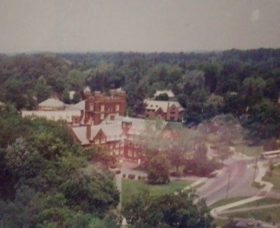
Cornell University and the surrounding woods where she was bitten

A former professional lab technician who worked in pharmaceutical development with US companies like Wyeth, SmithKline Beecham, and IPR Pharmaceuticals, Luisette has one dying wish: to donate her body to the Lyme Disease Biobank (LDB) so that samples from her brain, joints, organs, and tissues will be used to fuel much-needed research into Lyme and tick-borne diseases. She has registered with the National Disease Research Interchange (NDRI) in Philadelphia to have her body collected after her death, but as of writing this article, staff there are unable to find any medical professional on the island willing to partner with them to ensure this happens.

“We have been unsuccessful in securing anyone for recovery for the donor located in Puerto Rico. It has been very difficult getting anyone to follow up with us on top of the language barrier. We were trying to give the pathology department at the University time to get back to us but they seem to be very busy. The complexity of the recovery also makes it more difficult as well.” — Wauchita Green, Manager, Organ & Tissue Source Sites, NDRI, The National Disease Research Interchange

From Long Covid to Long Lyme: Persistent Infections Drive Chronic Illness

Ticktective interview with Dana Parish and Amy Proal, PhD

Ticktective Podcast Transcript


Ticktective™ with Dana Parish

In this insightful conversation between Ticktective™ guest host Dana Parish and microbiologist Amy Proal, PhD, we investigate persistent pathogens, how they remain in the body after treatment often leading to chronic illness, and how they can be reactivated by new infections, including Covid-19. Note: This transcribed podcast has been edited for clarity.

Dana Parish: Welcome to the Ticktective Podcast, a program of the Bay Area Lyme Foundation, where our mission is to make Lyme disease easy to diagnose and simple to cure. I’m your guest host today, Dana Parish. I’m the co-author of the book Chronic, and I’m on the advisory board of Bay Area Lyme Foundation. This program offers insightful interviews with clinicians, scientists, patients, and other interesting people. We’re a nonprofit foundation based in Silicon Valley, and thanks to a generous grant that covers a hundred percent of our overhead, all your donations go directly to our research and our prevention programs. For more information about Lyme disease, please visit us at www.bayarealyme.org.

Amy Proal, PhD

Today, on behalf of Bay Area Lyme Foundation, I am here with brilliant microbiologist Dr. Amy Proal. I have a little bio for her. I’m going to read right now. Dr. Proal serves as president and CEO of PolyBio Research Foundation, and she’s the chief scientific officer of the Long Covid Research Initiative, LCRI. She went to Georgetown, she has a PhD in microbiology from Murdoch University in Australia, and she is a rockstar in the field and a leader in the field of persistent pathogens. She has just come off of a huge press tour for her incredible work and the enormous grant that she just received for her Long Covid research, and I’m so excited to be one of the first people to talk to you after all this.

Amy Proal, PhD: Of course, Dana, thanks so much for having me. That was an amazing intro. I appreciate all of that. It’s great to be interviewed by you. It’s mostly just a friendly conversation, which is fun.

Dana Parish: So, congratulations on your grant. I found out about it all coming together because I saw it in Forbes and then in the LA Times, and then I saw it in the Financial Times and I was like, “Oh my God. This is front page news!” Can you talk a little bit about the work you’re doing in Long Covid?

New Study Finds American Dog Tick Populations Expanding into Colorado, and Identifies Rocky Mountain Wood Ticks in 5 More Counties Than Documented by CDC

FOR IMMEDIATE RELEASE

New Study Finds American Dog Tick Populations Expanding into Colorado, and Identifies Rocky Mountain Wood Ticks in 5 More Counties Than Documented by CDC

Citizen scientists contributing to Bay Area Lyme Foundation’s Free Tick Testing program assist in identifying ticks capable of carrying disease in Colorado

Portola Valley, CA, October 25, 2022—Bay Area Lyme Foundation, a leading sponsor of Lyme disease research in the US, today announced results of a study published in the November issue of the peer-reviewed journal Ticks and Tick-borne Diseases demonstrating that ticks capable of carrying diseases, including Rocky Mountain spotted fever, Colorado tick fever and the neurotoxin that causes tick-borne paralysis, pose an emerging threat in Colorado. The results show American dog ticks are very much present in 16 counties in Colorado, where they were not previously identified by the CDC, and Rocky Mountain wood ticks are found in 38 of the 64 Colorado counties, whereas they had only been identified in 33 previously. The study leveraged several sources for the study, including ticks collected by citizen scientists as part of a free tick testing program offered by the Bay Area Lyme Foundation.

“The critical takeaway from this study is that Coloradans need to take preventative measures against ticks when outdoors, such as tick checks, and doctors should be more vigilant for symptoms of tick-borne diseases including those carried by Rocky Mountain wood ticks and American dog ticks,” said Linda Giampa, executive director, Bay Area Lyme Foundation. “This ecology study illustrates the power of leveraging citizen science, and we are grateful for the more than 20,000 ticks that were submitted to our national program and made this study possible.” 

Conducted by researchers from Colorado State University and funded by the Bay Area Lyme Foundation, the study aimed to quantify the current county-level distribution of Rocky Mountain wood ticks, Dermacentor andersoni, and American dog ticks, Dermacentor variabilis.  The study evaluated data from ticks collected by citizen scientists and evaluated  at Northern Arizona University as part of Bay Area Lyme Foundation’s Free Tick Testing program, distribution data from the Colorado Department of Public Health and the Environment,  veterinary surveillance at Oklahoma State University, and literature data.

Bay Area Lyme Foundation Offers $150,000 Grant for Emerging Leaders in Lyme Disease Research

2021 Emerging Leader Awards

FOR IMMEDIATE RELEASE


Bay Area Lyme Foundation Offers $150,000 Grant for Emerging Leaders in Lyme Disease Research

Annual award seeks to attract innovative researchers with a new approach to overcome the challenges of tick-borne diseases

PORTOLA VALLEY, Calif., October 19, 2022—Bay Area Lyme Foundation, a leading sponsor of Lyme disease research in the US, is announcing a call for entries for their 2023 Emerging Leader Awards (ELA), which aim to recognize both established and up-and-coming researchers bringing new approaches and creative thinking to the field of Lyme disease. This year, the Foundation has increased the ELA award to $150,000 for researchers in academia or the private sector who are at the post-doctoral level through associate professor level. 

While applicants must have a defined approach to improving diagnostics and therapeutics for Lyme disease, the grants are open to those who have previously worked in Lyme disease research as well as researchers from other therapeutic areas. Applications will be accepted through February 15, 2023 at 11:59pm, Pacific Time. The full criteria and application for this award can be found at https://www.bayarealyme.org/our-research/emerging-leader-award/. 

“Despite modest increases in government funding, there is still a significant need for ‘out of the box’ ideas pulled from proven scientific approaches in other therapeutic areas,” said Wendy Adams, research grant director Bay Area Lyme Foundation. “We fund innovative scientifically-sound research and are seeking driven, rigorous scientists who can help make progress towards developing accurate diagnostic tests and effective therapeutics for various stages of the disease.”

The Emerging Leader Award is designed to support research that will increase the scope of investigation in Lyme disease and help develop better diagnostics and treatments. Bay Area Lyme Foundation encourages researchers to explore novel, scientifically well-founded concepts with potential utility toward that goal. Many ELA recipients have subsequently received grants from other groups including the NIH, as well as continued support from Bay Area Lyme Foundation. The efforts funded by this award are required to generate initial proof of concept within 12-24 months and requires applicants to demonstrate professional and scientific leadership in the biomedical sciences and a strong supporting scientific rationale. 

Making a Contribution and Feeling Heard—One Lyme Patient’s Experience of Participating in the Lyme Disease Biobank

Lyme Disease Biobank Collection

BAL Spotlights Series


In June of this year, Lyme Disease Biobank (LDB), led by Principal Investigator Liz Horn, PhD, MBI, conducted sample collection days at our partner site, Gordon Medical Associates, in San Rafael, CA. During the two-day event, we took the opportunity to sit down and talk with participants, hear their Lyme disease stories, and learn what motivated them to donate blood and urine samples to LDB.

Sarah Reid’s Lyme story is not dissimilar to the stories of many Lyme patients in California. She never saw a tick; she never had a rash; and for a very long time—despite countless doctors’ appointments, interventions, tests, and hours of research—she had absolutely no diagnosis for her bewildering kaleidoscope of symptoms. When she finally received confirmation from lab tests ordered by Gordon Medical Associates that she indeed had Lyme and Bartonella, the news was a massive relief initially. She finally had answers. However, as the diagnosis sunk in, it sparked reflection on her lifelong health struggles and launched her into a new world of confusion, frustration, and decision-making as she learned to navigate and manage her Lyme.

Patient Participation is the Key to Research Gains

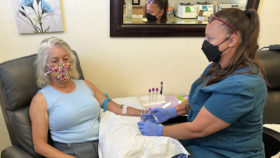
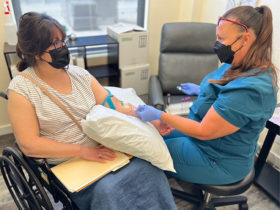
Biobank collection at Gordon Medical Associates

BAL Leading the Way Series


“With the lack of government initiative to make Lyme and tick-borne diseases easy to diagnose and simple to cure, it’s up to organizations like Bay Area Lyme and Lyme Disease Biobank to expand our understanding of tick-borne diseases.”  –Harrison S., LDB participant

“I participated in the Biobank program because I want to support legitimate science—it’s the compass pointing us in the direction that will lead to better diagnostics and therapeutics for Lyme patients. I am grateful that BAL is funding this critical research which is so sorely needed, and doing it expeditiously. It goes a long way to make up for the five decades of inaction by the CDC and HHS.”  – Rebecca W., LDB participant

Over three days in June, the Lyme Disease Biobank (LDB) welcomed participants to Gordon Medical Associates, our LDB collection site in San Rafael, CA. Persistent/chronic Lyme patients traveled from as far away as Sacramento, CA, and Reno, NV, to donate blood and urine samples to the Biobank. LDB, a program of Bay Area Lyme Foundation, was founded to ensure an adequate number of samples for researchers investigating Lyme and tick-borne diseases.