A New Year Call to Action After December 15, 2025, HHS Roundtable

Charlotte Mao, MD, MPH

Bay Area Lyme Spotlight Series

By Charlotte Mao, MD, MPH, Bay Area Lyme Foundation

Chronic Lyme Disease patients have been ignored for too long. That must end now.

– Charlotte Mao, MD, MPH

A Long-Overdue Moment of Recognition

Starting in 2026, Lyme disease and other tick-borne disease patients and their families have some reason to be encouraged by the growing recognition of the realities they face and the prospect of continued research to support new diagnostics and treatments.

HHS Lyme Disease Roundtable


The December 15, 2025, Department of Health and Human Services (HHS) roundtable marked something rare and long overdue: federal recognition of patient need, grounded in scientific evidence presented by researchers, clinicians, and patient advocates. But patients need more than another moment of recognition. They need results. In 2026, the question is whether that recognition will translate into sustained action, measurable progress, and real improvements in care.

Ten Years of Data, One Clear Message: We Need to Do Better for Lyme Patients

Lyme Disease Biobank

Bay Area Lyme Leading the Way Series

By Liz Horn, PhD, MBI, Principal Investigator, Lyme Disease Biobank

“The window for effective antibiotic treatment is narrow. Miss it—because of a false negative test, because symptoms are dismissed, or because follow-up doesn’t happen—and patients can develop persistent Lyme, which can be debilitating.”

– Dr. Liz Horn

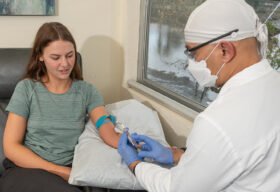
Lyme Disease Biobank patient sample

After a decade of collecting blood samples, testing the samples, tracking patient outcomes, and analyzing data from more than 800 participants, the numbers tell a powerful story about the gaps in our understanding of how we diagnose and treat early Lyme disease. And it’s made all the more urgent by this summer’s explosion in blacklegged (deer) tick populations across endemic areas.

Our latest Lyme Disease Biobank study looked at more than 250 patients with early Lyme disease on Long Island and in Central Wisconsin who provided a blood draw at enrollment and a second blood draw three months later. Published recently in Frontiers in Medicine, these 10 years of data confirm a few important points that have been known in the Lyme field for years, but the wider medical community may not be aware of.

Bay Area Lyme Foundation Opens Applications for 2026 Emerging Leader Awards and Research Grants

Emerging Leader Award 2026 call for entries

FOR IMMEDIATE RELEASE

Bay Area Lyme Foundation Opens Applications for 2026 Emerging Leader Awards and Research Grants

Annual program to fund two $150,000 grants to revolutionize diagnosis and treatment of tick-borne diseases, including new award focused on co-infections

PORTOLA VALLEY, Calif., October 22, 2025 – Bay Area Lyme Foundation, a leading sponsor of Lyme disease research in the US, today announced its call for applicants from academia and the private sector for the 2026 Emerging Leader Awards (ELA). These annual awards recognize innovative researchers advancing novel approaches in tick-borne disease diagnostics and treatments, while embodying the future of research leadership in this critical field.

In 2026, Bay Area Lyme Foundation will award two $150,000 ELA grants:

  • Lyme Disease Award will support creative approaches to advancing diagnostics and/or therapeutics for Lyme disease, continuing the legacy started more than a decade ago.
  • Tick-borne Pathogen Award is a new grant to support research on non-Borrelia tick-borne pathogens/infections occurring in the US, with preference for bacterial and parasitic pathogens. Projects may address co-infections in combination with Borrelia burgdorferi or as stand-alone investigations. Viral infections (e.g., Powassan virus, Heartland virus) are excluded from this category.

Applications are due by February 15, 2026, at 11:59pm PT. Eligible applicants include academic and private-sector researchers at the post-doctoral through associate professor level (or equivalent in industry), including those new to Lyme and tick-borne disease research. All applicants are encouraged to request samples from the Lyme Disease Biobank.

Applicants must demonstrate scientific leadership, a strong supporting rationale, and the ability to generate proof of concept within 12–24 months. While diagnostic and therapeutic approaches are of particular interest, all areas of research relevant to patients will be considered. Submissions require a research proposal and at least one supporting letter from a supervisor or Principal Investigator.

The full criteria and application can be found here. Awardees will be announced at LymeAid in May 2026.

New Bay Area Lyme Foundation Study Reports That Only One-Third of Early Lyme Patients with On-Going Symptoms Followed up with their Healthcare Providers

Lyme Disease Biobank

FOR IMMEDIATE RELEASE


New Bay Area Lyme Foundation Study Reports That Only One-Third of Early Lyme Patients with On-Going Symptoms Followed up with their Healthcare Providers

The new research, published in Frontiers in Medicine, points to need for greater follow-up from medical professionals to address potential treatment failures. 

PORTOLA VALLEY, Calif., July 10, 2025—Bay Area Lyme Foundation, a leading sponsor of Lyme disease research in the US, announced the publication of new research in Frontiers in Medicine based on data from Bay Area Lyme Foundation’s Lyme Disease Biobank. This large-scale study conducted over 10 years at sites on the East Coast and the Upper Midwest demonstrates the need for improved diagnostics and increased follow-up by medical professionals for Lyme disease patients.

Only one-fifth of study participants (23%), enrolled with signs and symptoms of early Lyme, were positive by the CDC’s standard two-tiered test for Lyme disease, which supports previous research that found that it misses up to 70% of cases of early-stage Lyme disease. Further, approximately 1 in 5 patients reported ongoing symptoms at 3 months, including joint pain, fatigue, and muscle pain yet only one-third (35%) of these participants followed up with their healthcare providers about these ongoing symptoms. Due to difficulties in diagnosing Lyme disease and resulting treatment delays, as many as two million people may suffer from persistent Lyme disease, which can be debilitating.

Accurate, timely detection of Lyme disease is critical to preventing long-term complications. Moreover, follow-up from medical professionals with all patients after they complete antibiotic treatment could improve outcomes and reduce the burden of Lyme disease,” said lead author Liz Horn, PhD, MBI, Principal Investigator of Lyme Disease Biobank, a Bay Area Lyme Foundation program which helps to accelerate research by collecting, storing and providing much-needed human biological samples for use in research. “Our data also confirm the limitations of serology testing in early Lyme disease and after antibiotic treatment.”

Bay Area Lyme Foundation Announces National Winner of the 2025 Emerging Leader Award to Develop a Much-Needed Rapid, Low-Cost, Easy-to-Use Lyme Disease Test

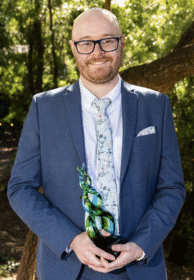
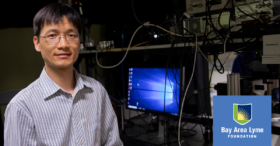
Chao Wang, PhD

FOR IMMEDIATE RELEASE 


Bay Area Lyme Foundation Announces National Winner of the 2025 Emerging Leader Award to Develop a Much-Needed Rapid, Low-Cost, Easy-to-Use Lyme Disease Test

Winner Chao Wang of Arizona State University will receive $150,000 to evaluate a unique diagnostic that uses gold nanoparticles and has been proven in other infectious diseases 

PORTOLA VALLEY, Calif., June 12, 2025—Bay Area Lyme Foundation, a leading sponsor of Lyme disease research in the US, has given its 2025 Emerging Leader Award (ELA) to Chao Wang, PhD, associate professor in the School of Electrical, Computer and Energy Engineering at Arizona State University, faculty with ASU’s Biodesign Institute® and an expert in nanotechnology and biosensors. Wang will receive $150,000 to support his work to develop a much-needed rapid, low-cost, easy-to-use test, called Nano2RED-LD, for Lyme disease. The test aims to deliver results in as few as 30 minutes when a patient who may have Lyme disease first sees a doctor. 

There is an immense need for better Lyme disease tests. Today’s standard-of-care tests miss too many cases at all stages of Lyme disease, including as many as 70% of early Lyme cases. 

“With Lyme disease cases rising steadily across the U.S., the need for accurate and timely diagnostic tools has never been greater,” said Katariina Tuovinen, research grant director, Bay Area Lyme Foundation. “Dr. Wang’s pioneering work epitomizes the essence of this award as it applies innovation from other infectious diseases in an effort to enhance outcomes for patients affected by Lyme disease.”

  Science Translational Medicine Study Funded by the Bay Area Lyme Foundation Identifies FDA-approved Piperacillin as More Effective, Targeted Treatment for Lyme Disease

Brandon Jutras

FOR IMMEDIATE RELEASE 


  Science Translational Medicine Study Funded by the Bay Area Lyme Foundation Identifies FDA-approved Piperacillin as More Effective, Targeted Treatment for Lyme Disease

An additional Science Translational Medicine study also funded by Bay Area Lyme Foundation uncovers how lingering bacterial cell wall molecules may contribute to chronic Lyme symptoms  

PORTOLA VALLEY, Calif. April 23, 2025 – Bay Area Lyme Foundation, a leading sponsor of Lyme disease research in the US, announces two pre-clinical studies published in the peer-reviewed journal Science Translational Medicine. The studies demonstrate promising implications for improved Lyme disease treatment and understanding of chronic Lyme through peptidoglycan, a molecule found in the cell wall of the bacterium, Borrelia burgdorferi (Bb), which causes Lyme disease. The first study finds piperacillin, an FDA-approved treatment for pneumonia that inhibits peptidoglycan production, may be a more effective treatment for Lyme disease than the current “gold standard” treatment, doxycycline, which is not effective for up to 20% of patients. The second study uncovers how lingering peptidoglycan builds up in the joint fluid and liver, contributing to chronic Lyme symptoms, which affect over 20% of patients treated for Lyme disease.

“Piperacillin may be a game-changer for improving Lyme disease treatment, which is currently a challenge for researchers and physicians. Furthermore, our new mechanistic understanding of how piperacillin affects peptidoglycan synthesis is unexpectedly informing our development of a biomarker-based approach to diagnose acute Lyme disease,” said Brandon Jutras, PhD, associate professor of Microbiology-Immunology at Northwestern University Feinberg School of Medicine, and a Bay Area Lyme Foundation 2021 Emerging Leader Award winner. “Our second study explores the role of peptidoglycan in chronic Lyme symptoms; peptidoglycan influences an inflammatory and chronic illness response for weeks or even months after infection, adding to the growing evidence that remnants of bacteria and viruses can stick around and keep affecting the body, similar to the occurrence of Long COVID in some patients.”

Connection and Collaboration Bringing Hope: Understanding the Immune System’s Role in Post-Treatment Lyme Disease

Bill Robonson, MD, PhD

Bay Area Lyme Spotlights Series


“Philanthropy is mission-critical to advance the field of Lyme disease research.”

– Bill Robinson, MD, PhD

In this conversation, we talk with Bill Robinson, MD, PhD, the James W. Raitt professor of medicine and division chief, division of immunology and rheumatology at Stanford University, about how his work is helping us understand the immune system’s response to a Lyme infection. A long-term collaborator and grant recipient of Bay Area Lyme Foundation, Dr. Robinson reflects on his history with our organization, the plight of Lyme patients, the paucity of government funding for investigations into the disease, where Lyme disease research is now, and where he thinks it’s headed in the next 5-10 years.

UCSF’s New Lyme Clinical Trials Center: Addressing the Need for Evidence-Based Treatments for Lyme & TBD Patients

Felicia Chow UCSF Clinical Trial

 Bay Area Lyme Happenings Series


UCSF has joined the Cohen Foundation’s nationwide Lyme Clinical Trials Network (CTN) for Lyme and tick-borne diseases. The new Lyme Clinical Trials Center (CTC) at UCSF was funded by a $1m grant from Bay Area Lyme Foundation and is led by Charles Chiu, MD, PhD, and Felicia Chow, MD, as co-principal investigators. As the West Coast ‘node’ in the network, UCSF’s new Lyme Clinical Trials Center will focus on interventional trials and diagnostic studies to improve diagnosis and treatment of Lyme disease.

In this presentation to patients with Lyme disease in Marin County just north of San Francisco, Dr. Chow explains how the CTC allows for a more diverse patient population to participate in Lyme clinical trials, which is critical for developing therapies that can help a wider range of patients. UCSF’s involvement also aims to help Bay Area Lyme raise awareness that Lyme disease is prevalent year-round in almost all California counties.

Dr. Chow discusses an upcoming trial at UCSF that will evaluate the use of transcranial direct current stimulation (tDCS) to improve cognitive symptoms in patients with chronic Lyme disease. Additionally, UCSF researchers are exploring the use of metagenomic sequencing and machine learning to develop more accurate diagnostic tests for Lyme and other tick-borne infections.

Note: This transcript of Dr. Chow’s presentation has been edited for length and clarity.

“I hope that through these clinical trials, we’ll be able to identify therapies that are helpful to patients and that, as a result, have an impact on clinically meaningful outcomes—from day-to-day function, quality of life, and all of those important measures that indicate that a treatment is successful.”

– Felicia Chow, MD

The Numbers Don’t Lie: Why the NIH Consistently Underfunds Research into Lyme Disease

An In-depth Interview with Kris Newby, Author of “Bitten”


“We need to let the NIH know that we’re watching them, and we want results.” 

– Kris Newby


Kris NewbyKris Newby, author of ‘Bitten,’ is investigating government spending on Lyme disease research, which is strongly influenced by the flawed original disease definition of Lyme disease. She summarizes the impact of the 2018 Tick-Borne Disease Working Group’s report, explains where research funding has and is currently being directed, and calls for money to be spent on better diagnostics and treatments for Lyme disease sufferers instead. Kris explores potential actions that Lyme patients can take to help direct the course of funding, such as communicating with Congress, supporting advocacy groups, and donating to research organizations.

The views and opinions expressed in this article are those of the interviewee and do not necessarily reflect the views or positions of Bay Area Lyme Foundation.

Kris Newby is watching our government, and watching quite closely. She has a lot to say about how government money is spent on a disease that, according to CDC estimates, infects almost 500,000 people annually in the US, causing untold pain, suffering, loss of livelihood, and, in extreme cases, severe mental illness, including suicidal and homicidal events.

Of course, we are talking about Lyme disease—the pariah of infection-associated chronic conditions.

Understanding Infection-associated Chronic Illness: How the Immune System Responds to Persistent Infection

Distinguished Speaker Series with Michal Tal, PhD

Distinguished Speaker Series Transcript


Mihal Tal, PhD“I want to leave you with hope. I think we’re going to be unstoppable because I think that these are solvable problems. These are answerable questions. I think that there are already a lot of existing tools in immunology that just need to be brought into the fight, and we can change this.”

– Michal Caspi Tal, PhD

Michal Caspi Tal: In the chronic illness world, I think that there is something about hope with a capital ‘H’ that is precious. I think it always has to be. I want to talk a little bit about what my lab is doing, where I think we could go in the future and the hope that I have for how we move forward, how we solve this, and how we change this for those who come after us. So, I’ll tell you a little bit about some of the recent things that have come out of the lab, what the lab is working on now, and where we want to go. 

New Study Shows How Borrelia burgdorferi Evades the Immune System

Recently, we published a study in collaboration with Hanna Ollila’s lab where we compared people who’ve had Lyme and have had a diagnosis of Lyme versus people who’ve never had a diagnosis of Lyme. We found a genetic difference in a sweat protein that nobody—including me—had ever thought about before. We tested it against the bacteria in our lab, and we saw that it had a huge effect; we tested it in mice, and it had a huge effect. So that’s really exciting. We had another paper that came online yesterday that is one of these last papers from my postdoctoral work over at Stanford, where we actually managed to figure out some of how Borrelia burgdorferi, the bacteria that causes Lyme, manages to evade immune clearance. 

Michal Tal, PhDAny respectable pathogen that can establish a persistent infection needs to figure out your immune system to the point that it can evade it. The fact that it has persisted means that it was able to evade your immune clearance. And so, I got to that from a very interesting direction working on immune regulation, trying to understand these brakes on the immune response and how they impact the response to infection. The immune system has the power to kill you and obviously, nobody has any incentive for that to happen. So, there are a lot of mechanisms in place to put brakes on the immune system and reign it in. One of the huge developments in cancer over the last two decades has been reevaluating the question: can we take those brakes off? So in my postdoc, I was studying a particular checkpoint where this was turning into an exciting immuno-oncology target, and I said, ‘I want to look at how this checkpoint is used in infection.’ I realized that this checkpoint was being used to help you survive an acute infection, but created a vulnerability for pathogens to evade immune clearance and establish chronic infection much like it allows cancer cells to evade immune clearance. In an amazing collaboration with Irv Weissman, Balyn Zaro, and Jenifer Coburn we realized that the bacteria that cause Lyme disease manipulate this brake and that’s how I became fascinated with Lyme.  But I also became concerned about turning off this brake in cancer patients because I was concerned about what would happen if you used this on cancer patients during an active infection. Indeed, the clinical trials on this drug were ended due to increased death from infection, and I wish it hadn’t been tested during a worldwide pandemic.