
Bay Area Lyme Spotlights Series
“Philanthropy is mission-critical to advance the field of Lyme disease research.”
– Bill Robinson, MD, PhD
In this conversation, we talk with Bill Robinson, MD, PhD, the James W. Raitt professor of medicine and division chief, division of immunology and rheumatology at Stanford University, about how his work is helping us understand the immune system’s response to a Lyme infection. A long-term collaborator and grant recipient of Bay Area Lyme Foundation, Dr. Robinson reflects on his history with our organization, the plight of Lyme patients, the paucity of government funding for investigations into the disease, where Lyme disease research is now, and where he thinks it’s headed in the next 5-10 years.
Early Days of Bay Area Lyme and the Robinson Lab Collaboration
Bay Area Lyme: As we look back over the last 12 years, we have been talking with key people who’ve stayed with us and been instrumental in moving us towards achieving our mission of making Lyme easy to diagnose and simple to cure. I want to start by asking how you first got involved with Bay Area Lyme and what your earliest memories are of our organization.
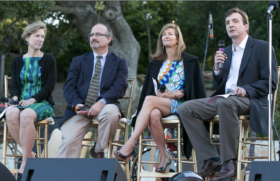
Bill Robinson: My first introduction was to what became the Bay Area Lyme emerging team, including meeting Carin Rollins and Bonnie Crater. Initially, we gathered in people’s homes, usually in the kitchen! Later on, I went to the Portola Valley office, and my colleague, Lisa Blum, and I presented updates on our projects. It must have been in the very early days when the organization was getting itself off the ground, defining its priorities, and defining how Bay Area Lyme could have an impact. My lab had already been working on Lyme disease with Dr. John Aucott and several others on the East Coast—even before the formation of what is now Bay Area Lyme. So, I think that’s one of the reasons my lab was identified as potentially one Bay Area Lyme could collaborate and work with on mechanistic studies.
Bay Area Lyme: I’d like to take you back to where your thinking and your hypotheses were. What were some of the congruences that you were seeking in the Lyme community in those early days? What were you looking to discover in collaborative ways?
Bill Robinson: Lyme disease is very, very complex, and there are probably multiple different conditions within that greater basket of diseases and conditions. For the medical community to really embrace all these variances of Lyme disease, we need better ways to define these variances molecularly and serologically. This molecular delineation is what will result in a much broader and better definition of the disease. This is how the medical community will better understand Lyme, which will ultimately result in patients who are suffering from Lyme disease receiving better care. Likewise, I’m of the mind that the way you best develop therapies is by understanding the underlying mechanism of the disease. Then, you use that insight to develop a therapy targeting that mechanism.
“Lyme disease is very, very complex.”
– Bill Robinson, MD, PhD
Emerging Leader Award and Lyme Disease Biobank Spur Research Gains
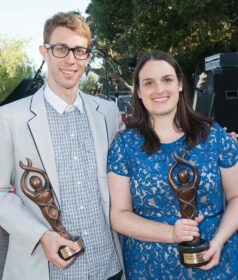
Bay Area Lyme: When you became connected to Bay Area Lyme Foundation, Lisa Blum was already in your lab, and Wendy Adams, Bay Area Lyme’s Research Grant Director, came up with the idea of Bay Area Lyme’s Emerging Leader Award. How did that further develop your lab’s relationship with our organization?
Bill Robinson: Lisa Blum is a super talented and insightful scientist, and in science, you always are in search of money and samples and collaborators. Bay Area Lyme provided all of these things to help support her work—and my lab’s work—with 1) funding, 2) access to certain samples, and 3) connections with people. Bay Area Lyme has created an outstanding network of investigators to try and broaden collaborative synergies.
Bay Area Lyme: Let’s talk about the Lyme Disease Biobank because I believe that you were at some of the initial meetings with John Aucott, Bonnie Crater, and Wendy Adams before we launched our biobank. Was the need to get samples from people with Lyme disease already on your radar at that time?
Bill Robinson: Absolutely. Without samples from well-characterized patients, and also certain types of samples—particularly blood cells that are frozen in a way that can be analyzed using cutting-edge techniques—it’s very hard to conduct investigations. Those samples are really enabling research. I was involved in the NIH consensus meeting, the New York City meeting, and other biobank meetings, working with Liz Horn to promote her efforts to establish the Bay Area Lyme biobank (now known as the Lyme Disease Biobank).
Understanding the Inflammatory Mechanisms Behind Persistent Lyme
Bay Area Lyme: You already had a relationship with John Aucott at that time as he was getting his SLICE Study up and running. This early collaboration to discover what was happening in Lyme disease patients was—and still is—elemental to the pursuit of Bay Area Lyme’s mission. But the fact that you are both very early characters who are still involved in Bay Area Lyme’s story is really important. I’d like to delve into your relationship with John Aucott a little bit more in terms of the importance of your collaboration and sharing of knowledge.
Bill Robinson: John has been a fabulous collaborator over the last 15 years. We’ve worked together on multiple different projects to better define serologically and molecularly what post-treatment Lyme disease (PTLD) is and what are the underlying inflammatory mechanisms. He’s doing outstanding work and rigorously, clinically characterizing these cohorts (of samples in his SLICE study) and applying the latest technologies to gain new insights.
“Bay Area Lyme has been an excellent steward of its resources and deployed them in highly appropriate ways to advance the field of Lyme disease research.”
– Bill Robinson, MD, PhD
Bay Area Lyme: In terms of your work, how can we put it in a nutshell so that people reading this interview can understand what you are investigating? What is it that you are asking of science in your specific investigations? What is different from what other people are doing? And how would you describe it simply?

Bill Robinson: We’re a B cell and antibody laboratory, so we study the role of B cells and the antibodies they produce and use those antibodies to discover target antigens for autoimmune conditions. So, we are investigating and defining the autoimmune component. It’s not always present in Lyme disease patients, but it’s present in some, and this is our forté. It’s very aligned with the interests of the field and collaborators, such as John Aucott. Dr. Monica Embers is another research scientist who we’ve had very synergistic interactions with.
Bay Area Lyme: How would you characterize where you are now and where you think you’re going with your investigations into Lyme vis-à-vis the underlying inflammatory aspect of the immune system?
Bill Robinson: I think we have identified some autoantibodies being produced in these PTLD (post-treatment Lyme disease) patients. And I think that’s a transformative insight because it also provides an explanation for why these people are ill, and it could give rise to therapies that would target those immune responses. I think that there are other subsets of PTLD. Perhaps there is the persistence of pathogens in some patients. There have been several landmark papers that show a lot of persistent COVID symptoms, and long COVID is associated with persistent SARS-CoV-2, so I think a long-held hypothesis is that there’s persistence of Borrelia in some individuals, so there’s likely a subset that has some autoimmune basis. There’s likely some subset that’s a persistence of Borrelia, and there are likely other subsets where there are other mechanisms. None of these complex diseases like Lyme disease are a “one size fits all” answer in my experience, clinically.
New Technologies Bring Hope
Bay Area Lyme: What kind of hope would you give to people who are currently struggling with post-treatment Lyme disease or chronic/persistent Lyme?
Bill Robinson: I think there are a lot of reasons to have tremendous hope that there will be new insights that will enable current therapies to be applied effectively to treat the condition and the development of new therapies that will also effectively treat Lyme disease. I think we’re learning a tremendous amount, and we don’t have all the answers now, but I think science is moving at a speed that is much more rapid and expedited than ever before with new technologies and our ways of making antibody therapeutics. I think there are a lot of reasons to be very hopeful.
“I think there are a lot of reasons to have tremendous hope that there will be new insights that will enable current therapies to be applied effectively to treat the condition and the development of new therapies that will also effectively treat Lyme disease.”
– Bill Robinson, MD, PhD
Why Philanthropy is Critical for Lyme Research
Bay Area Lyme: What would you say about the role of philanthropy in Lyme disease?
Bill Robinson: Philanthropy is very important. Philanthropy is mission-critical to advance the field of Lyme disease research. I think Lyme disease is a neglected area of human disease. What I mean by neglected is that it is not fully addressed by the funding agencies to the degree that it impacts people, and also not necessarily fully addressed by the medical community to the degree that it might be. There are opportunities to advance rapidly on both fronts. Most funding agencies have specific sets of diseases and areas that they fund research on. And although NIH, DOD, and others do fund Lyme research, more funding is mission-critical. You can’t do research without funding. It simply doesn’t happen. Bay Area Lyme Foundation has provided funding and a collaborative network and established the Lyme Disease Biobank.
Bay Area Lyme: What would you say to scientists who are looking at coming into the field of Lyme? Do you see this as a field where growth is still possible? Is it an exciting place for people to come into versus where it was 10-15 years ago when it was a neglected part of the medical research community?
Bill Robinson: There are many exciting scientific and clinical opportunities in Lyme disease. And we need the next generation of physician-scientists coming to work on Lyme disease to apply their expertise and their insights. Science doesn’t happen, lickity split. You don’t just do a little bit of funding and all of a sudden solve a complex problem. You build incrementally—frequently over many years—and then that leads to transformative advances. And the investment is one that requires persistence. Human disease would have been solved decades ago if it was simple. But when you look at the whole spectrum of human disease, we’re in this continuum of advancing these fields. Different fields cross-pollinate and provide insights that are applicable across diseases. I think having Lyme researchers funded as well as possible and getting access to samples and the latest technologies and approaches is really critical.
“Science doesn’t happen, lickity split. You don’t just do a little bit of funding and all of a sudden solve a complex problem. You build incrementally—frequently over many years—and then that leads to transformative advances.”
– Bill Robinson, MD, PhD
Academic research and academic science operate on a shoestring budget, but grad students, postdocs, and research assistants still have to make a base salary to survive. There’s this myth that when you’re at UCSF or Stanford University, or any university, you receive money from the university. That’s not how it works. We are all privileged to be based at a university that provides a scientific environment, but we are responsible for paying all of our salaries and providing all of our supplies. We don’t receive money from Stanford. People at UCSF don’t receive money from UCSF. We are actually taxed on all grants and money that we bring in, but I would argue that that’s very appropriate because you need accounting and management.
How Funding Science Works at the University Level
Bay Area Lyme: What would you say to donors who read this conversation in a blog and who are trying to decide whether they should continue to give money to support Lyme research? If we are to believe reports in the media, a lot of recent articles seem to be signaling, “Oh, we’re going to get a vaccine, and we’re going to be solving Lyme disease! We’re almost at the point where this problem is going to go away!” But we know that’s not the case. So, what would you say to donors?
Bill Robinson: I think there’s a huge opportunity to still have an impact and to make a difference. I think a vaccine may be effective at preventing people from getting a Borrelia infection and thereby preventing them from getting Lyme disease. But I think it’s unlikely that it’s going to help people who already have Lyme disease, unfortunately. It might help some people with persistent infection, but people who have an autoimmune reaction to the infection or other aspects are more complicated cases. It’s unlikely that a vaccine that protects against infection in an uninfected individual is going to help people with established disease, just like HIV vaccines.
“It’s very simple: If there’s no Lyme disease research funding, people aren’t going to be able to work on Lyme disease.”
– Bill Robinson, MD, PhD
Bay Area Lyme: Are you saying that there’s still an ongoing need for financial support from the Lyme community?
Bill Robinson: Absolutely. And it’s mission-critical because, for most labs, funding has a huge impact on what you work on. You need to work on areas where you can get enough grant support to justify working on it because you have to pay your research team—the grad students, the postdocs, and the research assistants. If you don’t have funding to pay them, you work on something else where you can get enough funding to pay them. That’s the hard reality. And no, we don’t receive money from the university. You have to bring in your resources to conduct a program. It’s very simple: If there’s no Lyme disease research funding, people aren’t going to be able to work on Lyme disease.
Early Research Projects Still Inform Today’s Science Investigations
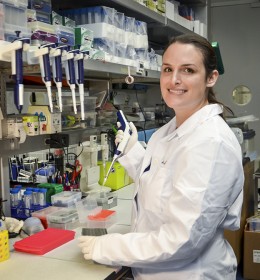
Bay Area Lyme: Let’s talk about Lisa Blum’s Emerging Leader Award, the project she was working on, and the early funding you received from Bay Area Lyme. As you said before, science sometimes moves slowly in stages over decades. How is our initial grant and that initial project continuing to inform work that’s happening now?
Bill Robinson: Lisa did the initial B cell and antibody repertoire sequencing studies and generated an initial collection of antibodies that are generated in both acutely infected individuals, as well as in post-treatment Lyme disease (PTLD) syndrome individuals. This work seeded the hypotheses. It identified a bunch of the targets in Borrelia that are associated with effective responses that clear the infection and result in a return to health. Lisa showed that a robust B cell response against certain Borrelia proteins correlated strongly with a return to health and that other types of immune responses—including the production of autoantibodies against self-proteins—were associated with the development of post-treatment Lyme syndrome. So, I think her results supported certain hypotheses and the basis for the disease that laid the foundation for the studies we are extending now to further define the role of the immune system in both clearance as well as in pathogenic responses that cause PTLD syndrome.
“Bay Area Lyme has been very committed to supporting the best science and helping advance the field. It’s been a great and synergistic set of interactions. But there’s a lot of work still to be done.”
– Bill Robinson, MD, PhD
Does Epstein Barr Virus Play a Role in Lyme Disease?
Bay Area Lyme: What projects or areas of research are you specifically excited about? As you look ahead to say the next five years, for example, what’s your intuition telling you about what’s going to be happening?
 Bill Robinson: We’re very interested in further defining the role of autoimmunity in a subset of post-treatment Lyme syndrome. We’re very interested in the role of Epstein Barr Virus (EBV) as a potentiator of Borrelia-induced autoimmunity and autoinflammatory responses. Bay Area Lyme is funding our lab’s multi-year project on that topic. Your foundation has been very committed to supporting the best science and helping advance the field. I applaud that and have appreciated the opportunity to work with Bay Area Lyme. It’s been a great and synergistic set of interactions. But there’s a lot of work still to be done. We need to further define the molecular basis for protective responses that clear Borrelia and pathogenic ones that result in PTLD. I believe that is the key objective because from that arises diagnostic tests that are aimed at those mechanisms, and it also gives rise to the insight that you need to make an effective therapy.
“We need to further define the molecular basis for protective responses that clear Borrelia and pathogenic ones that result in PTLD. I believe that is the key objective because from that arises diagnostic tests that are aimed at those mechanisms, and it also gives rise to the insight that you need to make an effective therapy.”
– Bill Robinson, MD, PhD
Bay Area Lyme: Anything else that you would like to share?
Bill Robinson: I applaud everything Bay Area Lyme is doing, and we need to continue on the trajectory because I think you are doing a fabulous job and having a real impact and making a real difference, but our work is not done. I think this is the right trajectory. I think it is on target. But we need to continue to advance the field. Hopefully, that’s going to result in the next generation of diagnostics and therapies that help people who are suffering from Lyme disease get appropriately diagnosed and appropriately treated so they can be cured and live a normal, full life. Bay Area Lyme has been an excellent steward of their resources and deployed them in highly appropriate ways to advance the field of Lyme disease research.
Bay Area Lyme: Thank you for spending time with us today, Bill. We appreciate everything that you do for the Lyme disease community and your long-term relationship and collaboration with Bay Area Lyme.
William Robinson, MD, PhD, Professor of Medicine, Stanford University Dept. of Medicine (Immunology & Rheumatology). Dr. Robinson is a board-certified rheumatologist at Stanford’s School of Medicine and has clinical practices affiliated with the VA Hospital in Palo Alto. He is also the Chair of the Stanford Lyme Working Group (SLWG). His laboratory studies the molecular mechanisms of autoimmune and rheumatic diseases and develops therapies to treat rheumatoid arthritis, multiple sclerosis, and osteoarthritis. The lab is a part of the Division of Immunology and Rheumatology in the Department of Medicine, the Program in Immunology, and the Center for Clinical Immunology at Stanford (CCIS) at Stanford University School of Medicine. It is also part of the Institute for Immunity Transplantation and Infection (ITI) at Stanford. This blog is part of our Bay Area Lyme Spotlights blog series. Bay Area Lyme Foundation provides reliable, fact-based information so that prevention and the importance of early treatment are common knowledge. For more information about Bay Area Lyme, including our research and prevention programs, go to www.bayarealyme.org.
I appreciate the work of Dr. Robinson and his colleagues, but it is unfortunate that they are focusing only on people with post-treatment Lyme disease (PTLD) and not including those of us with chronic Lyme disease. There is not data available on the number of people with chronic Lyme disease, but from anecdotal evidence, many people never got the initial antibiotics because they didn’t know they had Lyme disease. It would be a big boost to his research and help to the Lyme disease community if he would include that group of people also.