FOR IMMEDIATE RELEASE
Bay Area Lyme Foundation Now Accepting Applications for 2024 Emerging Leader Award and Grant
Annual grant seeks to attract innovative researchers with a new approach for diagnosing and treating tick-borne diseases
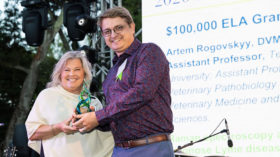
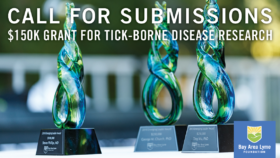
PORTOLA VALLEY, Calif., October 26, 2023—Bay Area Lyme Foundation, a leading sponsor of Lyme disease research in the US, is announcing a call for entries for their 2024 Emerging Leader Awards (ELA), which aim to recognize U.S. researchers from academia or the private sector who bring new approaches to the field of Lyme disease and embody the future of Lyme disease research leadership. This year, the Foundation ELA will present a $150,000 award for a researcher who is at the post-doctoral level through associate professor level.
While applicants must have a defined scientific approach to advancing diagnostics and/or therapeutics for Lyme disease, the grants are open to researchers from other therapeutic areas as well as those who have previously worked in Lyme disease research. Applications will be accepted through March 1, 2024 at 11:59pm, Pacific Time. The full criteria and application for this award can be found here.
“The world is seeing firsthand the damage that infections can cause – both in acute and chronic forms –and Lyme is no exception. Even today, it presents a significant hurdle for the scientific research community,” said Wendy Adams, research grant director Bay Area Lyme Foundation. “We intend for our Emerging Leader Award to encourage creative, driven scientists to embrace the challenge of developing accurate diagnostic tests and effective therapeutics for various stages of tick-borne diseases.”
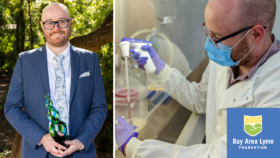
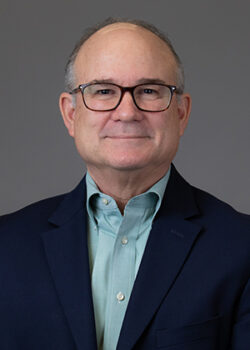 In this blog, part of our 10-year anniversary blog series, we talk with John Aucott, MD, Associate Professor of Medicine at Johns Hopkins University, Director of the Lyme Disease Research Center, about his work and how his investigations are helping us understand persistent/chronic Lyme infections. A long-term collaborator and grant recipient of Bay Area Lyme Foundation, Dr. Aucott reflects on his history with our organization, the ongoing plight of Lyme disease patients, and the slow growth in government funding for investigations into the disease. He talks about the early days of identifying the need for well-characterized samples from Lyme patients and his role in helping launch biobank programs, including his own SLICE Study Biorepository and BAL’s Lyme Disease Biobank.

 Dana Parish:
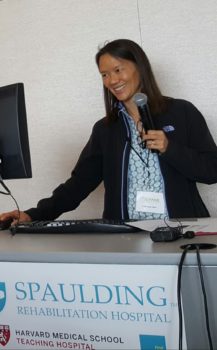 In this conversation between Ticktective™ host Dana Parish and Harvard-trained