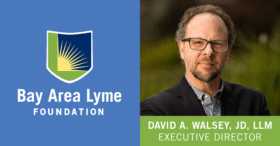
A Leader Who Understands the Journey: Welcoming David Walsey as Bay Area Lyme Foundation’s New Executive Director

Bay Area Lyme Spotlight Series


“Science drives our mission, but patient stories remind us why the science matters.”

– David Walsey

As David Walsey steps into his new role as Executive Director of Bay Area Lyme Foundation, he brings more than professional expertise. He brings lived experience of diagnostic uncertainty, immune dysfunction, co-infections, and the long arc many families travel before answers emerge. For patients, caregivers, and supporters of Bay Area Lyme, David’s leadership signals both continuity and momentum: a future rooted in rigorous science, compassionate leadership, and hope grounded in progress. “It’s been a long journey to get here,” David says. “We’ve spent nearly a decade navigating tick-borne disease as a family. That experience changed everything for us.” Dana Parish interviewed David as part of our Ticktective video podcast series. Watch or listen to the complete interview.

When Symptoms Don’t Fit the Textbook

Nearly ten years ago, David’s son began experiencing a constellation of symptoms that defied easy explanation. Despite multiple medical evaluations, no unifying diagnosis emerged. When Lyme disease was finally identified, the family initially felt relief. “I thought this was a solvable, short-term problem,” David recalls. “You treat it, and life goes back to normal.”
We Need a New Generation of Lyme Doctors: James Bruzzese, MD, is Leading the Way

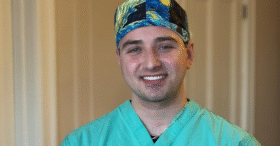
James Bruzzese

Bay Area Lyme Spotlights Series


“Some institutions are evolving in research and education, but it’s not translating to clinical practice.”

– James Bruzzese, MD

When James Bruzzese, MD, talks about Lyme disease, he doesn’t speak in abstractions. He speaks as a brother who watched his sister lose her ability to walk; a son who watched his father leave his job to become a full-time caregiver; and as a medical student who sat in lecture halls knowing that what was being taught about Lyme and tick-borne disease was grossly incomplete.

Now, as a young physician preparing to open a practice dedicated to treating Lyme and tick-borne disease patients in New York, James represents something the Lyme community urgently needs: a new generation of doctors who understand that Lyme is real, that patients deserve better, and that the status quo must be challenged.

“It Was Traumatic. We Thought We Might Lose Her.”

Bay Area Lyme Foundation Opens Applications for 2026 Emerging Leader Awards and Research Grants

Emerging Leader Award 2026 call for entries

FOR IMMEDIATE RELEASE

Bay Area Lyme Foundation Opens Applications for 2026 Emerging Leader Awards and Research Grants

Annual program to fund two $150,000 grants to revolutionize diagnosis and treatment of tick-borne diseases, including new award focused on co-infections

PORTOLA VALLEY, Calif., October 22, 2025 – Bay Area Lyme Foundation, a leading sponsor of Lyme disease research in the US, today announced its call for applicants from academia and the private sector for the 2026 Emerging Leader Awards (ELA). These annual awards recognize innovative researchers advancing novel approaches in tick-borne disease diagnostics and treatments, while embodying the future of research leadership in this critical field.

In 2026, Bay Area Lyme Foundation will award two $150,000 ELA grants:

  • Lyme Disease Award will support creative approaches to advancing diagnostics and/or therapeutics for Lyme disease, continuing the legacy started more than a decade ago.
  • Tick-borne Pathogen Award is a new grant to support research on non-Borrelia tick-borne pathogens/infections occurring in the US, with preference for bacterial and parasitic pathogens. Projects may address co-infections in combination with Borrelia burgdorferi or as stand-alone investigations. Viral infections (e.g., Powassan virus, Heartland virus) are excluded from this category.

Applications are due by February 15, 2026, at 11:59pm PT. Eligible applicants include academic and private-sector researchers at the post-doctoral through associate professor level (or equivalent in industry), including those new to Lyme and tick-borne disease research. All applicants are encouraged to request samples from the Lyme Disease Biobank.

Applicants must demonstrate scientific leadership, a strong supporting rationale, and the ability to generate proof of concept within 12–24 months. While diagnostic and therapeutic approaches are of particular interest, all areas of research relevant to patients will be considered. Submissions require a research proposal and at least one supporting letter from a supervisor or Principal Investigator.

The full criteria and application can be found here. Awardees will be announced at LymeAid in May 2026.

  Science Translational Medicine Study Funded by the Bay Area Lyme Foundation Identifies FDA-approved Piperacillin as More Effective, Targeted Treatment for Lyme Disease

Brandon Jutras

FOR IMMEDIATE RELEASE 


  Science Translational Medicine Study Funded by the Bay Area Lyme Foundation Identifies FDA-approved Piperacillin as More Effective, Targeted Treatment for Lyme Disease

An additional Science Translational Medicine study also funded by Bay Area Lyme Foundation uncovers how lingering bacterial cell wall molecules may contribute to chronic Lyme symptoms  

PORTOLA VALLEY, Calif. April 23, 2025 – Bay Area Lyme Foundation, a leading sponsor of Lyme disease research in the US, announces two pre-clinical studies published in the peer-reviewed journal Science Translational Medicine. The studies demonstrate promising implications for improved Lyme disease treatment and understanding of chronic Lyme through peptidoglycan, a molecule found in the cell wall of the bacterium, Borrelia burgdorferi (Bb), which causes Lyme disease. The first study finds piperacillin, an FDA-approved treatment for pneumonia that inhibits peptidoglycan production, may be a more effective treatment for Lyme disease than the current “gold standard” treatment, doxycycline, which is not effective for up to 20% of patients. The second study uncovers how lingering peptidoglycan builds up in the joint fluid and liver, contributing to chronic Lyme symptoms, which affect over 20% of patients treated for Lyme disease.

“Piperacillin may be a game-changer for improving Lyme disease treatment, which is currently a challenge for researchers and physicians. Furthermore, our new mechanistic understanding of how piperacillin affects peptidoglycan synthesis is unexpectedly informing our development of a biomarker-based approach to diagnose acute Lyme disease,” said Brandon Jutras, PhD, associate professor of Microbiology-Immunology at Northwestern University Feinberg School of Medicine, and a Bay Area Lyme Foundation 2021 Emerging Leader Award winner. “Our second study explores the role of peptidoglycan in chronic Lyme symptoms; peptidoglycan influences an inflammatory and chronic illness response for weeks or even months after infection, adding to the growing evidence that remnants of bacteria and viruses can stick around and keep affecting the body, similar to the occurrence of Long COVID in some patients.”

Pathogens and Persistence: The Chronic Disease Drivers

Dr Steven Phillips Ticktective

BAL “Quick Bites” Series


“I’ve always said that the FDA has been captured by the pharmaceutical industry. They don’t have our best interests at heart. You shouldn’t be funded by the people you’re supposed to be regulating.”

– Steven Phillips, MD

ChronicTicktective host, Dana Parish, talks with her longtime collaborator and co-author of Chronic, Dr. Steven Phillips, a Yale-trained internal medicine doctor who specializes in treating patients with complex, chronic illnesses, often driven by underlying infections like Lyme, Bartonella, Babesia, and now, COVID. In this podcast episode, Phillips discusses the importance of getting to the root cause of mystery autoimmune illnesses, rather than just suppressing symptoms. He states that many chronic infections can drive autoimmune conditions, including Lyme disease, and that Lyme tests are often inaccurate, with a sensitivity of around 50%. Phillips discusses how he recommends treating suspected tick bites to prevent the development of chronic Lyme disease and his use of a multi-antibiotic approach and pulsed antibiotic therapy to target persistent infections. He also discusses his experiences treating COVID-19, using a multi-modal approach including doxycycline, Paxlovid, Metformin, and other drugs and supplements, and the reactivation of infections like Bartonella in Long COVID patients. They also discuss how the chemical and pharmaceutical industries’ interests do not necessarily align with patients trying to get well. The interview highlights Dr. Phillips’s expertise in treating complex chronic infections and his holistic, evidence-based approach to patient care.

UCSF’s New Lyme Clinical Trials Center: Addressing the Need for Evidence-Based Treatments for Lyme & TBD Patients

Felicia Chow UCSF Clinical Trial

 Bay Area Lyme Happenings Series


UCSF has joined the Cohen Foundation’s nationwide Lyme Clinical Trials Network (CTN) for Lyme and tick-borne diseases. The new Lyme Clinical Trials Center (CTC) at UCSF was funded by a $1m grant from Bay Area Lyme Foundation and is led by Charles Chiu, MD, PhD, and Felicia Chow, MD, as co-principal investigators. As the West Coast ‘node’ in the network, UCSF’s new Lyme Clinical Trials Center will focus on interventional trials and diagnostic studies to improve diagnosis and treatment of Lyme disease.

In this presentation to patients with Lyme disease in Marin County just north of San Francisco, Dr. Chow explains how the CTC allows for a more diverse patient population to participate in Lyme clinical trials, which is critical for developing therapies that can help a wider range of patients. UCSF’s involvement also aims to help Bay Area Lyme raise awareness that Lyme disease is prevalent year-round in almost all California counties.

Dr. Chow discusses an upcoming trial at UCSF that will evaluate the use of transcranial direct current stimulation (tDCS) to improve cognitive symptoms in patients with chronic Lyme disease. Additionally, UCSF researchers are exploring the use of metagenomic sequencing and machine learning to develop more accurate diagnostic tests for Lyme and other tick-borne infections.

Note: This transcript of Dr. Chow’s presentation has been edited for length and clarity.

“I hope that through these clinical trials, we’ll be able to identify therapies that are helpful to patients and that, as a result, have an impact on clinically meaningful outcomes—from day-to-day function, quality of life, and all of those important measures that indicate that a treatment is successful.”

– Felicia Chow, MD

Bay Area Lyme Foundation Opens Applications for 2025 Emerging Leader Award and Research Grant

ELA Award 2026

FOR IMMEDIATE RELEASE 

Bay Area Lyme Foundation Opens Applications for 2025 Emerging Leader Award and Research Grant

In its tenth year, the annual grant encourages novel approaches to revolutionizing diagnosis and treatment of tick-borne diseases

PORTOLA VALLEY, Calif., October 31, 2024 – Bay Area Lyme Foundation, a leading sponsor of Lyme disease research in the U.S., invites innovative researchers from academia and the private sector to apply for the 2025 Emerging Leader Awards (ELA). These awards recognize those advancing novel approaches in Lyme disease diagnostics and treatments, while embodying the future of Lyme disease research leadership. This year, in its tenth anniversary, Bay Area Lyme Foundation’s ELA will present two $150,000 awards for researchers who are at the post-doctoral level through associate professor level or equivalent.

While applicants must have a defined scientific approach to advancing diagnostics and/or therapeutics for Lyme disease, the grants are open to researchers from other therapeutic areas in addition to those who have previously investigated Lyme disease. Applications will be accepted through March 7, 2025 at 11:59pm, Pacific Time. The full criteria and application for this award can be found at www.bayarealyme.org/our-research/emerging-leader-award/.

“The global impact of both acute and chronic infections has never been more apparent, and tackling an infectious disease as complex as Lyme requires innovative approaches and concerted efforts to drive progress in diagnostics and treatment,” said Wendy Adams, research grant director Bay Area Lyme Foundation. “Our goal with the Emerging Leader Award is to inspire ambitious and creative scientists to take on the challenge of advancing accurate diagnostics and effective therapeutics for various stages of tick-borne diseases.”

Keeping Frontline Workers Safe: New Program Will Educate Firefighters At Risk for Lyme Disease

Functional Medicine for First Responders

BAL Leading the Way Series


Dr Sunjya SchweigSunjya Schweig, MD, founder of the California Center for Functional Medicine, discusses a new program he is developing with funding from Bay Area Lyme to provide education and awareness about Lyme disease and the risks of tick-borne infections for firefighters. Firefighters have a profile of unique occupational exposures, including tick bites, and there is a significant lack of education on this topic. This new program aims to create professional, engaging videos featuring firefighters sharing their experiences and providing information on tick bite prevention, checking for ticks, and what to do if bitten. The goal is to roll out the program in California first, targeting professional firefighter and first responder organizations and eventually expanding nationwide. The exact number of firefighters living with Lyme disease is unknown, but it is acknowledged that they have both occupational and recreational exposures. This new program is seen as a way to bring awareness and education to this population and beyond.

“Lyme is not really on the radar for many firefighters. They may have had tick bites either in the line of duty or out mountain biking or hiking when they’re off duty, but many don’t know that tick-borne disease is a big problem.” 

– Sunjya Schweig, MD

 New Study Demonstrates Protein May Provide Protection Against Lyme Disease

Mikki Thal, PhD

FOR IMMEDIATE RELEASE


 New Study Demonstrates Protein May Provide Protection Against Lyme Disease

Sweat protein protects against Lyme disease in vivo and is a potential therapeutic avenue for drug development

PORTOLA VALLEY, Calif. April 3, 2024—Bay Area Lyme Foundation, a leading sponsor of Lyme disease research in the US, recently announced the identification of an unknown common missense variant at the gene encoding for Secretoglobin family 1D member 2 (SCGB1D2) protein that increases the susceptibility for Lyme disease as well as two previously known variants. Published in the peer-reviewed journal Nature Communications, this study shows normal versions of the SCGB1D2 protein prevent infection by Borrelia in vivo and appear to be a host defense factor present in the skin, sweat, and other secretions, opening an exciting potential therapeutic avenue for Lyme disease. This research was also featured on NBC10 News in Boston.

“We are excited that our international collaboration with Hanna Ollia’s group and our co-authors has turned up such an exciting and unexplored avenue in the body’s defenses against Lyme disease,” said Michal Tal, PhD, Principal Scientist in the Department of Biological Engineering at MIT, and a Bay Area Lyme Foundation 2018 Emerging Leader Award winner. “This discovery reveals a human protein with protective activity against the bacteria that cause Lyme disease, which we hope could lead to a future path for exploring new methods to prevent and treat Lyme disease.”

This research has shown that the genetic variant of the SCGB1D2 which creates a misshapen protein appears to be specific for Lyme disease and has not been previously reported as associated with any other disease, phenotype, or infection. The researchers also found that about one-third of the population carries a genetic variant of this protein that is associated with Lyme disease in genome-wide association studies (GWAS).

Dana Parish’s Personal Odyssey: Her Quest for the Right Diagnosis and Treatment of Lyme Disease 

BAL Spotlights Series


Dana Parish
Dana at The Voice where she performed her song “Broken Ones”

Dana Parish is a singer/songwriter based in New York City, signed with SonyATV. She is renowned for her captivating vocals and emotionally charged performances. Her debut single, ‘Not My Problem,’ from her album Uncrushed, reached the #23 spot on the Billboard charts, establishing her as one of the highest-charting independent artists in history.  She notably contributed two songs, ‘Thankful’ and ‘Always be Your Girl,’ to Celine Dion’s album Loved Me Back to Life. Additionally, her song ‘Someday I’ll Fly’ by G.E.M. became a #1 hit in China. Another one of her compositions, ‘Broken Ones,’ performed by Jacquie Lee, a finalist on Season 5 of The Voice, achieved chart success. A fearless advocate for the Lyme community, Dana champions the cause of individuals suffering from Lyme and tick-borne diseases. In May 2016, she delivered a heartfelt performance of ‘Pull You Through’ at LymeAid, Bay Area Lyme’s annual fundraising event, contributing to raising more than $815,000 for Lyme disease research. In 2021, she co-authored Chronic: The Hidden Cause of the Autoimmune Pandemic and How to Get Healthy Again with Steven Phillips, MD. Dana hosts the Ticktective podcast and video series for Bay Area Lyme Foundation and is a member of our advisory board.

In this interview, Dana Parish discusses her life before being diagnosed with Lyme disease and the challenges she faced in getting accurate diagnosis and correct treatment. She talks about her career in the music industry before she was bitten by a tick. Dana shares her experience with being misdiagnosed and the physical and mental symptoms she experienced. She also discusses the importance of raising awareness about Lyme disease and advocating for better treatment options.  Dana also touches on the similarities between persistent Lyme disease and Long Covid and the potential for overlap in research and treatment. She emphasizes the importance of being your own advocate and demanding proper treatment. Finally, Dana shares her thoughts on the current protocol for treating tick bites and the need for aggressive and early treatment.