Bay Area Lyme Spotlights Series
“Some institutions are evolving in research and education, but it’s not translating to clinical practice.”
– James Bruzzese, MD
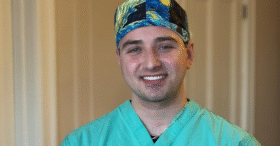
When James Bruzzese, MD, talks about Lyme disease, he doesn’t speak in abstractions. He speaks as a brother who watched his sister lose her ability to walk; a son who watched his father leave his job to become a full-time caregiver; and as a medical student who sat in lecture halls knowing that what was being taught about Lyme and tick-borne disease was grossly incomplete.
Now, as a young physician preparing to open a practice dedicated to treating Lyme and tick-borne disease patients in New York, James represents something the Lyme community urgently needs: a new generation of doctors who understand that Lyme is real, that patients deserve better, and that the status quo must be challenged.
“It Was Traumatic. We Thought We Might Lose Her.”
 James is the oldest of four siblings. His sister Julia, whose story touched people around the world after receiving a blessing from Pope Francis, became gravely ill after what should have been an easily recognized sign: a bull’s-eye rash. But no one recognized it. Her pediatrician dismissed early symptoms as growing pains. Fatigue was brushed off. Concerns were minimized. Over time, her health deteriorated. By the time the family realized something was terribly wrong, Julia was losing her ability to walk. “We were scared that we were going to lose her,” he recalls.
The family’s world became a round of hospital rooms, specialist visits, insurance battles, and overwhelming uncertainty. James watched his father leave his job to care for Julia full-time. The family faced devastating financial strain. For a time, they suffered in silence. For the Bruzzese family, Julia’s illness, deterioration, and then finally her Lyme diagnosis were, in James’s words, “A mountain of terrible news, controversy, neglect, uncertainty, thrown at you all at once.”
Julia ultimately became paralyzed from the waist down, and if you are unfamiliar with her story, you can see it here in The Quiet Epidemic, a 2022 documentary film funded in part by Bay Area Lyme Foundation. Although Julia remains in a wheelchair today, her story is also one of extraordinary resilience. Through years of treatment, endurance, and sheer force of will, she regained strength, clarity, and hope. And in a testament to her strength, Julia recently achieved something remarkable: she took the MCATs, applied to medical school, and has been accepted. “She went from nearly dying in a hospital bed to being accepted into medical school. That speaks volumes about what a warrior she is,” James says, clearly proud of his sister’s remarkable achievements.
Feeling Helpless Changed Everything
James had already been accepted into an accelerated medical program straight out of high school, the highly selective Sophie Davis/CUNY School of Medicine, before Julia became critically ill. Yet, like many 18-year-olds, he still carried doubts about whether medicine was truly his calling. But Julia’s illness erased all uncertainty. “Watching her suffer, watching my family suffer, and being completely helpless, I never wanted to feel that again.”
James describes his family as “fixers.” His father could repair anything with his hands. But Lyme was something no one in the family could fix. That helplessness became fuel and a drive to affect change in any way that they could.
“I was angry. I still am. And that anger drove me to learn everything I could so I could never be helpless again in helping someone I love, or a patient.”
– James Bruzzese, MD
Rather than give in to despair, James used his anger about Julia’s situation to spur himself along the path of his medical training. “I was angry. I still am. And that anger drove me to learn everything I could so I could never be helpless again in helping someone I love, or a patient,” he explains. The family faced many hardships as they pulled together to support Julia and each other as they navigated the financial, emotional, medical, and daily stress of their situation.
Medical Schools Still Not Teaching about Lyme
Despite his personal experience, James found that Lyme disease was barely acknowledged in his medical training. He shakes his head in disbelief at the memory: “We got one lecture on Lyme disease. One.” That lecture grouped Lyme with other vector-borne illnesses like malaria, and he recalls that the lecturer opened with a warning: if you see symptoms that look like Lyme, a swollen knee joint, for example, the medical students in the lecture hall were instructed to “think of something else first.”
“We got one lecture on Lyme disease. One.”
– James Bruzzese, MD
James challenged the logic of this during the lecture, asking about unreliable testing, early seronegativity, and the contradictions in clinical reasoning. The lecturer’s response revealed the troubling state of Lyme training for physicians: confusion, contradiction, and institutional rigidity were being passed down as education.
James continued to press for answers in the lecture, and begrudgingly, the doctor giving the talk conceded that if there was a suspicion of Lyme, the patient should be treated prophylactically with antibiotics. James notes the contradiction, wryly recalling “We started with ‘don’t think Lyme,’ and ended with ‘maybe you should treat anyway.’ That’s what we’re teaching future doctors.”
Later, during his residency training, James advocated for patients he believed had tick-borne illnesses. He backed up his recommendations with medical literature, attaching citations directly to his clinical notes. But it didn’t matter. “Even when my reasoning was supported by research, decisions were made based on optics and liability, not patient care.” James explains that the reason for this was the fear of insurance consequences, legal risk, and professional backlash, which often overrode clinical judgment.
Citing one instance where he was sure that the patient had Lyme, his attending physician, although agreeing with James’s diagnosis, insisted on getting a second opinion from an infectious disease (ID) doctor.
“Even when my reasoning was supported by research, decisions were made based on optics and liability, not patient care.”
– James Bruzzese, MD
The ID physician subsequently overrode James and the attending physician on the diagnosis, and the attending physician had to go along with the opinion, as doing otherwise could have ended in a malpractice lawsuit. “This is defensive medicine, and patients pay the price,” James notes.
The Shift Is Coming—But Not Fast Enough
However, James does see progress. Major institutions like Columbia and Mount Sinai have begun hosting Lyme conferences and adjusting curricula. And his own brother, also training to become a doctor, has helped push for curriculum changes at NYU and Stony Brook. But progress is inconsistent and rarely reaches bedside care. He notes that “Some institutions are evolving in research and education, but it’s not translating to clinical practice.”
“If doctors could treat Lyme patients without being punished by insurance companies, we’d be in a completely different world.”
– James Bruzzese, MD
But in James’s view, one of the biggest barriers remains insurance. “If doctors could treat Lyme patients without being punished by insurance companies, we’d be in a completely different world.”
 Building a Practice for Lyme Patients
Now, James is preparing to take a bold step: opening a new medical practice in New York dedicated to treating Lyme and tick-borne disease patients. He plans to incorporate not only medical treatment but also pain management, which is a deeply personal priority after watching his sister suffer from how Lyme impacted her body. “We must focus on treating the disease, which is essential, but quality of life matters too.” James is already recruiting nurse practitioners he can train, building a model of care that expands access rather than bottlenecks it.
His long-term vision is to scale the impact. Train other healthcare providers and build something sustainable. “I want to help everybody I possibly can.” And this drive is especially important right now as so many trailblazing Lyme doctors have recently died or are retiring from practice.
A Call to the Next Generation
James is deeply aware that many pioneering Lyme physicians are nearing retirement. The need for new Lyme and tick-borne disease clinicians is urgent. And his message for medical students, residents, and young clinicians who are watching this space from the sidelines is: “We need soldiers. We need people willing to step into this gap.”
“We need soldiers. We need people willing to step into this gap.”
– James Bruzzese, MD
He describes Lyme medicine not only as meaningful, but intellectually compelling due to its multi-system nature. He notes, “You have to understand the entire body. You’ll learn more medicine treating Lyme than in almost any other field.” But more than just the clinical expertise aspects, James speaks to the human side of the work. “You will meet patients who have been dismissed for years, who arrive in tears, who have lost everything. And when you help them, even a little, it’s one of the most meaningful things you can experience as a physician.”
Why Bay Area Lyme Foundation’s work matters
Bruzzese expresses his appreciation for the organizations working to advance science, education, and awareness in this field, particularly Bay Area Lyme Foundation. “Bay Area Lyme Foundation does critical work for patients and for the future of care. The research, the education, the advocacy, it all matters.” He describes Bay Area Lyme Foundation as “lifesaving for the Lyme community,” emphasizing that the work being done today, funding innovative research for better diagnostics and therapeutics, will directly shape the quality of care that future physicians are able to deliver.
“Bay Area Lyme Foundation does critical work for patients and for the future of care. The research, the education, the advocacy, it all matters.”
– James Bruzzese, MD
There are no quick fixes for a disease as complex as Lyme. Progress depends on sustained investment in research science, which is precisely Bay Area Lyme’s mission, the better education of clinicians in medical schools, and the cultivation of thoughtful, well-informed doctors willing to engage deeply with the realities patients face.
Young physicians like James Bruzzese, who are willing to challenge the status quo, are part of that future. And Bay Area Lyme Foundation is committed to funding the science that will help make it possible for them to raise their voices on behalf of Lyme patients.
This blog is part of our Bay Area Lyme Spotlights series. If you require a copy of this article in a bigger typeface and/or double-spaced layout, contact us here. Bay Area Lyme Foundation provides reliable, fact-based information about Lyme and tick-borne diseases so that prevention and the importance of early treatment are common knowledge. For more information about Bay Area Lyme, including our research and prevention programs, go to www.bayarealyme.org.
Dr. Bruzzese: Original letter to your father:
May 2, 2026
Dear Mr. Bruzzese,
My wife, Alyse Hamilton, MD, and I watched your documentary about your beloved daughter, Julia, with great interest.
We pray she has greatly improved since the film was completed.
We have a most successful record with the majority of our patients with chronic Lyme.
We began to treat chronic Lyme over 10 years ago. We were warned by our attorney to avoid saying “chronic Lyme.”
With constant research, our protocols have evolved and improved dramatically over time. We have achieved very positive results for nearly all of our patients with advanced, chronic Lyme disease.
In fact, one of our earliest patients with chronic Lyme was 10 years ago. She was an RN who today is happy to speak to others about her results here.
We first learned chronic Lyme disease from Thomas Rao, MD. He was then the head of the Paracelsus Institute in Switzerland. We learned that many people might be bitten by a tick, but not all get Lyme disease. Our first thought was, “could this be because of the strength of an individual’s immune system?”
We also noted that the primary conventional weapon used by so many others was synthetic antibiotics. Aside from the fact that Dr. Rao said you only have a 10-day window to begin synthetic antibiotic use, their use will begin to quickly damage and even destroy the microbiome, the core element of a healthy immune system. As I am sure you are aware, the microbiome is made up of likely 80 trillion bacteria living mostly in your colon. These bacteria protect a human being. As opposed to some 20 trillion that are not so friendly to us.
For us, the use of synthetic antibiotics is like treating cancer with chemotherapy and radiation which also tend to damage and destroy the all-important immune system. We do not oppose their use in those patients that choose to do so. However, we focus heavily on rebuilding, protecting and strengthening the all-important immune system.
We have dramatically improved our treatment protocols over time. And have achieved positive results for the vast majority of our patients with advanced, chronic Lyme. I am sure you have heard this from many. Our results are indeed, most positive.
In short, today we employ 5 different elements:
1. Extremely high doses of IV vitamin C at “prodrug” levels. The dose is generally individualized between 50,000 mg to >100,000 mg per IV. It is administered in a tight series of IVs over 5-6 weeks. At these levels, IV vitamin c, as opposed to oral vitamin c, is a highly effective natural, selective antibiotic. It kills the negative bacteria and avoids harming the protective ones. Just as importantly, high dose IV vitamin c rebuilds the immune system at 20 different levels. It fuels macrophages and platelets. And stimulates natural killer cells. It is safe and effective under the direction of well trained and highly experienced medical practitioners.
2. Biofilm Busters. The second tool we learned to use was several enzymes to “bust” and prevent biofilms. Lyme microbes can surround themselves with these biofilms to shield themselves from attack. The natural enzymes we employ are serapeptase, from the silkworm, lumbrokinase, from the earth worm, and the powerful nattokinase from the Japanese food, natto. These natural enzymes “bust” and prevent the Lyme microbes, which Dr Rao said can average 7 Lyme microbes in each patient, from protecting themselves.
3. Low Dose Naltrexone (LDN). The third element we employ is LDN. This is a highly effective repurposed, extremely low dose medication with some of the lowest levels of reported side effects. If a patient is not on opioids, in very low doses LDN increases the daily endorphin levels (peptides produced in the brain to block pain and increase a sense of wellbeing). But even more importantly, LDN re-balances (modulates) two critical cells in our immune system. When in balance (modulated), TH1 and TH2 cells kill viruses, intracellular bacteria and extracellular parasites and allergens. It is very inexpensive (our patients pay $50 to $90 for a 3-month supply) and it is easy to take. One capsule nightly.
4. Intravenous Ozonated Blood. Though nearly mocked by the FDA, IV ozonated blood is a strong anti-inflammatory with powerful antimicrobial effects in human beings. Dr. Hamilton’s instructor in the use of advanced ozone therapies, Robert Rowan, MD, used it in Africa to kill Ebola in 3-5 days. This is published in PubMed and still ignored. We do not use Dr. Rowan’ s direct route, but we do collect a small amount of blood (200 mL), ozonate it and infuse it back into the patient. We also use the more powerful “Multipass hyperbaric Ozone treatment.” We have seen very positive results. And very importantly, IV ozonated blood challenges the immune system with cytokines which make the immune system yet stronger. Its safety record in the hands well trained and experienced doctors and nurses is also very positive.
5. Pre and Probiotics. The use of prebiotics feeds the protective bacteria in our gut’s microbiome. The use of a well-tested and trusted probiotics such as, VSL-3, is also used to repopulate and rebuild the critical immune system.
We long ago veered away from Dr Horowitz because of his excessive use of synthetic antibiotics.
We learned how to quickly reverse a Herx reaction from Dr. Tomy Levy, MD, JD, one of our early instructors.
We focus on:
1. Rebuilding, rebalancing and challenging the critical immune system.
2. Preventing Lyme microbes from protecting themselves.
3. Attacking the microbes directly with high doses of IV vitamin c and ozonated blood.
If you would like to learn more, please feel free to contact me.
I would be happy to share our protocols with you and/or a well-qualified medical provider closer to you.
I know you have travelled near and far with what seems like minimal results.
We would be pleased to treat Julia here.
Whatever you choose, we wish the best of success for you and your precious daughter.
God bless,
Dr Michel Boxenbaum
PS: Our new Chronic Lyme page will be posted on our new website in the next 1-2 weeks.
Michael Boxenbaum, DNM, PhD
Alyse Hamilton, MD, Medical Director
Advanced Health and Vitality Center
7201 West 78th Street,
Suite 200
Bloomington, MN 55439
We are on Long Island how can we get on this Dr list my adult daughter has Bartonella severe
john, when you eventually open, would you address this and have this info in the info lymedisease.org shares with its followers ok?
complete address,
phone/fax no.
AGES OF KIDS YOU WILL SEE…we don’t have that many kids llmds across the entire USA!!
types of treatments you do: abx, natural, etc. other
1st visit cost ..
followup cost ..
Dr.Somer Delsignore of Hudsonvalleyintegrativehealth.com sees patients from all over the world. She is located in NY and specifically treats peds. I have 2 children who were severe with infections and co-infections and they are doing amazing actually really thriving. I actually have read that Dr.Delsignore treated Jame’s sister.
How do we contact Dr. James Bruzzese if we would like to be considered for treatment by him? We have an 11 year old daughter who has been navigating Lyme disease, erlichia and Alpha gal syndrome for 6 years.
Erin, we are very enthusiastic about Dr. Bruzzese and anxiously await his availability. Early this summer is when we might know more.
Will he also be involve in Chronic (Post) Neurological Lyme, Co-Infections and Persisters. Can people from other states have video visits and obtain blood work etc in their state and submit it to him.
We would like to make an appointment as well.
My son has Bartonella lines and no one seems to know how to help that isn’t alot of money.
We are on Long Island NY
Please put us on a list
My husband has lymes
I have lymes
But my son is suffering
Quit sports
Lucas 3/08
Best of luck. My daughter has suffered for 14 years because of being misdiagnosed. She saw over 20 doctors been to 3 hospitals and spent 6 weeks at a wellness center all because they wouldn’t start her on antibiotics. Her illness should have been based in clinical symptoms. I did my reseach and kept telling the Drs I felt sure that is what she had but because she had 4 negative tests they wouldn’t treat her. She has lost her job her home and her health.
I was very sick and my primary sent me to rheumatologist, OBGYN, I finally found a one letter doctor in Florida. It took me about two years to get better right before my Primary retired. He told me he didn’t believe in Lyme disease.!
Please look into Lyme Disease being chronic EBV, possibly a strain that has been identified yet, with the tic bite and bullseye rash being a trigger that lowers your immune system causing the underlying virus to thrive. Treating my Lyme as chronic EBV is what has healed 80-90% of my symptoms
How did you treat EBV? What was the protocol?
Thank you in advance for responding. Diana
This is the future, let us pray that those in power come to understand and actually do something about it. Thank you for your coutage and being our voice.
Thank you soo very much for all the work that u will be starting. God bless you 🙏
Will u take Medicare?
When will u open your office?
Thank you so much for your education of Lyme disease and for understanding that it is real and life changing.
You better make sure you have plenty of help in your practice because patients will be lined up to see you Dr Brizzese! I’m in NJ and will be one of them! Thank you for caring about Lyme patients!
I took medical classes in 2009. In two of those, Lyme was discussed, as hard to get, and easy to treat. Unfortunately, I didn’t realize that all my chronic issues I had since 1980 started after a tick bite. Then one day in 2011, there were four or five things that happened where I had potential exposures to something. I was in intense pain that night, and ended up in the ER for three days. I continued to get worse, and tried going from one doctor to another. Finally, I went to one, I gave my history, and I was then asked if I was ever bitten by a tick. My answer was several times. I finally found someone that saved my life(it gave me cellulitis. However, now I have new infections that no one seems to know how to treat them. I was very disappointed that I’m still sick, ended up on disability, and I see no hope to find anyone that can treat me, or that even wants to. The year before I spent thousands on schooling, and I was never able to use that knowledge.
Thank you so much for your courage, willingness and generosity to address this severe deficiency in medical care for people suffering with Lyme Disease and co infections. It is MUCH needed! I myself along with my 2 kids suffer greatly with this as thousands do also.
I was paralyzed, recovered but mobility later again declined and I have been just existing since 2019 barely able to walk or stand. It is absolutely most horrific disease that has been criminally denied long enough. And people will only get it or care after they themselves or a love one suffers.
Best wishes to you Dr. Brizzese. You are taking the old narrative and will make sustainable change for future generations to have a new one!