A Leader Who Understands the Journey: Welcoming David Walsey as Bay Area Lyme Foundation’s New Executive Director

Bay Area Lyme Spotlight Series


“Science drives our mission, but patient stories remind us why the science matters.”

– David Walsey

As David Walsey steps into his new role as Executive Director of Bay Area Lyme Foundation, he brings more than professional expertise. He brings lived experience of diagnostic uncertainty, immune dysfunction, co-infections, and the long arc many families travel before answers emerge. For patients, caregivers, and supporters of Bay Area Lyme, David’s leadership signals both continuity and momentum: a future rooted in rigorous science, compassionate leadership, and hope grounded in progress. “It’s been a long journey to get here,” David says. “We’ve spent nearly a decade navigating tick-borne disease as a family. That experience changed everything for us.” Dana Parish interviewed David as part of our Ticktective video podcast series. Watch or listen to the complete interview.

When Symptoms Don’t Fit the Textbook

Nearly ten years ago, David’s son began experiencing a constellation of symptoms that defied easy explanation. Despite multiple medical evaluations, no unifying diagnosis emerged. When Lyme disease was finally identified, the family initially felt relief. “I thought this was a solvable, short-term problem,” David recalls. “You treat it, and life goes back to normal.”

Improving Lyme Diagnostics, Biomarkers, and Treatment: Inside Dr. Peter Gwynne’s Research

Peter Gwynne, PhD

Bay Area Lyme Leading the Way series


“I wanted to be doing work that was driven by clinical need… and there are a lot of clinical needs in Lyme disease.”

– Peter Gwynne, PhD

Peter Gwynne, PhDFor too many people with Lyme disease, the journey begins with uncertainty. A missed rash. A negative test. Symptoms that don’t make sense. A diagnosis that comes too late, or not at all. Bay Area Lyme Foundation believes this must change. And we believe change happens through funding rigorous science, innovative thinking, and supporting researchers willing to tackle the hardest questions head-on.
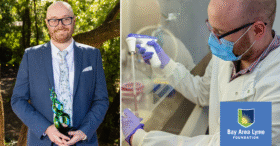
One of those scientists is Tufts researcher Peter Gwynne, PhD, a microbiologist whose work sits at the cutting edge of Lyme research and is the recipient of our 2022 Emerging Leader Award. We spoke with Dr. Gwynne to get an inside look at his work and understand how this may impact Lyme patients in the future. His focus is simple to state but complex to achieve: develop better diagnostics, identify meaningful biomarkers, and move the field toward treatments and even prevention strategies that could fundamentally reshape how Lyme disease is understood and managed.

Drawn to Lyme by the Urgency of the Need

Dr. Gwynne did not begin his career in Lyme disease. He trained in molecular microbiology, studying pathogens such as Salmonella and Staphylococcus, the bacteria responsible for serious infections, including those often acquired in hospital settings. But over time, he found himself seeking work that could make a tangible difference for patients.

We Need a New Generation of Lyme Doctors: James Bruzzese, MD, is Leading the Way

James Bruzzese

Bay Area Lyme Spotlights Series


“Some institutions are evolving in research and education, but it’s not translating to clinical practice.”

– James Bruzzese, MD

When James Bruzzese, MD, talks about Lyme disease, he doesn’t speak in abstractions. He speaks as a brother who watched his sister lose her ability to walk; a son who watched his father leave his job to become a full-time caregiver; and as a medical student who sat in lecture halls knowing that what was being taught about Lyme and tick-borne disease was grossly incomplete.

Now, as a young physician preparing to open a practice dedicated to treating Lyme and tick-borne disease patients in New York, James represents something the Lyme community urgently needs: a new generation of doctors who understand that Lyme is real, that patients deserve better, and that the status quo must be challenged.

“It Was Traumatic. We Thought We Might Lose Her.”

Bacterial Mechanism That Could Help Prevent and Treat Lyme Arthritis Identified by New Bay Area Lyme Foundation–Supported Study

Brandon Jutras, PhD

FOR IMMEDIATE RELEASE


Bacterial Mechanism That Could Help Prevent and Treat Lyme Arthritis Identified by New Bay Area Lyme Foundation–Supported Study

Research published in PLOS Pathogens highlights a cell wall–driven trigger of joint inflammation, pointing to new ways to target Lyme arthritis

PORTOLA VALLEY, Calif., January 20, 2026 — Bay Area Lyme Foundation, a leading sponsor of Lyme disease research in the United States, announced the publication of new research in PLOS Pathogens identifying a novel mechanism that may trigger Lyme arthritis, one of the most common and debilitating complications of Lyme disease in the US. The study provides new insight into how the structure of Borrelia burgdorferi peptidoglycan, a component of the bacterium’s cell wall, and its interaction with a Borrelia protein can provoke joint inflammation. In a preclinical model, subtle changes researchers made to the bacterium’s peptidoglycan structure nearly eliminated arthritis despite ongoing infection, suggesting new approaches to reduce Lyme arthritis and joint damage that may complement antibiotics by targeting inflammatory bacterial components.

“Understanding how these bacterial structures provoke inflammation is an avenue towards new approaches for limiting long-term joint damage and possibly treating patients whose symptoms persist despite standard antibiotic therapy,” said Brandon L. Jutras, PhD, lead author of the study and associate professor of Microbiology-Immunology at Northwestern University Feinberg School of Medicine, and a Bay Area Lyme Foundation 2021 Emerging Leader Award winner. “Our findings offer critical insight into how Lyme arthritis is largely driven by specific structural components of Borrelia burgdorferi that may be targeted independent of the other aspects of the infection.”

This new study demonstrates that the chemical makeup and physical structure of peptidoglycan, a structural component of the Borrelia cell wall, play a decisive role in determining whether joint inflammation develops. It also demonstrates how impeding peptidoglycan’s interaction with a specific Borrelia protein may impact the bacterium’s ability to migrate to and persist within joint tissue, resulting in near elimination of Lyme arthritis in the study.

A New Year Call to Action After December 15, 2025, HHS Roundtable

Charlotte Mao, MD, MPH

Bay Area Lyme Spotlight Series

By Charlotte Mao, MD, MPH, Bay Area Lyme Foundation

Chronic Lyme Disease patients have been ignored for too long. That must end now.

– Charlotte Mao, MD, MPH

A Long-Overdue Moment of Recognition

Starting in 2026, Lyme disease and other tick-borne disease patients and their families have some reason to be encouraged by the growing recognition of the realities they face and the prospect of continued research to support new diagnostics and treatments.

HHS Lyme Disease Roundtable


The December 15, 2025, Department of Health and Human Services (HHS) roundtable marked something rare and long overdue: federal recognition of patient need, grounded in scientific evidence presented by researchers, clinicians, and patient advocates. But patients need more than another moment of recognition. They need results. In 2026, the question is whether that recognition will translate into sustained action, measurable progress, and real improvements in care.

Accelerating Breakthroughs, Advancing Hope: How Bay Area Lyme Powers Lyme Disease Research

Bay Area Lyme Science Committee

Bay Area Lyme Leading the Way Series


“Every one of our success stories amplifies the ripple effect of philanthropy done right: targeted, strategic, and driven by measurable impact.”

– Katariina Tuovinen

For more than a decade, Bay Area Lyme Foundation has been rewriting the story of Lyme and tick-borne disease research. With a mission to make Lyme disease easy to diagnose and simple to cure, the Foundation has built a national reputation as a nimble, entrepreneurial engine for scientific innovation. Since its founding in 2012, Bay Area Lyme has invested more than $31 million to support over 60 groundbreaking studies and partnerships across 56 institutions nationwide, each one helping to transform the landscape of Lyme disease diagnostics, treatments, and prevention. 

At the heart of this success lies a small but mighty force: The Bay Area Lyme Science Committee, led by Research Grant Director Katariina Tuovinen, MS, MBA, MA, together with pediatric infectious disease physician Charlotte Mao, MD, MPH, and Liz Horn, PhD, MBI, Principal Investigator of Lyme Disease Biobank. Together, this team guides a grantmaking strategy that prizes bold ideas, cross-disciplinary collaboration, and measurable impact—an approach that has introduced new talent, fresh perspectives, and innovative technologies to a field that desperately needs them.

New Bay Area Lyme Foundation Study Reports That Only One-Third of Early Lyme Patients with On-Going Symptoms Followed up with their Healthcare Providers

Lyme Disease Biobank

FOR IMMEDIATE RELEASE


New Bay Area Lyme Foundation Study Reports That Only One-Third of Early Lyme Patients with On-Going Symptoms Followed up with their Healthcare Providers

The new research, published in Frontiers in Medicine, points to need for greater follow-up from medical professionals to address potential treatment failures. 

PORTOLA VALLEY, Calif., July 10, 2025—Bay Area Lyme Foundation, a leading sponsor of Lyme disease research in the US, announced the publication of new research in Frontiers in Medicine based on data from Bay Area Lyme Foundation’s Lyme Disease Biobank. This large-scale study conducted over 10 years at sites on the East Coast and the Upper Midwest demonstrates the need for improved diagnostics and increased follow-up by medical professionals for Lyme disease patients.

Only one-fifth of study participants (23%), enrolled with signs and symptoms of early Lyme, were positive by the CDC’s standard two-tiered test for Lyme disease, which supports previous research that found that it misses up to 70% of cases of early-stage Lyme disease. Further, approximately 1 in 5 patients reported ongoing symptoms at 3 months, including joint pain, fatigue, and muscle pain yet only one-third (35%) of these participants followed up with their healthcare providers about these ongoing symptoms. Due to difficulties in diagnosing Lyme disease and resulting treatment delays, as many as two million people may suffer from persistent Lyme disease, which can be debilitating.

Accurate, timely detection of Lyme disease is critical to preventing long-term complications. Moreover, follow-up from medical professionals with all patients after they complete antibiotic treatment could improve outcomes and reduce the burden of Lyme disease,” said lead author Liz Horn, PhD, MBI, Principal Investigator of Lyme Disease Biobank, a Bay Area Lyme Foundation program which helps to accelerate research by collecting, storing and providing much-needed human biological samples for use in research. “Our data also confirm the limitations of serology testing in early Lyme disease and after antibiotic treatment.”

The Lyme-Mold Connection: An Incredible Guide to Healing

Dr Jill Crista

Bay Area Lyme Quick Bites Series


“I think I prevented a lot of chronic Lyme cases by doing adequate early treatment. But I had a subset of patients who just were not getting better. These cases had either a current or a past exposure to mold.”

– Jill Crista, ND

In this latest episode of Ticktective, our host, Dana Parish, talks with Dr. Jill Crista, a leading expert on the diagnosis and treatment of toxic mold exposure and illness. Dr. Crista started her practice in southern Wisconsin, which is often in the top five states for Lyme disease cases, even though Lyme is often thought of as a Northeast issue.

Click here to watch or listen now.

Parish and Crista discuss the complex nature of mold toxicity, including its impact on the immune system, the brain, and various organ systems. Crista emphasizes the importance of identifying the underlying causes of mold exposure, such as water damage and poor indoor air quality, rather than just addressing the symptoms.

  Science Translational Medicine Study Funded by the Bay Area Lyme Foundation Identifies FDA-approved Piperacillin as More Effective, Targeted Treatment for Lyme Disease

Brandon Jutras

FOR IMMEDIATE RELEASE 


  Science Translational Medicine Study Funded by the Bay Area Lyme Foundation Identifies FDA-approved Piperacillin as More Effective, Targeted Treatment for Lyme Disease

An additional Science Translational Medicine study also funded by Bay Area Lyme Foundation uncovers how lingering bacterial cell wall molecules may contribute to chronic Lyme symptoms  

PORTOLA VALLEY, Calif. April 23, 2025 – Bay Area Lyme Foundation, a leading sponsor of Lyme disease research in the US, announces two pre-clinical studies published in the peer-reviewed journal Science Translational Medicine. The studies demonstrate promising implications for improved Lyme disease treatment and understanding of chronic Lyme through peptidoglycan, a molecule found in the cell wall of the bacterium, Borrelia burgdorferi (Bb), which causes Lyme disease. The first study finds piperacillin, an FDA-approved treatment for pneumonia that inhibits peptidoglycan production, may be a more effective treatment for Lyme disease than the current “gold standard” treatment, doxycycline, which is not effective for up to 20% of patients. The second study uncovers how lingering peptidoglycan builds up in the joint fluid and liver, contributing to chronic Lyme symptoms, which affect over 20% of patients treated for Lyme disease.

“Piperacillin may be a game-changer for improving Lyme disease treatment, which is currently a challenge for researchers and physicians. Furthermore, our new mechanistic understanding of how piperacillin affects peptidoglycan synthesis is unexpectedly informing our development of a biomarker-based approach to diagnose acute Lyme disease,” said Brandon Jutras, PhD, associate professor of Microbiology-Immunology at Northwestern University Feinberg School of Medicine, and a Bay Area Lyme Foundation 2021 Emerging Leader Award winner. “Our second study explores the role of peptidoglycan in chronic Lyme symptoms; peptidoglycan influences an inflammatory and chronic illness response for weeks or even months after infection, adding to the growing evidence that remnants of bacteria and viruses can stick around and keep affecting the body, similar to the occurrence of Long COVID in some patients.”

Dr. Scott Commins, Alpha-Gal Syndrome, and a Guide to Tick-Induced Meat Allergies

Scott Commins Ticktective

Ticktective Podcast Transcript


Ticktective host Dana Parish interviews Scott P. Commins, MD, PhD, about the growing prevalence of alpha-gal syndrome, a food allergy condition caused by a tick bite, where people develop an allergic reaction to a sugar found in red meat and other mammalian products. Symptoms can include hives, gastrointestinal distress, and potentially life-threatening anaphylaxis, often occurring 3–6 hours after consuming specific foods. This syndrome is increasing, especially in the Southeastern United States, due to the spread of the Lone Star tick. Dr. Commins discusses the current state of research in the US and how investigators are working to develop immunotherapy approaches to help desensitize patients and potentially resolve the allergy over time. 


ChronicDana Parish: Welcome to the Ticktective Podcast, a program of the Bay Area Lyme Foundation, where our mission is to make Lyme disease easy to diagnose and simple to cure. I’m your host, Dana Parish, and I’m the co-author of the book Chronic, and I sit on the advisory board of Bay Area Lyme Foundation. This program offers insightful interviews with scientists, clinicians, patients, and other interesting people. We’re a nonprofit based in Silicon Valley, and thanks to a generous grant that covers a hundred percent of our overhead. All of your donations go directly to our research and prevention programs. For more information about Lyme disease, please visit us at bayarealyme.org. 

Today, I welcome Dr. Scott Commins. He is a highly esteemed expert in the field of allergy and immunology at the University of North Carolina (UNC) and a pioneer when it comes to alpha-gal syndrome. You’ve heard about alpha-gal when a tick bite can cause a meat allergy, but there is so much more to know. So enjoy this interview. I hope you learn a lot and please share it with your doctors because there is such a lack of education about this very important syndrome, and doctors becoming aware of it will only help us patients.