BAL Spotlights Series

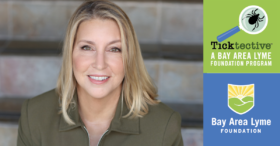
Dana Parish is a singer/songwriter based in New York City, signed with SonyATV. She is renowned for her captivating vocals and emotionally charged performances. Her debut single, ‘Not My Problem,’ from her album Uncrushed, reached the #23 spot on the Billboard charts, establishing her as one of the highest-charting independent artists in history. She notably contributed two songs, ‘Thankful’ and ‘Always be Your Girl,’ to Celine Dion’s album Loved Me Back to Life. Additionally, her song ‘Someday I’ll Fly’ by G.E.M. became a #1 hit in China. Another one of her compositions, ‘Broken Ones,’ performed by Jacquie Lee, a finalist on Season 5 of The Voice, achieved chart success. A fearless advocate for the Lyme community, Dana champions the cause of individuals suffering from Lyme and tick-borne diseases. In May 2016, she delivered a heartfelt performance of ‘Pull You Through’ at LymeAidⓇ, Bay Area Lyme’s annual fundraising event, contributing to raising more than $815,000 for Lyme disease research. In 2021, she co-authored Chronic: The Hidden Cause of the Autoimmune Pandemic and How to Get Healthy Again with Steven Phillips, MD. Dana hosts the Ticktective podcast and video series for Bay Area Lyme Foundation and is a member of our advisory board.
In this interview, Dana Parish discusses her life before being diagnosed with Lyme disease and the challenges she faced in getting accurate diagnosis and correct treatment. She talks about her career in the music industry before she was bitten by a tick. Dana shares her experience with being misdiagnosed and the physical and mental symptoms she experienced. She also discusses the importance of raising awareness about Lyme disease and advocating for better treatment options. Dana also touches on the similarities between persistent Lyme disease and Long Covid and the potential for overlap in research and treatment. She emphasizes the importance of being your own advocate and demanding proper treatment. Finally, Dana shares her thoughts on the current protocol for treating tick bites and the need for aggressive and early treatment.


 Robert Bransfield: Well, not enough. If you look at the old views of what caused psychiatric issues, it was thought to be demonic possession. Then we blamed our mothers, and then we blamed serotonin. It doesn’t quite make sense (to people) that there’s something that causes psychiatric illness. But these illnesses don’t just come out of nowhere.
 In this blog, part of our 10-year anniversary blog series, we talk with John Aucott, MD, Associate Professor of Medicine at Johns Hopkins University, Director of the Lyme Disease Research Center, about his work and how his investigations are helping us understand persistent/chronic Lyme infections. A long-term collaborator and grant recipient of Bay Area Lyme Foundation, Dr. Aucott reflects on his history with our organization, the ongoing plight of Lyme disease patients, and the slow growth in government funding for investigations into the disease. He talks about the early days of identifying the need for well-characterized samples from Lyme patients and his role in helping launch biobank programs, including his own SLICE Study Biorepository and BAL’s Lyme Disease Biobank.




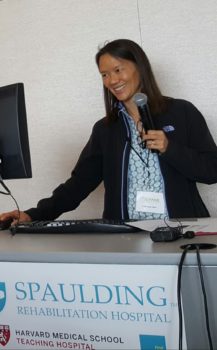 In this conversation between Ticktective™ host Dana Parish and Harvard-trained