Combination Antibiotic Therapies May Be Capable of Eradicating Lyme Disease, According to Investigational Study Funded by Bay Area Lyme Foundation

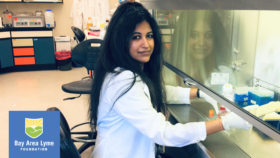
Monica E. Embers, PhD

FOR IMMEDIATE RELEASE


Combination Antibiotic Therapies May Be Capable of Eradicating Lyme Disease, According to Investigational Study Funded by Bay Area Lyme Foundation

 Study identifies persistent Lyme bacteria in tissue samples and points to need for clinical studies of combination antibiotics in persistent Lyme

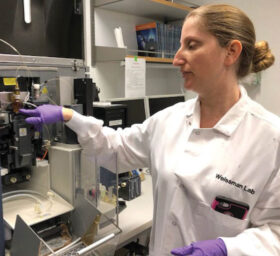
PORTOLA VALLEY, Calif., November 21, 2023—Bay Area Lyme Foundation, a leading public foundation sponsor of Lyme disease research in the US, today announced results of a laboratory study published in the peer-reviewed journal Frontiers in Microbiology that identifies seven combination therapies that are superior to courses of single antibiotics for treating persistent Lyme disease in an investigational model. These combination therapies were able to eradicate the bacteria from tissue samples, and the study was conducted by Bay Area Lyme Foundation Scientific Advisory Board member Monica Embers Ph.D., along with other researchers from Tulane University.

“Our results support the experience of Lyme disease patients whose symptoms have not resolved after a standard course of antibiotics, and these new data suggest that combination therapy should be investigated in clinical studies for treating persistent human Lyme disease,” said Embers, an associate professor of microbiology and immunology and director of Vector-borne Disease Research at Tulane National Primate Research Center.

While none of the single courses of antibiotics eliminated persistent infection in this investigational study, some combinations of already FDA-approved antimicrobial treatments were able to eradicate the bacteria. Specifically, four different dual combinations of antibiotics (doxycycline and ceftriaxone; dapsone and rifampicin; dapsone and clofazimine; doxycycline and cefotaxime) and three triple combinations of antibiotics and antimicrobials (doxycycline, ceftriaxone and carbomycin; doxycycline, cefotaxime and loratadine; dapsone, rifampicin and clofazimine) eradicated persistent infections of Borrelia burgdorferi, the bacteria that causes Lyme disease.

Research Funded by Bay Area Lyme Foundation Identifies New Investigational Therapy Regimen Capable of Irreversibly Damaging Lyme Bacteria in Laboratory Tests 

Tim Haystead, PhD

FOR IMMEDIATE RELEASE


Research Funded by Bay Area Lyme Foundation Identifies New Investigational Therapy Regimen Capable of Irreversibly Damaging Lyme Bacteria in Laboratory Tests  

Inspired by research that targets cancer tumors, these new findings in Lyme could also lead to novel R&D strategies for other diseases 

PORTOLA VALLEY, Calif. November 1, 2023—Bay Area Lyme Foundation, a leading sponsor of Lyme disease research in the US, today announced the development of a potential new drug, HS-291, that targets and destroys Borrelia burgdorferi, the bacterium that causes Lyme disease. Published in the peer-reviewed journal Cell Chemical Biology, this laboratory study represents a novel paradigm shift for anti-microbial treatment research as it is the first to target and inhibit Borrelia burgdorferi HtpG (high temperature protein G), a specific type of enzyme within the bacteria that causes Lyme disease— a condition affecting nearly 500,000 new patients annually. The research was conducted at Duke University School of Medicine, with collaboration from University of North Carolina, Tulane University, and Stanford University, and HS-291 is currently in preclinical stage testing at UC Davis. 

“As Lyme disease is currently treated with broad spectrum antibiotics and there are no targeted treatments, we are particularly excited about this discovery, and hopeful that our novel Lyme disease therapeutic HS-291 will specifically destroy the Lyme bacterium without off-target effects or antibiotic resistance,” said Timothy Haystead, PhD, professor of Pharmacology and Cancer Biology, Duke University School of Medicine, Bay Area Lyme Foundation grantee, and co-lead author. “This research has been an incredible opportunity to leverage knowledge from oncology to Lyme disease in order to design an investigational therapeutic that could one day benefit hundreds of thousands of patients with Lyme.” 

This new discovery has implications beyond Lyme disease as it demonstrates that using the drug HS-291 to deliver cellular toxins to HtpG, a type of non-essential enzyme that assists the folding or unfolding of large and complex proteins, greatly expands what can be considered druggable within any pathogen and opens a whole new area of infectious disease research.  

Bay Area Lyme Foundation ELA Winner Uses Metabolic Modeling to Predict 77 Unique Drug Targets in Lyme Disease Bacterium

Peter Gwynne, PhD

FOR IMMEDIATE RELEASE


Bay Area Lyme Foundation ELA Winner Uses Metabolic Modeling to Predict 77 Unique Drug Targets in Lyme Disease Bacterium

Results will help inform future research and development of new Lyme disease therapeutics

PORTOLA VALLEY, Calif., October 19, 2023—Bay Area Lyme Foundation, a leading sponsor of Lyme disease research in the US, today announced the findings of a study identifying new essential gene and enzyme drug targets in Lyme disease bacterium, which resulted, in-part, from a grant provided to Peter Gwynne, one of Bay Area Lyme Foundation’s 2022 Emerging Leader Award (ELA) winners. Published in the peer-reviewed journal mSystems, the study uses the most comprehensive metabolic modeling to date to predict 77 unique drug targets in Borrelia burgdorferi, the bacterium that causes Lyme disease—a condition affecting nearly 500,000 new patients annually.

“Lyme disease is often treated using long courses of antibiotics, which can cause side effects for patients and risks the evolution of antimicrobial resistance. Our research supplies the blueprint and scaffolding to build better Lyme disease therapeutics that do not have off-target effects for patients,” said Peter Gwynne, PhD, lead author on the study, research assistant professor at Tufts University School of Medicine, and Emerging Leader Award winner of the Bay Area Lyme Foundation. “Many of the 77 genes and enzymes predicted as essential represent candidate targets for the development of novel antiborrelial drug development.”

Current clinical guidelines recommend treatment of Lyme borreliosis with broad-spectrum antibiotics, which can pose risks to the patient’s microbiome. The bacterium that causes Lyme disease is extremely host-dependent, with a small genome and limited metabolism—making it an excellent candidate for the development of targeted, narrow-spectrum antimicrobials.

In the study, the researchers used in silico genome-scale metabolic computer modeling to construct a map of B. burgdorferi metabolism. This map was used to predict essential genes and enzymes that can be used as drug targets. Gwynne and the Tufts University School of Medicine research team validated these targets by repurposing existing drugs that kill B. burgdorferi in culture. While these drugs are not viable treatment options themselves, they provide a blueprint for future novel drug development.

Dr. Liz Horn Explains How Lyme Disease Biobank Samples are Foundational to the LymeX Diagnostics Prize 

Lyme Disease Biobank

BAL Spotlight Series


In this interview, the LymeX Diagnostic Prize talked with Liz Horn, PhD/MDI, Principal Investigator for Bay Area Lyme Foundation’s Lyme Disease Biobank (LDB), about her work in Lyme disease, the challenges researchers face, how the LymeX Diagnostics Prize could help further our understanding of the disease and how Lyme patient samples from our biobank are critical to the competition’s success.

This interview has been edited from the original

“What’s exciting about the LymeX Diagnostics Prize is that you have a lot of different people with good ideas and different teams with a lot of different technologies trying to solve this problem.”

– Liz Horn, PhD/MDI

Lyme Disease BiobankThe LymeX Diagnostics Prize is a multiphase competition funded by the US Department of Health and Human Services (HHS) and the Steven & Alexandra Cohen Foundation to accelerate the development of Lyme disease diagnostics. Through October 2023, the 10 teams selected to be part of Phase 2 of the LymeX Diagnostics Prize are participating in a virtual accelerator designed to help them refine their concepts for detecting active Lyme disease infections in people. As the Phase 2 accelerator cohort continues to develop their diagnostics, the teams have access to scientific advisors who provide valuable insight and feedback from their extensive experience in Lyme disease diagnostics, one of whom is Dr. Horn. The Phase 2 cohort also has access to the blood and urine samples donated to LDB by Lyme patients.

A cancer biologist by training, Dr. Horn has spent her career working with nonprofit research organizations to help build research programs, registries, and biorepositories. She joined Bay Area Lyme Foundation in 2013 to lead the creation of a Lyme disease biorepository. As a scientific advisor for the LymeX Diagnostics Prize, Dr. Horn is mentoring participating teams through office hours and webinars.

LymeX: As the principal investigator for the Bay Area Lyme Foundation’s Lyme Disease Biobank, you have extensive experience in Lyme disease research. How did you first start working in the field, and what are you focusing on now with the biorepository?

Ticktective with Dana Parish: From Harvard MD to MS Patient: Wisdom from Both Sides

Ticktective Podcast: a Bay Area Lyme Foundation Program

Annie Brewster, MD

Annie Brewster is an Assistant Professor of medicine at Harvard Medical School, a practicing physician at Massachusetts General Hospital, in Boston, a writer and a storyteller. She is also a patient, diagnosed with Multiple Sclerosis in 2001. In response to the disconnection she experienced in healthcare, both as a patient and a provider, and motivated by her belief in the power of stories, she started recording patient narratives in 2010. Integrating her personal experiences with the research supporting the health benefits of narrative, she founded Health Story Collaborative (HSC) in 2013. HSC is dedicated to helping individuals navigating health challenges find meaning, and ultimately heal, through storytelling. She is excited by interdisciplinary, cross-institutional collaborations that break through resistance to change. She is widely published in the press and is author of The Healing Power of Storytelling: Using Personal Narrative to Navigate Illness, Trauma, and Loss (2022).

Foundational Work Scores Results

John Aucott, MD

BAL 10-year Anniversary Series


10 Years of Collaboration Bringing Hope: How Dr. John Aucott’s Relationship with Bay Area Lyme Helped Get Groundbreaking Biobanks Launched to Fuel the Research Engine of Lyme Disease Investigations


John Aucott, MDIn this blog, part of our 10-year anniversary blog series, we talk with John Aucott, MD, Associate Professor of Medicine at Johns Hopkins University, Director of the Lyme Disease Research Center, about his work and how his investigations are helping us understand persistent/chronic Lyme infections. A long-term collaborator and grant recipient of Bay Area Lyme Foundation, Dr. Aucott reflects on his history with our organization, the ongoing plight of Lyme disease patients, and the slow growth in government funding for investigations into the disease. He talks about the early days of identifying the need for well-characterized samples from Lyme patients and his role in helping launch biobank programs, including his own SLICE Study Biorepository and BAL’s Lyme Disease Biobank. 

Bay Area Lyme: I want to take you right back to the very beginning of your relationship with Bay Area Lyme (BAL), the founding of your SLICE study and our Lyme Disease Biobank (LDB) and talk about everything that was happening 10 years ago. People talk about the “norming, storming and forming” stages of organizations, and there was an awful lot of activity going on 10 years ago in the world of Lyme disease. And so, please share your thoughts on what was happening around that time, your part in it, and how you came into the picture with BAL and our biobank.

SLICE Studies
The Study of Lyme disease Immunology and Clinical Events (SLICE), Johns Hopkins University Lyme Disease Research Center

John Aucott: My first memory is that I flew out to California and my agenda at that time was getting people interested in research. There was very little funding for Lyme disease research, and to some extent there still isn’t a great amount of funding for Lyme disease, especially the kind of research I do, which is clinical translational research. I’m an MD, so my research involves bridging basic science to human beings to patients. So, to be very candid about it, I was interested in getting BAL interested in my work. I pitched what we were doing. We had already set up the Johns Hopkins SLICE study, the Study of Lyme disease Immunology and Clinical Events. And at that point it was one of only two large scale biobanks collecting for Lyme disease. The other one is Dr. Gary Wormser’s, who still has a biobank in Valhalla, New York.

So, I was pitching the idea of a Lyme disease biobank to BAL, and this was a whole new concept. A biobank is a hard concept to sell initially because people don’t understand that setting up a biobank is like being Levi Strauss: It’s selling the Levis and the picks, and the shovels—not selling them the actual gold in your pocket. And it’s a hard pitch because people don’t understand that somebody has to supply the foundational work so that other people can mine for the gold. But BAL caught on to the idea that the biobank that we had at Hopkins was a crucial resource that would enable collaboration with other researchers to advance the scientific understanding of disease mechanisms and potentially identify and validate biomarkers for improving diagnostics and treatments.

LymeAid 2013
LymeAid 2014 Scientific Panel (from left): Wendy Adams, John Aucott, MD, Carin Rollins, and Bill Robinson, MD, PhD

Bay Area Lyme bought into the importance of this idea. The first thing that happened was you asked me to be on the BAL Scientific Advisory Board soon thereafter. BAL expressed support for the SLICE study’s biobank at Hopkins and you actually gave us one of our first grants to help support our biobank work. So, that was the first thing that happened. We applied for a grant, and we got a grant from BAL to help us because we had not yet gotten federal funding for it. So, that was one of the first grants to support it, and now in 2023 we are finally receiving our first NIH funding.

How to Diagnose if Lyme Disease is Affecting the Heart and How to Best Treat It

Adrian Baranchuk, MD

Ticktective Podcast Transcript


Dr. Adrian Baranchuk, Professor of Medicine at Queen’s University in the Division of Cardiology in Ontario, Canada discusses his screening process for identifying Lyme infections in the heart and how to treat these patients without unnecessary pacemakers. He has published research and spoken on the topic of Lyme carditis at numerous conferences. He is passionate in his efforts to educate doctors on diagnosing Lyme-related AV heart block. Dr. Baranchuk joined Bay Area Lyme Advisor Lia Gaertner to discuss the cardiological manifestations of Lyme disease, Lyme Carditis and specific cases that illustrate his approach.

Lia Gaertner: Welcome to the Ticktective podcast and video series, a program of the Bay Area Lyme Foundation, where our mission is to make Lyme disease easy to diagnose and simple to cure. I’m your host, Lia Gaertner. Lyme disease is the most common vector-borne disease in the USA and is a global issue. This podcast includes interviews with the researchers we fund, as well as other interesting people in the Lyme scientific community. We are a nonprofit foundation based in Silicon Valley. Thanks to a generous grant that covers all of our overhead, 100% of all donations go directly to support research and prevention programs. You can find out more or donate@bayarealyme.org. Thank you for joining the Ticktective video and podcast series, Dr. Baranchuk

Adrian Baranchuk: Thank you very much for having me.

Lia Gaertner: Dr. Baranchuk, a native of Buenos Aires, Argentina, completed his training in internal medicine in cardiology, along with clinical fellowship in cardiac electrophysiology. Dr. Baranchuk is a tenured professor of medicine at Queen’s University in the division of cardiology in Ontario, Canada. He is the editor-in-chief of the Journal of Electrocardiology, as well as a member of numerous editorial boards and a reviewer for several medical journals. Dr. Baranchuk has authored eight books and published more than 700 articles in prestigious international journals, as well as 54 book chapters, and he’s presented more than 270 abstracts around the world. He is the vice president of the International Society of Halter and Non-Invasive Electrocardiology, and the Secretary of the Inter-American Society of Cardiology. He’s also the past president of the International Society of Electrocardiology. He’s been elected as a member of the Electrophysiology Leadership section of the American College of Cardiology, and is the recipient of several teaching awards as well as being voted one of the 10 most influential Hispanics in Canada.

Adrian Baranchuk: Thank you very much for the invitation. I am so pleased to be here with you today.

Lia Gaertner: I’d like to start with a case study published in the Canadian Medical Association Journal (CMAJ). It reads:

“A fatal case of Lyme disease in a previously healthy 37-year-old man illustrates the challenges of diagnosing Lyme disease in the absence of classic symptoms. The patient originally presented to his family doctor with flu-like symptoms, including fever, sore throat, nasal congestion, and migratory joint pain. Several weeks earlier, he had been in contact with ticks but didn’t recall removing one. His physician suspected a viral infection and the patient’s symptoms resolved. However, weeks later, he developed heart palpitations, shortness of breath, and chest discomfort for which he was sent to the emergency department. Lyme disease was suspected as the ECG showed complete heart block. He was admitted to the hospital and started treatment for Lyme carditis. But his condition unfortunately worsened quickly. Clinicians were unable to reverse the course of his illness, and he died. Serology results confirmed Lyme disease and an autopsy showed Lyme carditis.” 

Biosafety is Key to Our Future: The Truth About Germs, Lab Leaks, and Information Warfare

Raina MacIntyre, MD, PhD

Ticktective Podcast Transcript


In this episode of Ticktective™, Dana Parish talks with Raina MacIntyre (MBBS Hons 1, M App Epid, PhD, FRACP, FAFPHM) about how lab safety lapses are still leading to frequent undocumented lab leaks, her concerns over Long Covid and the ongoing dangers of the pandemic, and how public health agencies use information warfare to keep everyone in the dark about what is happening at the forefront of biomedical investigations, especially in the field of experimental gain of function research. Raina MacIntyre is Head of the Biosecurity Program, Kirby Institute, University of New South Wales (UNSW), Australia, and author of Dark Winter. She has over 450 peer-reviewed publications, has received many awards including the Sir. Henry Wellcome Medal from the Association of Military Surgeons of the US and is a member of the WHO COVID-19 Vaccine Composition Technical Advisory Group and WHO Smallpox and monkeypox working group.

Dana Parish: Welcome to the Ticktective podcast, a program of the Bay Area Lyme Foundation, where our mission is to make Lyme disease easy to diagnose and simple to cure. I’m your host Dana Parish, and I’m the co-author of the book Chronic and I sit on the advisory board of Bay Area Lyme Foundation. This program offers insightful interviews with scientists, clinicians, patients, and other interesting people. We’re a nonprofit based in Silicon Valley, and thanks to a generous grant that covers a hundred percent of our overhead, all of your donations go directly to our research and prevention programs. For more information about Lyme disease, please visit us@bayarealyme.org.

Dana Parish: Hi, I’m Dana Parish and I’m thrilled today to welcome Dr. Raina McIntyre. Let me tell you a little bit about her. Raina McIntyre, MBBS is head of the Biosecurity program, Kirby Institute, UNSW. She leads research on prevention of epidemic infections, including EPI watch, an AI-driven early warning system for serious outbreaks. She has over 450 peer reviewed publications. She’s received many awards including the SIR Henry Welcome Medal from the Association of Military Surgeons of the US. She was on a US National Academies of Science Engineering Medicine Pandemic Consensus Committee, and she’s a member of W’S Covid 19 Vaccine Composition Technical Advisory Group and WHO Smallpox and Monkeypox Working Group. Has written over 450 publications and I am really pleased to have met you through this new nonprofit that we’re both a part of called BiosafetyNow.org. You know, it’s an honor to be able to learn from you and meet you, and I’d love to talk a little bit about your background and what it means to be a biosecurity expert and an MD and a PhD in your area of expertise.

Raina MacIntyre: I started my career as a medical doctor and I was going to be a cardiologist because I’d done a lot of cardiology, in my specialist physician training and wanted to do cardiology. But I was also interested in epidemiology. I saw an ad for this Master of Applied Epidemiology, which is the Australian Field Epidemiology Training Program, which is a type of hands-on training in outbreak investigation that was pioneered by the US CDC called the Epidemic Intelligence Services. And in some countries when you do it, you get a degree. So, I decided to do that degree and it was quite life-changing for me because it was a new way of learning where you do just short bursts of classroom learning, but then you go out in the field, you investigate outbreaks and you apply the learning that you had in the classroom to practical problems in the field where you’re investigating outbreaks, trying to work out: What is this? Where did it start? How can it be stopped?

Bay Area Lyme Ambassador Shares Her Story

Guest Blog by Jessica Devine


Bay Area Lyme Foundation is one of the first sources of information I found when I was finally diagnosed.  I realized through the years that only a few resources could always be relied upon for accurate information based on scientific research. I also feel connected to BAL because I was bit in California by a tick that carried Lyme, Babesia, Bartonella, Erhlichia, Rocky Mountain Spotted Fever and more. I have always trusted their information for over a decade now. What they do and continue to do to help this community is something I will always be grateful for.

Jessica Devine and her family

Creating an uplifting space for Lyme patients has been my dream since my first TV interview when a local station asked me to come on and share my story. Once on camera, I was filled with passion when given the chance to speak about my story, the injustices of Lyme disease treatment and getting a late diagnosis.

From there, people started reaching out to me needing help. I had kind of lost myself in my illness and slowly, through advocacy work, I gained a feeling that I can only describe as finding your true purpose. When I help someone, I have peace.

I found groups to be depressing and I knew the only way to have the group that best served a patient in the ways I needed was to create it myself. I wanted a solution based group that required all of its members to act with kindness. Alongside my own Lyme doctor’s methods, member polls and an accumulation of top resources, I finally was able to create the first Lyme Disease and Co-Infections Directory to cover almost any topic related to these diseases. An easy way for a patient to find the information quickly and learn. I feel the more we understand about these diseases, why we have the symptoms we have and how to help ourselves heal, we become more hopeful and empowered.

Ticktective with Dana Parish: Biosafety Is Key to Our Future: the Truth About Germs, Lab Leaks, and Information Warfare

Ticktective Podcasts

Raina MacIntyre, MD, PhD

Raina MacIntyre (MBBS Hons 1, M App Epid, PhD, FRACP, FAFPHM) is Head of the Biosecurity Program, Kirby Institute, UNSW and author of “DARK WINTER”. She has over 450 peer-reviewed publications, has received many awards including the Sir Henry Wellcome Medal from the Association of Military Surgeons of the US, and is a member of the WHO COVID-19 Vaccine Composition Technical Advisory Group and WHO Smallpox and monkeypox working group.

To read the podcast transcript, click here.