BAL “Quick Bites” Series
“I’ve always said that the FDA has been captured by the pharmaceutical industry. They don’t have our best interests at heart. You shouldn’t be funded by the people you’re supposed to be regulating.”
– Steven Phillips, MD
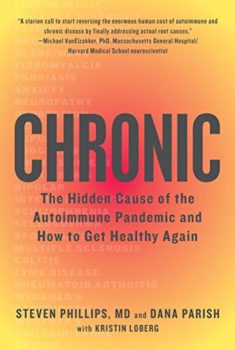 Ticktective host, Dana Parish, talks with her longtime collaborator and co-author of Chronic, Dr. Steven Phillips, a Yale-trained internal medicine doctor who specializes in treating patients with complex, chronic illnesses, often driven by underlying infections like Lyme, Bartonella, Babesia, and now, COVID. In this podcast episode, Phillips discusses the importance of getting to the root cause of mystery autoimmune illnesses, rather than just suppressing symptoms. He states that many chronic infections can drive autoimmune conditions, including Lyme disease, and that Lyme tests are often inaccurate, with a sensitivity of around 50%. Phillips discusses how he recommends treating suspected tick bites to prevent the development of chronic Lyme disease and his use of a multi-antibiotic approach and pulsed antibiotic therapy to target persistent infections. He also discusses his experiences treating COVID-19, using a multi-modal approach including doxycycline, Paxlovid, Metformin, and other drugs and supplements, and the reactivation of infections like Bartonella in Long COVID patients. They also discuss how the chemical and pharmaceutical industries’ interests do not necessarily align with patients trying to get well. The interview highlights Dr. Phillips’s expertise in treating complex chronic infections and his holistic, evidence-based approach to patient care.



 “I want to leave you with hope. I think we’re going to be unstoppable because I think that these are solvable problems. These are answerable questions. I think that there are already a lot of existing tools in immunology that just need to be brought into the fight, and we can change this.”
 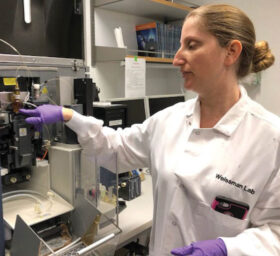 Any respectable pathogen that can establish a persistent infection needs to figure out your immune system to the point that it can evade it. The fact that it has persisted means that it was able to evade your immune clearance. And so, I got to that from a very interesting direction working on immune regulation, trying to understand these brakes on the immune response and how they impact the response to infection. The immune system has the power to kill you and obviously, nobody has any incentive for that to happen. So, there are a lot of mechanisms in place to put brakes on the immune system and reign it in. One of the huge developments in cancer over the last two decades has been reevaluating the question: can we take those brakes off? So in my postdoc, I was studying a particular checkpoint where this was turning into an exciting immuno-oncology target, and I said, ‘I want to look at how this checkpoint is used in infection.’ I realized that this checkpoint was being used to help you survive an acute infection, but created a vulnerability for pathogens to evade immune clearance and establish chronic infection much like it allows cancer cells to evade immune clearance. In an amazing collaboration with Irv Weissman, Balyn Zaro, and Jenifer Coburn we realized that the bacteria that cause Lyme disease manipulate this brake and that’s how I became fascinated with Lyme. But I also became concerned about turning off this brake in cancer patients because I was concerned about what would happen if you used this on cancer patients during an active infection. Indeed, the
 Lyme Disease Biobank established a key partnership with the nonprofit
  “Although it is an emotional and difficult idea for anyone to plan to donate parts of their body to science after they have died, we believe that this decision is an important way for Lyme patients to change the course of Lyme disease research. Having access to tissues from the brain, heart, joints, and central nervous system of Lyme patients allows researchers to prove unequivocally that Lyme is present in tissue and contributes to patient suffering,” explains