
Bay Area Lyme Leading the Way series
Understanding what the body reveals about infection
New research from Lyme scientist Maria Gomes-Solecki, DVM, shows how patterns in antibodies could help develop earlier and more accurate diagnostics.
Diagnosing Lyme disease early remains one of the biggest challenges facing patients and physicians grappling with the impact of this tick-borne infection. Today’s blood tests typically look for antibodies, which are molecules the immune system produces in response to infection, but those antibodies take time to appear. That delay can leave patients and doctors uncertain in the earliest days after a tick bite.
New research led by Maria Gomes-Solecki, DVM, is helping scientists better understand how the immune system responds to Lyme infection and how those signals might help doctors determine not only whether someone has Lyme disease but also how long they’ve been infected. Dr. Gomes-Solecki has studied Lyme disease for decades and was the first researcher to receive samples from Bay Area Lyme Foundation’s Lyme Disease Biobank in 2016. This resource has since helped accelerate diagnostic research across the field.
Dr. Gomes-Solecki’s latest research focuses on different types of antibodies, sometimes called antibody classes or “isotypes,” that appear as the immune response evolves during infection.
“Our body produces different classes of antibodies over time. By looking at those patterns, we may be able to predict the stage of the disease.”
– Maria Gomes-Solecki, DVM
Understanding those patterns could help clinicians interpret Lyme test results more precisely and guide treatment decisions earlier. Read a commentary on this research by another Bay Area Lyme scientist and LDB collaborator.
What antibodies can reveal about infection timing
When the body encounters a pathogen, such as the Lyme bacterium Borrelia burgdorferi, the immune system begins producing antibodies designed to recognize and fight the invader. These antibodies are not all the same. The immune system produces several classes, including IgM and IgG, each playing a different role in immune defense.
Generally speaking:
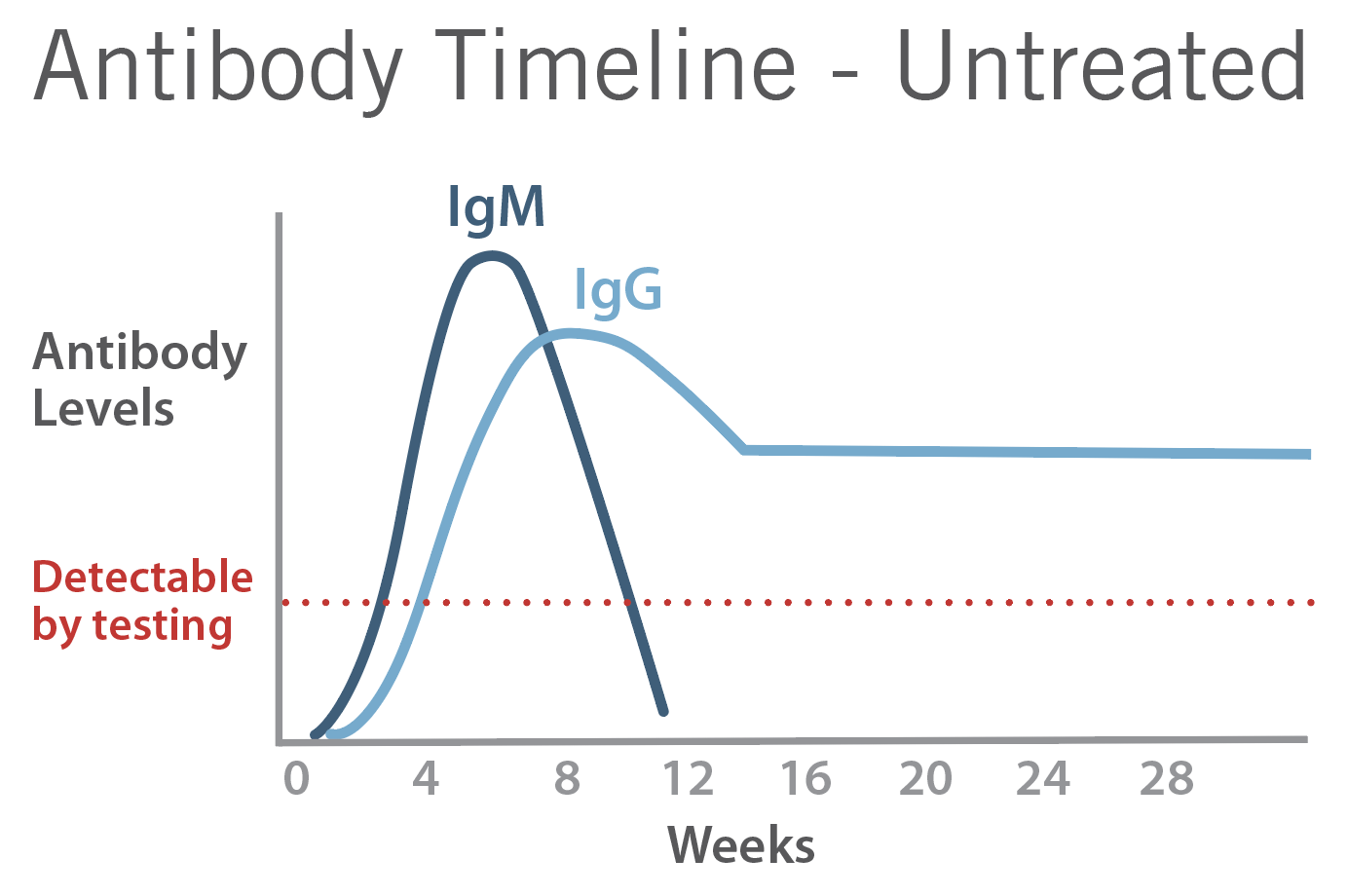
- IgM antibodies appear first after infection
- IgG antibodies develop later and often persist longer
- Different IgG subtypes can rise or fall as the infection progresses
Dr. Gomes-Solecki’s team studied antibodies that target a protein called VlsE, which the Lyme bacterium expresses throughout infection. By analyzing how specific antibody subtypes change over time, the researchers identified patterns that may correspond to different stages of Lyme disease, from early infection to later complications such as Lyme arthritis.
“Some antibody types are increased in the earliest phases of infection, while others become more common in later stages.”
– Maria Gomes-Solecki, DVM
If incorporated into future diagnostic tools, these immune signatures could help doctors more accurately estimate when a Lyme infection began, a determination that is often difficult to make today.
Why early Lyme testing is so challenging
One reason Lyme disease remains difficult to diagnose early is that antibody production takes time. After a tick transmits the bacterium, the immune system may need days or even weeks to produce detectable antibody levels. During that early window, standard two-tier blood tests, such as ELISA and Western blot, can return negative results even when an infection is present.
Dr. Gomes-Solecki notes that the most reliable antibody detection typically occurs about a month after infection, when the immune response is fully developed. That delay creates a frustrating gap for patients and clinicians. Someone who receives a tick bite and immediately seeks testing may be told the result is negative, not because they are infection-free, but because their immune system has not yet produced measurable antibodies.
“The earlier you can diagnose Lyme disease accurately, the sooner you can take action.”
– Maria Gomes-Solecki, DVM
Earlier diagnosis allows physicians to begin treatment sooner and potentially prevent more serious complications.
The next frontier: detecting the Lyme bacteria itself
Because antibody tests depend on the immune response, researchers are pursuing a different strategy: direct detection of the Lyme bacterium. Instead of looking for antibodies, these approaches aim to identify Borrelia proteins or other biological markers in blood or other body fluids. Such tests could detect infection within days of a tick bite, even before the immune system produces detectable antibodies.
Several research groups, including the teams in LymeX, among others, are currently working toward this goal. While antibody testing will likely remain an important diagnostic tool, direct detection methods could dramatically improve early diagnosis. Dr. Gomes-Solecki believes advances in early detection could transform Lyme care, allowing doctors to start treatment sooner and reducing the uncertainty that many patients experience in the first weeks of illness.
Building the future of Lyme diagnostics
For patients and families affected by Lyme disease, scientific progress often begins in laboratories studying the complex interactions between the immune system and the Lyme bacterium. And resources like Lyme Disease Biobank, which provides well-characterized patient samples to scientists around the world, are helping accelerate this work
“Lyme Disease Biobank has contributed tremendously to the advancement of development of diagnostic assays in the field.”
– Maria Gomes-Solecki, DVM
As the first researcher to receive Biobank samples and advisor to the Biobank, Dr. Gomes-Solecki has been part of that progress from the beginning. By understanding how the immune system responds to infection over time, researchers are uncovering new ways to improve diagnosis, treatment, and prevention.
“Dr. Gomes-Solecki and I have had a long-standing collaboration for the last decade. She is a fantastic scientist, and we are fortunate to have such an innovative researcher working to improve diagnostics for Lyme disease patients. Each discovery brings the field closer to a future where Lyme disease can be detected quickly, treated effectively, and ultimately prevented.”
– Liz Horn, PhD, MBI, Principal Investigator, Lyme Disease Biobank.
 Maria Gomes-Solecki, DVM, is a leading researcher in tick-borne Lyme disease and a professor in the Department of Microbiology, Immunology, and Biochemistry at the University of Tennessee Health Science Center. Trained as a veterinarian in Portugal, she moved to the United States to pursue research in molecular biology and infectious disease. For more than two decades, her work has focused on improving Lyme disease diagnostics, vaccines, and understanding immune responses to Borrelia burgdorferi. Dr. Gomes-Solecki was also the first investigator to receive samples from Bay Area Lyme Foundation’s Lyme Disease Biobank, contributing to advances in diagnostic research. Her work continues to help drive progress toward earlier detection and prevention of Lyme disease.
This blog is part of our Bay Area Lyme Leading the Way series. If you require a copy of this article in a bigger typeface and/or double-spaced layout, contact us here. Bay Area Lyme Foundation provides reliable, fact-based information about Lyme and tick-borne diseases so that prevention and the importance of early treatment are common knowledge. For more information about Bay Area Lyme, including our research and prevention programs, go to www.bayarealyme.org.