Bay Area Lyme Leading the Way Series
By Liz Horn, PhD, MBI, Principal Investigator, Lyme Disease Biobank
“The window for effective antibiotic treatment is narrow. Miss it—because of a false negative test, because symptoms are dismissed, or because follow-up doesn’t happen—and patients can develop persistent Lyme, which can be debilitating.”
– Dr. Liz Horn
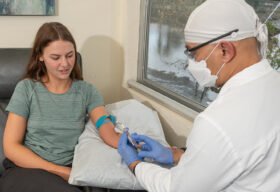
After a decade of collecting blood samples, testing the samples, tracking patient outcomes, and analyzing data from more than 800 participants, the numbers tell a powerful story about the gaps in our understanding of how we diagnose and treat early Lyme disease. And it’s made all the more urgent by this summer’s explosion in blacklegged (deer) tick populations across endemic areas.
Our latest Lyme Disease Biobank study looked at more than 250 patients with early Lyme disease on Long Island and in Central Wisconsin who provided a blood draw at enrollment and a second blood draw three months later. Published recently in Frontiers in Medicine, these 10 years of data confirm a few important points that have been known in the Lyme field for years, but the wider medical community may not be aware of.
For one, the CDC’s standard two-tiered serology diagnostic test missed 77% of early Lyme disease cases in our study. It even missed 66% of people presenting with an erythema migrans more than five centimeters in diameter. This size and type of rash is so characteristic of Lyme that healthcare providers are encouraged to skip testing when they see it. While early Lyme is typically diagnosed clinically, providers may order Lyme tests when the diagnosis is unclear. Unfortunately, providers may not know that negative test results do not rule out Lyme.
We also learned some useful information about who tests positive with our current tests. Patients with multiple erythema migrans were much more likely to test positive than those with just one. And for those without a Lyme rash (about one-third of our cohort), just 16% tested positive.
We also confirmed that one in five patients continued to experience symptoms they attributed to Lyme three months after standard antibiotic treatment: Joint pain, fatigue, muscle pain, headache, and even confusion/memory loss—the symptoms that have sent countless patients on diagnostic odysseys, seeking treatment from various specialists.
And while we took a second blood sample from participants three months after their initial blood draw, only 35% of people who still had Lyme symptoms had followed up with their healthcare provider. That means that 65% didn’t seek care.
Why This Matters Now
We’re living through what can only be described as a Lyme disease epidemic. Approximately half a million Americans get Lyme disease each year, and up to two million Americans are currently suffering from persistent symptoms that could have been prevented with early diagnosis and effective treatment. With tick populations booming, we could see even more people infected this year.
“Only 35% of people who still had Lyme symptoms had followed up with their healthcare provider. That means that 65% didn’t seek care.”
– Dr. Liz Horn
The window for effective antibiotic treatment is narrow. Miss it—because of a false negative test, because symptoms are dismissed, or because follow-up doesn’t happen—and patients can develop persistent Lyme disease, which can be debilitating. And for people who travel to areas where Lyme is prevalent, this can be even more challenging, because their local providers may be less familiar with Lyme disease.
 A Source of Well-Characterized Samples
When we started the Lyme Disease Biobank in 2014, researchers struggled to find well-characterized patient samples. Studies were small, geographically limited, and often lacked information about diagnostic tests and treatment outcomes.
We set out to change that. Over ten years, we’ve collected samples from more than 1,250 participants across endemic areas in the Northeast, Upper Midwest, and West Coast. We’ve created a robust sample collection with detailed clinical information that can actually move the needle on Lyme disease research. In fact, this resource currently supports more than 115 research projects.
What Needs to Change
First, we need better diagnostics. A test that misses seven out of 10 people with early Lyme isn’t an accurate diagnostic tool; it’s a barrier to care. And clinicians deserve an accurate test that can confirm a Lyme diagnosis, especially in people who don’t present with a Lyme rash. Researchers are working on more sensitive tests, but until they’re available, healthcare providers need to know the limitations of current testing in early Lyme disease.
Second, patients need routine follow-up (phone, e-mail, or text) after completion of antibiotic treatment. For those who report continuing symptoms, this should trigger a conversation about next steps, which may include immediate antibiotic retreatment.
“Clinicians deserve an accurate test that can confirm a Lyme diagnosis, especially in people who don’t present with a Lyme rash.”
– Dr. Liz Horn
What We Can Do

Better tests are being developed, but until they are available, there are several actions we can take now:
- Healthcare providers: Trust your clinical judgment. If a patient has been in an endemic area and developed a rash or viral-like symptoms, don’t rely on serologic tests. And please, follow up with patients after completion of antibiotics to determine if further care is needed.
- Patients: Advocate for yourself. If you continue to have symptoms after treatment, go back to your provider. If your provider dismisses your concerns, find another one. Your health matters, and your symptoms deserve attention.
- Researchers: We’ve built something powerful with Lyme Disease Biobank. We’ve collected more than 90,000 aliquots of well-characterized blood, serum, plasma, and urine samples. We are always looking for new collaborators, and we can help in many ways beyond just providing samples.
More than a decade of building this resource has taught me that while good science takes time, it also requires urgency. Each day we delay investing in more accurate Lyme diagnostics, diagnoses are missed, treatment is delayed, and the risk of poor outcomes increases. In the meantime, careful follow-up with patients could increase the number who fully recover from this complex, challenging disease.
We would like to thank the participants who volunteered to donate samples. Without their willingness to participate in research, none of this would have been possible.
Dr. Liz Horn is the Principal Investigator of the Lyme Disease Biobank, a Bay Area Lyme Foundation program. The complete study, “Lyme Disease Biobank: 10 years of 3-month follow-up visits from 2014-2023,” is available here in Frontiers in Medicine. Liz has spent over two decades advancing research initiatives with nonprofits, specializing in registries and biobanks. She played a pivotal role in launching Lyme Disease Biobank, which has supported more than 25 published studies, and is recognized nationally as an expert in tick-borne disease. Liz has mentored many researchers and advised multiple US government efforts, including serving as a scientific advisor for the LymeX Diagnostics Prize, the HHS Tick-Borne Disease Working Group, and the CDMRP Tick-Borne Disease Research Program. She earned her PhD in molecular pharmacology and cancer therapeutics from SUNY at Buffalo, was a National Library of Medicine fellow in biomedical informatics, and received her MBI from Oregon Health and Science University. Passionate about building resources that drive research and reduce suffering, Liz continues to shape the future of Lyme and tick-borne disease science. This blog is part of our Bay Area Lyme Leading the Way series. If you require a copy of this article in a bigger typeface and/or double-spaced layout, contact us here. Bay Area Lyme Foundation provides reliable, fact-based information about Lyme and tick-borne diseases so that prevention and the importance of early treatment are common knowledge. For more information about Bay Area Lyme, including our research and prevention programs, go to www.bayarealyme.org.