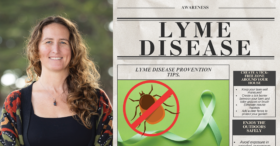
Bay Area Lyme Spotlights Series
“Lyme and ticks are talked about a lot more! Students are showing peers their tick keys and sharing information, and even staff are discussing it around campus.”
– Melissa Kelly, teacher
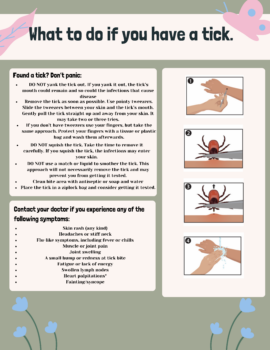
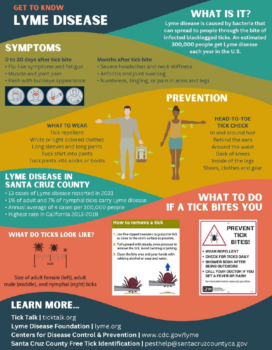
Children are the most at-risk group for contracting tick-borne diseases, so Monterey Peninsula health educator, Melissa Kelly, gave her students an important assignment during Lyme Disease Awareness month: design a poster to teach their school community about Lyme and tick-borne diseases and how to prevent tick bites. Bay Area Lyme Foundation provided tick keys and educational materials to support Melissa’s teaching and curriculum. We asked Melissa to tell us about the project!
Q: Melissa, tell us about your school, where it’s located, and how you learned about Lyme disease awareness month.
A: Chartwell School is located in Seaside, California. We serve students with learning differences such as dyslexia and more. Our school community includes students from 1st to 12th grade. I work specifically with high school students. I first learned about Lyme Disease Awareness Month after my own experience with Lyme disease. Before teaching, I worked as a field biologist and likely contracted Lyme during my fieldwork. Thankfully, I was able to get it treated, and I am okay. That experience has kept me engaged with the latest research and studies on tick-borne diseases, which is how I learned about Lyme Awareness Month.
Q: Why did you decide to create a unit on tick bite prevention?
A: For the unit, students learn about Lyme disease by hearing me share my personal experience with Lyme disease, which helps them connect to the topic in a real way. We also talk about any encounters they’ve had, or likely will have, since our campus is surrounded by chaparral oak forests and students often hike around campus. This year, we even attempted a ‘tick walk’ similar to what entomologists do in the field. We dragged a microfiber towel along the trail to collect data on ticks. We only found one tick, but it was a great exercise! We also looked for evidence of questing and identified high-risk areas on campus trails.
At the end of the unit, I let students choose how they want to share what they learned using a choice board. They’ve created everything from PSA videos to presentations. This year, most of the class chose to create posters. These posters could highlight any aspect of Lyme disease they felt was important for people to know. It was a fun way to wrap up the project and give students ownership of how they shared their knowledge.
“Students learn about Lyme disease by hearing me share my personal experience with Lyme disease, which helps them connect to the topic in a real way.”
– Melissa Kelly, teacher

Q: What impact has learning about Lyme and tick-borne diseases had on your students and school community?
A: Lyme and ticks are talked about a lot more! Students are showing peers their tick keys and sharing information, and even staff are discussing it around campus. This year, while we were finishing up our project, one student found a tick on themselves at home. They used what they learned in class to handle the situation responsibly, removing the tick safely, sending it in for testing, and, with their family’s permission, shared the results with the class. It turned out to be negative across the board, but it was a powerful learning experience. It brought home how real these encounters are and how important it is to be informed and prepared.
Q: What was the most surprising thing that you and your students have learned about ticks and tick-borne diseases?
A: The most surprising thing for us was learning about Western Fence Lizards. Their blood can neutralize the bacteria that cause Lyme disease in ticks, and their presence can reduce the spread of Lyme. The lizards are found all over campus. This made it personal and got students talking about how studying the lizards could be a possible cure. It’s a great example of how studying nature closely sparks new ideas and solutions.
Q: Do you plan to offer this assignment again?
Absolutely! I want to continue to improve the project and highlight students’ work every May for Lyme Disease Awareness Month.
Q: How did you learn about Bay Area Lyme Foundation?
A: I learned about BAL at the 2023 California Association of Environmental and Outdoor Educators (AEOE) Conference. I received a tick key and learned about the curriculum resources. At the time, I had recently started teaching Health, and this inspired me to begin including Lyme disease awareness as part of my class. I used the curriculum resources, and students created an outreach project that year. The students enjoyed learning about it, and I’ve continued to do the project every year.
Melissa Kelly is a high school biology and health teacher at Chartwell School in Seaside, California, where she also coaches surfing. She works with students who have learning differences, creating engaging, real-world learning experiences that connect the classroom to the natural world. Before teaching, Melissa worked as a field biologist and has a special interest in exploring how our environment shapes our health and well-being. Outside of school, she loves spending time outdoors with her husband and dogs. Bay Area Lyme Foundation has partnered with the California Association of Environmental and Outdoor Educators (AEOE) for more than ten years. We have sponsored their annual conference and hosted workshops, to bring tick-bite prevention awareness and education programming and materials to outdoor educators, teachers, and naturalists working with children, the most at-risk population for tick bites. For more information about Bay Area Lyme, including our research and prevention programs, go to www.bayarealyme.org. This blog is part of our Bay Area Lyme Spotlights series. If you require a copy of this article in a bigger typeface and/or double-spaced layout, contact us here. Bay Area Lyme Foundation provides reliable, fact-based information about Lyme and tick-borne diseases so that prevention and the importance of early treatment are common knowledge. For more information about Bay Area Lyme, including our research and prevention programs, go to www.bayarealyme.org.