We Need a New Generation of Lyme Doctors: James Bruzzese, MD, is Leading the Way

James Bruzzese

Bay Area Lyme Spotlights Series


“Some institutions are evolving in research and education, but it’s not translating to clinical practice.”

– James Bruzzese, MD

When James Bruzzese, MD, talks about Lyme disease, he doesn’t speak in abstractions. He speaks as a brother who watched his sister lose her ability to walk; a son who watched his father leave his job to become a full-time caregiver; and as a medical student who sat in lecture halls knowing that what was being taught about Lyme and tick-borne disease was grossly incomplete.

Now, as a young physician preparing to open a practice dedicated to treating Lyme and tick-borne disease patients in New York, James represents something the Lyme community urgently needs: a new generation of doctors who understand that Lyme is real, that patients deserve better, and that the status quo must be challenged.

“It Was Traumatic. We Thought We Might Lose Her.”
Bay Area Lyme Foundation Highlights Research Leadership and Momentum in Tick-Borne Disease, Names New Executive Director

FOR IMMEDIATE RELEASE


Bay Area Lyme Foundation Highlights Research Leadership and Momentum in Tick-Borne Disease, Names New Executive Director

Milestones include FDA-cleared diagnostics enabled by Lyme Disease Biobank, the launch of Bay Area Lyme Ventures, and 10 years since Lyme Disease Biobank provided its first samples, advancing the field

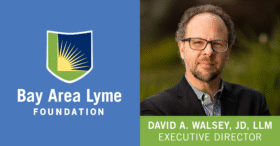
PORTOLA VALLEY, Calif., February 11, 2026Bay Area Lyme Foundation, a national nonprofit and leading sponsor of tick-borne disease research, today reflected on concrete progress in 2025 that demonstrates the maturation of more than a decade of investment in diagnostics, therapeutics, and research infrastructure for Lyme and other tick-borne diseases. As Bay Area Lyme Foundation-supported programs advance towards being available for clinicians and patients, the organization announced David A. Walsey, JD, LLM, as Executive Director. He has extensive experience offering strategic guidance to life sciences companies and a personal connection to Lyme disease that will help guide the foundation’s next phase of scientific translation and organizational growth.

In 2025, Bay Area Lyme Foundation reached an important inflection point as new diagnostic tests enabled by the foundation’s Lyme Disease Biobank secured FDA clearance. These new tests highlight the potential to move from discovery-stage research toward tools that can meaningfully improve patient care. The organization also launched Bay Area Lyme Ventures, an investment arm designed to help promising diagnostics and therapeutics move more efficiently from the laboratory into real-world use, while also creating the opportunity for returns to support future Bay Area Lyme Foundation research. This progress underscores the importance of the more than $30 million in research Bay Area Lyme Foundation has invested at leading academic and medical institutions such as Stanford, Johns Hopkins, Tulane, and Duke. Research supported by the foundation has produced over 70 peer-reviewed scientific publications and sustained collaboration across top research centers nationwide.

Better Tests, Better Answers 

Jyotsna Shah, PhD, Ticktective

Bay Area Lyme Leading the Way Series


“The IGeneX test is far more sensitive than most commercially available tests for Lyme disease, detecting far more positive patients compared to standard two-tier ELISA or Western Blot tests,”

– Jyotsna Shah, PhD

Click here to watch or listen now

For people living with or who suspect Lyme disease, getting a clear diagnosis can feel like the hardest part. Symptoms often mimic those of other illnesses, and traditional tests miss many cases. 

In this episode of Ticktective™, Dr. Jyotsna Shah, President and Laboratory Director of IGeneX, shares with our host, Dana Parish, how her team is changing that—and how Bay Area Lyme Foundation helped make it possible. 

Dr. Shah explains how partnerships between innovative labs like IGenex, Bay Area Lyme Foundation, and our Lyme Disease Biobank are helping deliver faster, more accurate diagnostics—and new hope for patients who’ve struggled for years to find answers.

Bay Area Lyme Foundation Launches Bay Area Lyme Ventures as First Impact Investment Fund to Support Entrepreneurs and Companies Advancing Lyme Disease Solutions

Lyme Ventures

FOR IMMEDIATE RELEASE

Bay Area Lyme Foundation Launches Bay Area Lyme Ventures as First Impact Investment Fund to Support Entrepreneurs and Companies Advancing Lyme Disease Solutions

New venture philanthropy fund announces initial investments and will help guide game-changing Lyme diagnostics and therapeutics to commercialization

PORTOLA VALLEY, Calif., September 4, 2025 — Bay Area Lyme Foundation, a leading sponsor of Lyme disease research in the US, today announced the launch of Bay Area Lyme Ventures (Lyme Ventures), a bold new impact fund that is the first designed to attract and drive investment to promising tick-borne diagnostics and therapeutics nearing commercialization. By bringing together strategic research investments, collaborative partnerships, and patient-focused resources, Lyme Ventures aims to advance innovative diagnostics and therapeutics to fill significant gaps that exist in medical care. Today, the fund announces investments in Aces Diagnostics and LymeAlert, both of which are designed to help people bitten by ticks navigate the complicated process of getting an accurate diagnosis.

“This new chapter expands Bay Area Lyme Foundation’s commitment to accelerating innovative diagnostics and therapeutic breakthroughs, as there is an extreme scarcity of support for entrepreneurs and companies developing accurate solutions for patients and clinicians in tick-borne disease,” said Linda Giampa, who led Bay Area Lyme Foundation for the past 12 years and is now the founder and managing director of Bay Area Lyme Ventures.

Lyme Ventures will complement Bay Area Lyme Foundation’s continued commitment to funding scientific research by advancing promising discoveries into clinical development and, ultimately, through commercialization. To date, Bay Area Lyme Foundation has granted more than $30 million toward research, while Lyme Ventures has a goal of investing $5 million by 2027 into companies working to bring solutions to market. Proceeds from these philanthropic investments will fund research projects at Bay Area Lyme Foundation.

Tick-borne Disease Prevention for City Employees

City of San Jose

Bay Area Lyme Spotlights Series


“Tick-borne diseases are a growing public health concern in California and across the country. Educating the community and supporting prevention efforts is essential.”

– Guillermo Calvillo, Staff Specialist

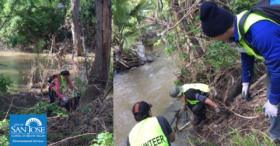
For the past four years, Bay Area Lyme Foundation has partnered with the City of San Jose’s Environmental Services Division (ESD) to offer free tick-bite prevention and Lyme disease awareness training to employees whose jobs in the field place them at risk of exposure to ticks. As part of our ongoing education efforts, we spoke with Staff Specialist Guillermo Calvillo to learn more about his department’s work—and why tick-bite prevention matters to his team.

BAL: What do you do?

Calvillo: I work at the City of San Jose Environmental Services Division (ESD). I am in charge of all aspects of safety training and compliance for the entire ESD. I have been with the city for almost five years, and I have learned a great deal while enjoying being part of the ESD team.

Bay Area Lyme Foundation Announces National Winner of the 2025 Emerging Leader Award to Develop a Much-Needed Rapid, Low-Cost, Easy-to-Use Lyme Disease Test

Chao Wang, PhD

FOR IMMEDIATE RELEASE 


Bay Area Lyme Foundation Announces National Winner of the 2025 Emerging Leader Award to Develop a Much-Needed Rapid, Low-Cost, Easy-to-Use Lyme Disease Test

Winner Chao Wang of Arizona State University will receive $150,000 to evaluate a unique diagnostic that uses gold nanoparticles and has been proven in other infectious diseases 

PORTOLA VALLEY, Calif., June 12, 2025—Bay Area Lyme Foundation, a leading sponsor of Lyme disease research in the US, has given its 2025 Emerging Leader Award (ELA) to Chao Wang, PhD, associate professor in the School of Electrical, Computer and Energy Engineering at Arizona State University, faculty with ASU’s Biodesign Institute® and an expert in nanotechnology and biosensors. Wang will receive $150,000 to support his work to develop a much-needed rapid, low-cost, easy-to-use test, called Nano2RED-LD, for Lyme disease. The test aims to deliver results in as few as 30 minutes when a patient who may have Lyme disease first sees a doctor. 

There is an immense need for better Lyme disease tests. Today’s standard-of-care tests miss too many cases at all stages of Lyme disease, including as many as 70% of early Lyme cases. 

“With Lyme disease cases rising steadily across the U.S., the need for accurate and timely diagnostic tools has never been greater,” said Katariina Tuovinen, research grant director, Bay Area Lyme Foundation. “Dr. Wang’s pioneering work epitomizes the essence of this award as it applies innovation from other infectious diseases in an effort to enhance outcomes for patients affected by Lyme disease.”

Award-Winning Short-Form YouTube Series ‘Girl at a Bar’ Depicts Challenges of Living with Chronic Lyme

Tracey Mullholland

Bay Area  Lyme Spotlights Series


“I hope people with Lyme can see themselves on screen and they resonate with it.” 

– Tracy Mulholland 

We sat down with Tracy Mulholland, actress, writer, producer, and Lyme patient, who wrote, produced, and stars in the award-winning short-form series Girl at a Bar, made possible by a grant from Bay Area Lyme Foundation. The short-form series, now available on YouTube, aims to provide an entertaining, accessible narrative to raise awareness about Lyme. Tracy hopes it will resonate with those living with chronic conditions and spark more conversations and content about these experiences. We discuss Tracy’s personal story as the inspiration behind the show and how the series explores challenges relevant not only to people navigating chronic illness but also to life in general. Conversation topics include:

  • How the show is inspired by the creator’s own experiences with Lyme disease, including the social isolation and impacts on relationships that can occur during chronic illness. 
  • An exploration around themes of identity, vulnerability, and empathy, drawing parallels to other chronic and invisible illnesses beyond Lyme. 
  • In addition to the short-form series, Tracy is launching a related spin-off podcast series where others are challenged to push their comfort zones.
  • Each episode aims to humanize the Lyme experience, foster greater understanding, and inspire more diverse storytelling about chronic illnesses in media and entertainment.

UCSF’s New Lyme Clinical Trials Center: Addressing the Need for Evidence-Based Treatments for Lyme & TBD Patients

Felicia Chow UCSF Clinical Trial

 Bay Area Lyme Happenings Series


UCSF has joined the Cohen Foundation’s nationwide Lyme Clinical Trials Network (CTN) for Lyme and tick-borne diseases. The new Lyme Clinical Trials Center (CTC) at UCSF was funded by a $1m grant from Bay Area Lyme Foundation and is led by Charles Chiu, MD, PhD, and Felicia Chow, MD, as co-principal investigators. As the West Coast ‘node’ in the network, UCSF’s new Lyme Clinical Trials Center will focus on interventional trials and diagnostic studies to improve diagnosis and treatment of Lyme disease.

In this presentation to patients with Lyme disease in Marin County just north of San Francisco, Dr. Chow explains how the CTC allows for a more diverse patient population to participate in Lyme clinical trials, which is critical for developing therapies that can help a wider range of patients. UCSF’s involvement also aims to help Bay Area Lyme raise awareness that Lyme disease is prevalent year-round in almost all California counties.

Dr. Chow discusses an upcoming trial at UCSF that will evaluate the use of transcranial direct current stimulation (tDCS) to improve cognitive symptoms in patients with chronic Lyme disease. Additionally, UCSF researchers are exploring the use of metagenomic sequencing and machine learning to develop more accurate diagnostic tests for Lyme and other tick-borne infections.

Note: This transcript of Dr. Chow’s presentation has been edited for length and clarity.

“I hope that through these clinical trials, we’ll be able to identify therapies that are helpful to patients and that, as a result, have an impact on clinically meaningful outcomes—from day-to-day function, quality of life, and all of those important measures that indicate that a treatment is successful.”

– Felicia Chow, MD

Lyme Patient Releases Smooth Jazz Album: Easing the Pain with Approachable Melodies

Steve Erlich

Bay Area Lyme Spotlight Series


“My goal was to create happy, melodic, and approachable music that everyone in the Lyme community can enjoy during infusions, when they are feeling down, or just need a distraction of their own.”

– Steve Ehrlich, Lyme patient

Steve Ehrlich emigrated to the Bay Area from South Africa in 1989. Chronic Lyme Disease cut his career in the software industry short, and he turned to writing music. His virtual band, The Inter Section, released its debut album, Jazz and All That, in November 2024. He spends his days on his sofa writing music with his dog, Teddy, making sure the notes are correct.

The Numbers Don’t Lie: Why the NIH Consistently Underfunds Research into Lyme Disease

An In-depth Interview with Kris Newby, Author of “Bitten”


“We need to let the NIH know that we’re watching them, and we want results.” 

– Kris Newby


Kris NewbyKris Newby, author of ‘Bitten,’ is investigating government spending on Lyme disease research, which is strongly influenced by the flawed original disease definition of Lyme disease. She summarizes the impact of the 2018 Tick-Borne Disease Working Group’s report, explains where research funding has and is currently being directed, and calls for money to be spent on better diagnostics and treatments for Lyme disease sufferers instead. Kris explores potential actions that Lyme patients can take to help direct the course of funding, such as communicating with Congress, supporting advocacy groups, and donating to research organizations.

The views and opinions expressed in this article are those of the interviewee and do not necessarily reflect the views or positions of Bay Area Lyme Foundation.

Kris Newby is watching our government, and watching quite closely. She has a lot to say about how government money is spent on a disease that, according to CDC estimates, infects almost 500,000 people annually in the US, causing untold pain, suffering, loss of livelihood, and, in extreme cases, severe mental illness, including suicidal and homicidal events.

Of course, we are talking about Lyme disease—the pariah of infection-associated chronic conditions.