Improving Lyme Diagnostics, Biomarkers, and Treatment: Inside Dr. Peter Gwynne’s Research

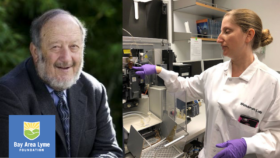
Peter Gwynne, PhD

Bay Area Lyme Leading the Way series


“I wanted to be doing work that was driven by clinical need… and there are a lot of clinical needs in Lyme disease.”

– Peter Gwynne, PhD

Peter Gwynne, PhDFor too many people with Lyme disease, the journey begins with uncertainty. A missed rash. A negative test. Symptoms that don’t make sense. A diagnosis that comes too late, or not at all. Bay Area Lyme Foundation believes this must change. And we believe change happens through funding rigorous science, innovative thinking, and supporting researchers willing to tackle the hardest questions head-on.

One of those scientists is Tufts researcher Peter Gwynne, PhD, a microbiologist whose work sits at the cutting edge of Lyme research and is the recipient of our 2022 Emerging Leader Award. We spoke with Dr. Gwynne to get an inside look at his work and understand how this may impact Lyme patients in the future. His focus is simple to state but complex to achieve: develop better diagnostics, identify meaningful biomarkers, and move the field toward treatments and even prevention strategies that could fundamentally reshape how Lyme disease is understood and managed.

Drawn to Lyme by the Urgency of the Need

Dr. Gwynne did not begin his career in Lyme disease. He trained in molecular microbiology, studying pathogens such as Salmonella and Staphylococcus, the bacteria responsible for serious infections, including those often acquired in hospital settings. But over time, he found himself seeking work that could make a tangible difference for patients.
Chronic Infections, Fertility, & Immunity: MIT Immunoengineer Makes Groundbreaking Lyme Discoveries

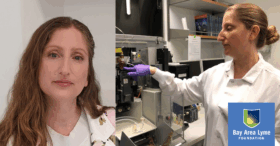
Michal Caspi Tal, PhD

Bay Area Lyme Spotlight Series


“There are significant increases after Lyme in fibroids and in endometriosis.”

– Michal Caspi Tal, PhD

Dancing Borrelia, Mikki Tal, PhD
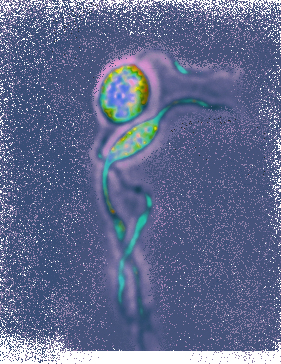
Borrelia burgdorferi under attack from the immune system.

Imagine a world where Lyme disease isn’t something people fear, but something we actively prevent, or at least treat more precisely, especially for the many who suffer long after the tick bite. Dr. Michal “Mikki” Caspi Tal, immunoengineer and Associate Scientific Director at the MIT Center for Gynecology Pathology Research, is turning that possibility into reality. Her research isn’t just pushing boundaries, it’s rewriting the rules, especially in regards to women’s health.

“Nobody had looked…at what was happening to the uterus.”

– Michal Caspi Tal, PhD

Watching this incredible Ticktective™ interview with host Dana Parish is an absolute treasure trove of information—and if you or someone you know has ever wondered why some people recover from Lyme and others don’t, why symptoms linger, or why women disproportionately suffer, this is one of the most important conversations you’ll hear this year.

Click here to watch or listen now

Accelerating Breakthroughs, Advancing Hope: How Bay Area Lyme Powers Lyme Disease Research

Bay Area Lyme Science Committee

Bay Area Lyme Leading the Way Series


“Every one of our success stories amplifies the ripple effect of philanthropy done right: targeted, strategic, and driven by measurable impact.”

– Katariina Tuovinen

For more than a decade, Bay Area Lyme Foundation has been rewriting the story of Lyme and tick-borne disease research. With a mission to make Lyme disease easy to diagnose and simple to cure, the Foundation has built a national reputation as a nimble, entrepreneurial engine for scientific innovation. Since its founding in 2012, Bay Area Lyme has invested more than $31 million to support over 60 groundbreaking studies and partnerships across 56 institutions nationwide, each one helping to transform the landscape of Lyme disease diagnostics, treatments, and prevention. 

At the heart of this success lies a small but mighty force: The Bay Area Lyme Science Committee, led by Research Grant Director Katariina Tuovinen, MS, MBA, MA, together with pediatric infectious disease physician Charlotte Mao, MD, MPH, and Liz Horn, PhD, MBI, Principal Investigator of Lyme Disease Biobank. Together, this team guides a grantmaking strategy that prizes bold ideas, cross-disciplinary collaboration, and measurable impact—an approach that has introduced new talent, fresh perspectives, and innovative technologies to a field that desperately needs them.

Bay Area Lyme Foundation Opens Applications for 2026 Emerging Leader Awards and Research Grants

Emerging Leader Award 2026 call for entries

FOR IMMEDIATE RELEASE

Bay Area Lyme Foundation Opens Applications for 2026 Emerging Leader Awards and Research Grants

Annual program to fund two $150,000 grants to revolutionize diagnosis and treatment of tick-borne diseases, including new award focused on co-infections

PORTOLA VALLEY, Calif., October 22, 2025 – Bay Area Lyme Foundation, a leading sponsor of Lyme disease research in the US, today announced its call for applicants from academia and the private sector for the 2026 Emerging Leader Awards (ELA). These annual awards recognize innovative researchers advancing novel approaches in tick-borne disease diagnostics and treatments, while embodying the future of research leadership in this critical field.

In 2026, Bay Area Lyme Foundation will award two $150,000 ELA grants:

  • Lyme Disease Award will support creative approaches to advancing diagnostics and/or therapeutics for Lyme disease, continuing the legacy started more than a decade ago.
  • Tick-borne Pathogen Award is a new grant to support research on non-Borrelia tick-borne pathogens/infections occurring in the US, with preference for bacterial and parasitic pathogens. Projects may address co-infections in combination with Borrelia burgdorferi or as stand-alone investigations. Viral infections (e.g., Powassan virus, Heartland virus) are excluded from this category.

Applications are due by February 15, 2026, at 11:59pm PT. Eligible applicants include academic and private-sector researchers at the post-doctoral through associate professor level (or equivalent in industry), including those new to Lyme and tick-borne disease research. All applicants are encouraged to request samples from the Lyme Disease Biobank.

Applicants must demonstrate scientific leadership, a strong supporting rationale, and the ability to generate proof of concept within 12–24 months. While diagnostic and therapeutic approaches are of particular interest, all areas of research relevant to patients will be considered. Submissions require a research proposal and at least one supporting letter from a supervisor or Principal Investigator.

The full criteria and application can be found here. Awardees will be announced at LymeAid in May 2026.

Journal of Clinical Microbiology Studies Demonstrate Two Investigational Diagnostics Outperform Current Tests in Detecting Early Lyme Disease

Journal of Clinical Microbiology Studies Demonstrate Two Investigational Diagnostics Outperform Current Tests in Detecting Early Lyme Disease

FOR IMMEDIATE RELEASE


Journal of Clinical Microbiology Studies Demonstrate Two Investigational Diagnostics Outperform Current Tests in Detecting Early Lyme Disease

Studies utilize Bay Area Lyme Foundation’s Lyme Disease Biobank samples to point to the promise of single-tier diagnostics to potentially transform early detection


PORTOLA VALLEY, Calif., October 9, 2025 — Bay Area Lyme Foundation, the leading nonprofit funder of Lyme disease research in the US, today announced results from two independent studies published in Journal of Clinical Microbiology, conducted by researchers at Tufts University School of Medicine, and Kephera Diagnostics, respectively, demonstrating the potential of novel investigational single-tier Lyme disease tests to improve accuracy in the earliest stages of infection. Each study uses well-characterized samples from Bay Area Lyme Foundation’s Lyme Disease Biobank and demonstrated unprecedented accuracy, far exceeding the current CDC-recommended Lyme disease two-tier test, which can miss up to 70% of early-stage cases as well as later-stage cases.

“The CDC’s standard two-tier Lyme diagnostic misses the majority of early cases, delaying treatment and increasing the risk of developing persistent, debilitating symptoms for patients. The two novel single-tier assays—while not yet FDA-cleared for clinical use—point to a future where Lyme disease can be diagnosed quickly, accurately, and with a single test,” Liz Horn, PhD, MBI, a coauthor on both studies, and Principal Investigator of Lyme Disease Biobank, a Bay Area Lyme Foundation program that provides much-needed samples to approved researchers working to better understand tick-borne diseases and develop improved diagnostic tests and therapeutics. “These single tier tests, like InBios Lyme Detect™ and Kephera’s Hybrid Lyme ELISA could mark a turning point for Lyme diagnostics, giving physicians and patients more accurate tools that are urgently needed.”

The first study, evaluating the InBios Lyme Detect™ Multiplex ELISA, was conducted by Pete Gwynne, PhD, a 2022 Bay Area Lyme Emerging Leader Award (ELA) winner, and colleagues at Tufts University School of Medicine. Using samples from the Lyme Disease Biobank, this new diagnostic correctly identified all two-tier positive samples evaluated in the study, while also detecting 21 of 79 clinically diagnosed patients who were missed by following the current CDC guidance for testing using FDA-cleared standard two-tier tests (STTT) and had erythema migrans (EM) skin lesions. Importantly, the InBios test maintained >99% specificity, with only one false positive across more than 200 control and lookalike disease samples and was shown to be highly reproducible.

  Science Translational Medicine Study Funded by the Bay Area Lyme Foundation Identifies FDA-approved Piperacillin as More Effective, Targeted Treatment for Lyme Disease

Brandon Jutras

FOR IMMEDIATE RELEASE 


  Science Translational Medicine Study Funded by the Bay Area Lyme Foundation Identifies FDA-approved Piperacillin as More Effective, Targeted Treatment for Lyme Disease

An additional Science Translational Medicine study also funded by Bay Area Lyme Foundation uncovers how lingering bacterial cell wall molecules may contribute to chronic Lyme symptoms  

PORTOLA VALLEY, Calif. April 23, 2025 – Bay Area Lyme Foundation, a leading sponsor of Lyme disease research in the US, announces two pre-clinical studies published in the peer-reviewed journal Science Translational Medicine. The studies demonstrate promising implications for improved Lyme disease treatment and understanding of chronic Lyme through peptidoglycan, a molecule found in the cell wall of the bacterium, Borrelia burgdorferi (Bb), which causes Lyme disease. The first study finds piperacillin, an FDA-approved treatment for pneumonia that inhibits peptidoglycan production, may be a more effective treatment for Lyme disease than the current “gold standard” treatment, doxycycline, which is not effective for up to 20% of patients. The second study uncovers how lingering peptidoglycan builds up in the joint fluid and liver, contributing to chronic Lyme symptoms, which affect over 20% of patients treated for Lyme disease.

“Piperacillin may be a game-changer for improving Lyme disease treatment, which is currently a challenge for researchers and physicians. Furthermore, our new mechanistic understanding of how piperacillin affects peptidoglycan synthesis is unexpectedly informing our development of a biomarker-based approach to diagnose acute Lyme disease,” said Brandon Jutras, PhD, associate professor of Microbiology-Immunology at Northwestern University Feinberg School of Medicine, and a Bay Area Lyme Foundation 2021 Emerging Leader Award winner. “Our second study explores the role of peptidoglycan in chronic Lyme symptoms; peptidoglycan influences an inflammatory and chronic illness response for weeks or even months after infection, adding to the growing evidence that remnants of bacteria and viruses can stick around and keep affecting the body, similar to the occurrence of Long COVID in some patients.”

Connection and Collaboration Bringing Hope: Understanding the Immune System’s Role in Post-Treatment Lyme Disease

Bill Robonson, MD, PhD

Bay Area Lyme Spotlights Series


“Philanthropy is mission-critical to advance the field of Lyme disease research.”

– Bill Robinson, MD, PhD

In this conversation, we talk with Bill Robinson, MD, PhD, the James W. Raitt professor of medicine and division chief, division of immunology and rheumatology at Stanford University, about how his work is helping us understand the immune system’s response to a Lyme infection. A long-term collaborator and grant recipient of Bay Area Lyme Foundation, Dr. Robinson reflects on his history with our organization, the plight of Lyme patients, the paucity of government funding for investigations into the disease, where Lyme disease research is now, and where he thinks it’s headed in the next 5-10 years.

Bay Area Lyme Foundation Opens Applications for 2025 Emerging Leader Award and Research Grant

ELA Award 2026

FOR IMMEDIATE RELEASE 

Bay Area Lyme Foundation Opens Applications for 2025 Emerging Leader Award and Research Grant

In its tenth year, the annual grant encourages novel approaches to revolutionizing diagnosis and treatment of tick-borne diseases

PORTOLA VALLEY, Calif., October 31, 2024 – Bay Area Lyme Foundation, a leading sponsor of Lyme disease research in the U.S., invites innovative researchers from academia and the private sector to apply for the 2025 Emerging Leader Awards (ELA). These awards recognize those advancing novel approaches in Lyme disease diagnostics and treatments, while embodying the future of Lyme disease research leadership. This year, in its tenth anniversary, Bay Area Lyme Foundation’s ELA will present two $150,000 awards for researchers who are at the post-doctoral level through associate professor level or equivalent.

While applicants must have a defined scientific approach to advancing diagnostics and/or therapeutics for Lyme disease, the grants are open to researchers from other therapeutic areas in addition to those who have previously investigated Lyme disease. Applications will be accepted through March 7, 2025 at 11:59pm, Pacific Time. The full criteria and application for this award can be found at www.bayarealyme.org/our-research/emerging-leader-award/.

“The global impact of both acute and chronic infections has never been more apparent, and tackling an infectious disease as complex as Lyme requires innovative approaches and concerted efforts to drive progress in diagnostics and treatment,” said Wendy Adams, research grant director Bay Area Lyme Foundation. “Our goal with the Emerging Leader Award is to inspire ambitious and creative scientists to take on the challenge of advancing accurate diagnostics and effective therapeutics for various stages of tick-borne diseases.”

Bay Area Lyme Foundation Selects National Winner of the 2024 Emerging Leader Award for Research of Combination Therapies to Treat Chronic Lyme Disease

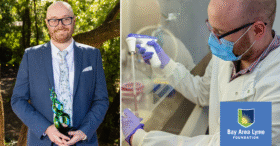
Trever Smith, PhD winner of Emerging Leader Award

FOR IMMEDIATE RELEASE


Bay Area Lyme Foundation Selects National Winner of the 2024 Emerging Leader Award for Research of Combination Therapies to Treat Chronic Lyme Disease

Winner Trever Smith, of Tufts University, will collect novel therapeutic data to develop a first-of-its-kind drug interaction compendium for Lyme Disease

PORTOLA VALLEY, Calif., August 1, 2024—Bay Area Lyme Foundation, a leading sponsor of Lyme disease research in the US, announces the recipient of the 2024 Emerging Leader Award (ELA), which is designed to support new and innovative research and aims to attract aspiring new scientific talent to the field of Lyme. This year’s winner, Trever Smith, PhD, Research Assistant Professor of Molecular Biology and Microbiology at Tufts University School of Medicine, will receive $150,000 for his work to identify precise treatment combinations that more effectively target persistent Borrelia burgdorferi (Bb) infection in persistent Lyme patients. For this research, Dr. Smith intends to develop a first-of-its-kind drug interaction compendium to help prioritize the most effective combinations for testing in pre-clinical models of Lyme disease. To do so, Dr. Smith will leverage techniques he and other researchers use to identify effective drug combinations against other infectious diseases, such as tuberculosis, and translate them for Bb. Due to the difficulty in diagnosing and treating Lyme disease, it is estimated that over two million patients currently suffer from the debilitating later-stage symptoms of persistent Lyme in the US, and there are currently no FDA-approved treatments for the persistent symptoms of Lyme disease.

“While combination therapies to treat chronic Lyme have shown promise in early research and are widely used with success in other disease areas, the vast majority of chronic Lyme patients are not able to benefit from combination therapies,” said Wendy Adams, research grant director, Bay Area Lyme Foundation. “Dr. Smith’s research aims to change this, as it builds on his previous research success in tuberculosis to bring the hope of combination therapies for Lyme to the forefront and seeks to give clinicians and researchers a better understanding of the advantages of combining current FDA-approved treatments in Lyme disease.”

New Discovery Identifies “Don’t Eat Me” Protein that Allows Lyme Bacteria to Evade Body’s Immune Response

New Discovery Identifies “Don’t Eat Me” Protein that Allows Lyme Bacteria to Evade Body’s Immune Response

FOR IMMEDIATE RELEASE


New Discovery Identifies “Don’t Eat Me” Protein that Allows Lyme Bacteria to Evade Body’s Immune Response

Stanford University/MIT/UCSF study funded by Bay Area Lyme Foundation offers new direction for tick-borne disease research, paving the way for potential new discoveries   

Palo Alto, CA, May 7, 2024—Bay Area Lyme Foundation, a leading sponsor of Lyme disease research in the U.S., today announced a study finding a new mechanism of immune evasion used by Borrelia burgdorferi (Bb), the bacterium that causes Lyme disease. This study is the first to identify the specific Borrelia protein that acts as a “don’t eat me” signal to the body’s immune system in people with Lyme disease, offering insight into how the bacteria may persist in Lyme patients and introduces an entirely new research direction toward potential future treatments. The research was conducted at Stanford University and University of California San Francisco and funded in part by Bay Area Lyme Foundation. This groundbreaking data posted on bioRxiv on April 30, 2024, is expected to be published in a peer-review journal in the future.

“One of the big mysteries of Lyme disease has been how Borrelia is able to evade and survive the immune system – and this study helps answer that question. We’ve unlocked a critical door to understanding how this bacteria, and possibly other pathogens, manage to trick the immune system to evade clearance,” said lead author Michal Tal, PhD, principal scientist, Massachusetts Institute of Technology, and a Bay Area Lyme Foundation 2018 Emerging Leader Award winner who has received additional funding from the organization for this project.

In this study, researchers found that P66, a known Borrelia surface protein and one of the IgG Western Blot testing “bands” used for diagnosis, can inhibit an important portion of the immune response.