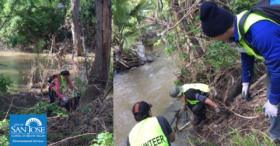
Tick-borne Disease Prevention for City Employees

City of San Jose

Bay Area Lyme Spotlights Series


“Tick-borne diseases are a growing public health concern in California and across the country. Educating the community and supporting prevention efforts is essential.”

– Guillermo Calvillo, Staff Specialist

For the past four years, Bay Area Lyme Foundation has partnered with the City of San Jose’s Environmental Services Division (ESD) to offer free tick-bite prevention and Lyme disease awareness training to employees whose jobs in the field place them at risk of exposure to ticks. As part of our ongoing education efforts, we spoke with Staff Specialist Guillermo Calvillo to learn more about his department’s work—and why tick-bite prevention matters to his team.

BAL: What do you do?

Calvillo: I work at the City of San Jose Environmental Services Division (ESD). I am in charge of all aspects of safety training and compliance for the entire ESD. I have been with the city for almost five years, and I have learned a great deal while enjoying being part of the ESD team.
The Lyme-Mold Connection: An Incredible Guide to Healing

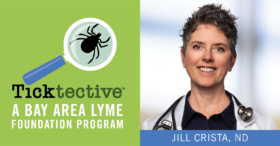
Dr Jill Crista

Bay Area Lyme Quick Bites Series


“I think I prevented a lot of chronic Lyme cases by doing adequate early treatment. But I had a subset of patients who just were not getting better. These cases had either a current or a past exposure to mold.”

– Jill Crista, ND

In this latest episode of Ticktective, our host, Dana Parish, talks with Dr. Jill Crista, a leading expert on the diagnosis and treatment of toxic mold exposure and illness. Dr. Crista started her practice in southern Wisconsin, which is often in the top five states for Lyme disease cases, even though Lyme is often thought of as a Northeast issue.

Click here to watch or listen now.

Parish and Crista discuss the complex nature of mold toxicity, including its impact on the immune system, the brain, and various organ systems. Crista emphasizes the importance of identifying the underlying causes of mold exposure, such as water damage and poor indoor air quality, rather than just addressing the symptoms.

Bay Area Lyme Foundation Announces National Winner of the 2025 Emerging Leader Award to Develop a Much-Needed Rapid, Low-Cost, Easy-to-Use Lyme Disease Test

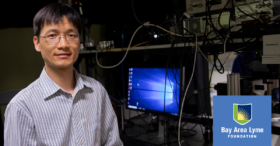
Chao Wang, PhD

FOR IMMEDIATE RELEASE 


Bay Area Lyme Foundation Announces National Winner of the 2025 Emerging Leader Award to Develop a Much-Needed Rapid, Low-Cost, Easy-to-Use Lyme Disease Test

Winner Chao Wang of Arizona State University will receive $150,000 to evaluate a unique diagnostic that uses gold nanoparticles and has been proven in other infectious diseases 

PORTOLA VALLEY, Calif., June 12, 2025—Bay Area Lyme Foundation, a leading sponsor of Lyme disease research in the US, has given its 2025 Emerging Leader Award (ELA) to Chao Wang, PhD, associate professor in the School of Electrical, Computer and Energy Engineering at Arizona State University, faculty with ASU’s Biodesign Institute® and an expert in nanotechnology and biosensors. Wang will receive $150,000 to support his work to develop a much-needed rapid, low-cost, easy-to-use test, called Nano2RED-LD, for Lyme disease. The test aims to deliver results in as few as 30 minutes when a patient who may have Lyme disease first sees a doctor. 

There is an immense need for better Lyme disease tests. Today’s standard-of-care tests miss too many cases at all stages of Lyme disease, including as many as 70% of early Lyme cases. 

“With Lyme disease cases rising steadily across the U.S., the need for accurate and timely diagnostic tools has never been greater,” said Katariina Tuovinen, research grant director, Bay Area Lyme Foundation. “Dr. Wang’s pioneering work epitomizes the essence of this award as it applies innovation from other infectious diseases in an effort to enhance outcomes for patients affected by Lyme disease.”

Dr Jill Crista: The Lyme-Mold Connection: An Incredible Guide to Healing

Ticktective Podcasts

Dr. Jill Crista

Dr. Jill Crista is a pioneering naturopathic doctor, best-selling author, devoted educator, and creative innovator. Her superpower is to make complex medical concepts simple and digestible for the average person. Dr. Jill focuses on conditions that cause injury to the brain and nervous system, including mold, PANS and PANDAS, Lyme disease, and concussion.

  Science Translational Medicine Study Funded by the Bay Area Lyme Foundation Identifies FDA-approved Piperacillin as More Effective, Targeted Treatment for Lyme Disease

Brandon Jutras

FOR IMMEDIATE RELEASE 


  Science Translational Medicine Study Funded by the Bay Area Lyme Foundation Identifies FDA-approved Piperacillin as More Effective, Targeted Treatment for Lyme Disease

An additional Science Translational Medicine study also funded by Bay Area Lyme Foundation uncovers how lingering bacterial cell wall molecules may contribute to chronic Lyme symptoms  

PORTOLA VALLEY, Calif. April 23, 2025 – Bay Area Lyme Foundation, a leading sponsor of Lyme disease research in the US, announces two pre-clinical studies published in the peer-reviewed journal Science Translational Medicine. The studies demonstrate promising implications for improved Lyme disease treatment and understanding of chronic Lyme through peptidoglycan, a molecule found in the cell wall of the bacterium, Borrelia burgdorferi (Bb), which causes Lyme disease. The first study finds piperacillin, an FDA-approved treatment for pneumonia that inhibits peptidoglycan production, may be a more effective treatment for Lyme disease than the current “gold standard” treatment, doxycycline, which is not effective for up to 20% of patients. The second study uncovers how lingering peptidoglycan builds up in the joint fluid and liver, contributing to chronic Lyme symptoms, which affect over 20% of patients treated for Lyme disease.

“Piperacillin may be a game-changer for improving Lyme disease treatment, which is currently a challenge for researchers and physicians. Furthermore, our new mechanistic understanding of how piperacillin affects peptidoglycan synthesis is unexpectedly informing our development of a biomarker-based approach to diagnose acute Lyme disease,” said Brandon Jutras, PhD, associate professor of Microbiology-Immunology at Northwestern University Feinberg School of Medicine, and a Bay Area Lyme Foundation 2021 Emerging Leader Award winner. “Our second study explores the role of peptidoglycan in chronic Lyme symptoms; peptidoglycan influences an inflammatory and chronic illness response for weeks or even months after infection, adding to the growing evidence that remnants of bacteria and viruses can stick around and keep affecting the body, similar to the occurrence of Long COVID in some patients.”

Nancy Haney’s Death: A Tragic Story of Misdiagnosis, Delayed Diagnosis, and Medical Failure

Nancy Haney

Bay Area Lyme Spotlights Series


“If you have someone who’s sick and you are treating them and they’re not getting better, then either the treatment is wrong or the diagnosis is wrong.” 

– David Haney, PhD


Nancy Haney was a highly respected pediatric physical therapist who developed serious health problems that were misdiagnosed over many years, leading to delays in treatment. After exhaustive efforts, it was determined that Nancy had developed an autoimmune condition—likely triggered by Lyme disease—that resulted in debilitating symptoms and complications, including a long-lasting case of shingles, which eventually led to a fatal hemorrhagic stroke. David Haney, Nancy’s husband, recounts his tireless pursuit to find Nancy appropriate care and treatment. Despite his efforts, the mainstream medical system repeatedly failed to correctly diagnose and treat Nancy’s underlying conditions, which led to a tragic and preventable outcome. 

David’s story is a call to action for greater awareness, more comprehensive training for doctors, and a fundamental shift in the medical community’s approach to complex, multifaceted infection-associated chronic conditions. Nancy’s case highlights the critical need for improved awareness, diagnostic tools, and treatment approaches for complex cases involving Lyme and tick-borne diseases. Only then can we hope to prevent other families from enduring the same treatment failures as the Haney family.

Connection and Collaboration Bringing Hope: Understanding the Immune System’s Role in Post-Treatment Lyme Disease

Bill Robonson, MD, PhD

Bay Area Lyme Spotlights Series


“Philanthropy is mission-critical to advance the field of Lyme disease research.”

– Bill Robinson, MD, PhD

In this conversation, we talk with Bill Robinson, MD, PhD, the James W. Raitt professor of medicine and division chief, division of immunology and rheumatology at Stanford University, about how his work is helping us understand the immune system’s response to a Lyme infection. A long-term collaborator and grant recipient of Bay Area Lyme Foundation, Dr. Robinson reflects on his history with our organization, the plight of Lyme patients, the paucity of government funding for investigations into the disease, where Lyme disease research is now, and where he thinks it’s headed in the next 5-10 years.

Dr. Scott Commins: Alpha Gal Chronicles: A Guide to Tick-Induced Meat Allergies

Ticktective Podcasts

Dr. Scott Commins

Dr. Scott Commins is an esteemed allergist and immunologist known for his pioneering research on alpha-gal syndrome, a meat allergy triggered by tick bites. With a medical degree from the University of North Carolina at Chapel Hill and fellowship training at the University of Michigan, he has dedicated his career to understanding food allergies and their impact on patients’ lives. Dr. Commins is a prominent speaker and educator; his work has been instrumental in raising awareness about tick-related allergies and improving the diagnosis and management of this condition.

To read the podcast transcript, click here.

Dr. Neil Nathan: When You’re Not Getting Better. Best-selling Author and Chronic Illness Expert has Answers.

Dr Neil Nathan

Bay Area Lyme Quick Bites series


“If you have Lyme disease and your treatment is stalled out or not moving or you’re not progressing the way you should, please check for mold. It’s almost certain that’s what you need to be working on next.”

– Neil Nathan, MD

Dr. Neil NathanOur Ticktective host, Dana Parish, interviews Dr. Neil Nathan, renowned physician and best-selling author. Dr. Nathan specializes in treating chronic illnesses, particularly those related to environmental toxins, vector-borne infections, and complex systemic disorders. With decades of experience in clinical practice, he focuses on understanding the impact of toxins on health and is dedicated to helping patients recover from illnesses that conventional medicine often struggles to address. His bestselling book, Toxic: Heal Your Body from Mold Toxicity, Lyme Disease, Multiple Chemical Sensitivities, and Other Chronic Environmental Illnesses, provides a comprehensive guide to recognizing, diagnosing, and treating various chronic conditions linked to environmental factors.

Click here to watch or listen now.

Award-Winning Short-Form YouTube Series ‘Girl at a Bar’ Depicts Challenges of Living with Chronic Lyme

Tracey Mullholland

Bay Area  Lyme Spotlights Series


“I hope people with Lyme can see themselves on screen and they resonate with it.” 

– Tracy Mulholland 

We sat down with Tracy Mulholland, actress, writer, producer, and Lyme patient, who wrote, produced, and stars in the award-winning short-form series Girl at a Bar, made possible by a grant from Bay Area Lyme Foundation. The short-form series, now available on YouTube, aims to provide an entertaining, accessible narrative to raise awareness about Lyme. Tracy hopes it will resonate with those living with chronic conditions and spark more conversations and content about these experiences. We discuss Tracy’s personal story as the inspiration behind the show and how the series explores challenges relevant not only to people navigating chronic illness but also to life in general. Conversation topics include:

  • How the show is inspired by the creator’s own experiences with Lyme disease, including the social isolation and impacts on relationships that can occur during chronic illness. 
  • An exploration around themes of identity, vulnerability, and empathy, drawing parallels to other chronic and invisible illnesses beyond Lyme. 
  • In addition to the short-form series, Tracy is launching a related spin-off podcast series where others are challenged to push their comfort zones.
  • Each episode aims to humanize the Lyme experience, foster greater understanding, and inspire more diverse storytelling about chronic illnesses in media and entertainment.