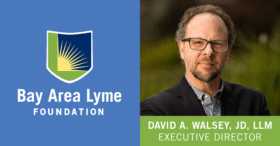
A Leader Who Understands the Journey: Welcoming David Walsey as Bay Area Lyme Foundation’s New Executive Director

Bay Area Lyme Spotlight Series


“Science drives our mission, but patient stories remind us why the science matters.”

– David Walsey

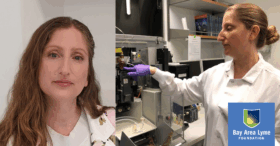
As David Walsey steps into his new role as Executive Director of Bay Area Lyme Foundation, he brings more than professional expertise. He brings lived experience of diagnostic uncertainty, immune dysfunction, co-infections, and the long arc many families travel before answers emerge. For patients, caregivers, and supporters of Bay Area Lyme, David’s leadership signals both continuity and momentum: a future rooted in rigorous science, compassionate leadership, and hope grounded in progress. “It’s been a long journey to get here,” David says. “We’ve spent nearly a decade navigating tick-borne disease as a family. That experience changed everything for us.” Dana Parish interviewed David as part of our Ticktective video podcast series. Watch or listen to the complete interview.

When Symptoms Don’t Fit the Textbook

Nearly ten years ago, David’s son began experiencing a constellation of symptoms that defied easy explanation. Despite multiple medical evaluations, no unifying diagnosis emerged. When Lyme disease was finally identified, the family initially felt relief. “I thought this was a solvable, short-term problem,” David recalls. “You treat it, and life goes back to normal.”
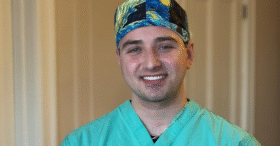
We Need a New Generation of Lyme Doctors: James Bruzzese, MD, is Leading the Way

James Bruzzese

Bay Area Lyme Spotlights Series


“Some institutions are evolving in research and education, but it’s not translating to clinical practice.”

– James Bruzzese, MD

When James Bruzzese, MD, talks about Lyme disease, he doesn’t speak in abstractions. He speaks as a brother who watched his sister lose her ability to walk; a son who watched his father leave his job to become a full-time caregiver; and as a medical student who sat in lecture halls knowing that what was being taught about Lyme and tick-borne disease was grossly incomplete.

Now, as a young physician preparing to open a practice dedicated to treating Lyme and tick-borne disease patients in New York, James represents something the Lyme community urgently needs: a new generation of doctors who understand that Lyme is real, that patients deserve better, and that the status quo must be challenged.

“It Was Traumatic. We Thought We Might Lose Her.”

Bacterial Mechanism That Could Help Prevent and Treat Lyme Arthritis Identified by New Bay Area Lyme Foundation–Supported Study

Brandon Jutras, PhD

FOR IMMEDIATE RELEASE


Bacterial Mechanism That Could Help Prevent and Treat Lyme Arthritis Identified by New Bay Area Lyme Foundation–Supported Study

Research published in PLOS Pathogens highlights a cell wall–driven trigger of joint inflammation, pointing to new ways to target Lyme arthritis

PORTOLA VALLEY, Calif., January 20, 2026 — Bay Area Lyme Foundation, a leading sponsor of Lyme disease research in the United States, announced the publication of new research in PLOS Pathogens identifying a novel mechanism that may trigger Lyme arthritis, one of the most common and debilitating complications of Lyme disease in the US. The study provides new insight into how the structure of Borrelia burgdorferi peptidoglycan, a component of the bacterium’s cell wall, and its interaction with a Borrelia protein can provoke joint inflammation. In a preclinical model, subtle changes researchers made to the bacterium’s peptidoglycan structure nearly eliminated arthritis despite ongoing infection, suggesting new approaches to reduce Lyme arthritis and joint damage that may complement antibiotics by targeting inflammatory bacterial components.

“Understanding how these bacterial structures provoke inflammation is an avenue towards new approaches for limiting long-term joint damage and possibly treating patients whose symptoms persist despite standard antibiotic therapy,” said Brandon L. Jutras, PhD, lead author of the study and associate professor of Microbiology-Immunology at Northwestern University Feinberg School of Medicine, and a Bay Area Lyme Foundation 2021 Emerging Leader Award winner. “Our findings offer critical insight into how Lyme arthritis is largely driven by specific structural components of Borrelia burgdorferi that may be targeted independent of the other aspects of the infection.”

This new study demonstrates that the chemical makeup and physical structure of peptidoglycan, a structural component of the Borrelia cell wall, play a decisive role in determining whether joint inflammation develops. It also demonstrates how impeding peptidoglycan’s interaction with a specific Borrelia protein may impact the bacterium’s ability to migrate to and persist within joint tissue, resulting in near elimination of Lyme arthritis in the study.

Chronic Infections, Fertility, & Immunity: MIT Immunoengineer Makes Groundbreaking Lyme Discoveries

Michal Caspi Tal, PhD

Bay Area Lyme Spotlight Series


“There are significant increases after Lyme in fibroids and in endometriosis.”

– Michal Caspi Tal, PhD

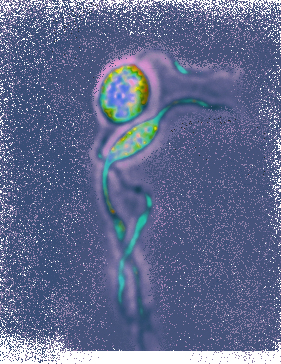
Dancing Borrelia, Mikki Tal, PhD
Borrelia burgdorferi under attack from the immune system.

Imagine a world where Lyme disease isn’t something people fear, but something we actively prevent, or at least treat more precisely, especially for the many who suffer long after the tick bite. Dr. Michal “Mikki” Caspi Tal, immunoengineer and Associate Scientific Director at the MIT Center for Gynecology Pathology Research, is turning that possibility into reality. Her research isn’t just pushing boundaries, it’s rewriting the rules, especially in regards to women’s health.

“Nobody had looked…at what was happening to the uterus.”

– Michal Caspi Tal, PhD

Watching this incredible Ticktective™ interview with host Dana Parish is an absolute treasure trove of information—and if you or someone you know has ever wondered why some people recover from Lyme and others don’t, why symptoms linger, or why women disproportionately suffer, this is one of the most important conversations you’ll hear this year.

Click here to watch or listen now

New Bay Area Lyme Foundation Study Reports That Only One-Third of Early Lyme Patients with On-Going Symptoms Followed up with their Healthcare Providers

Lyme Disease Biobank

FOR IMMEDIATE RELEASE


New Bay Area Lyme Foundation Study Reports That Only One-Third of Early Lyme Patients with On-Going Symptoms Followed up with their Healthcare Providers

The new research, published in Frontiers in Medicine, points to need for greater follow-up from medical professionals to address potential treatment failures. 

PORTOLA VALLEY, Calif., July 10, 2025—Bay Area Lyme Foundation, a leading sponsor of Lyme disease research in the US, announced the publication of new research in Frontiers in Medicine based on data from Bay Area Lyme Foundation’s Lyme Disease Biobank. This large-scale study conducted over 10 years at sites on the East Coast and the Upper Midwest demonstrates the need for improved diagnostics and increased follow-up by medical professionals for Lyme disease patients.

Only one-fifth of study participants (23%), enrolled with signs and symptoms of early Lyme, were positive by the CDC’s standard two-tiered test for Lyme disease, which supports previous research that found that it misses up to 70% of cases of early-stage Lyme disease. Further, approximately 1 in 5 patients reported ongoing symptoms at 3 months, including joint pain, fatigue, and muscle pain yet only one-third (35%) of these participants followed up with their healthcare providers about these ongoing symptoms. Due to difficulties in diagnosing Lyme disease and resulting treatment delays, as many as two million people may suffer from persistent Lyme disease, which can be debilitating.

Accurate, timely detection of Lyme disease is critical to preventing long-term complications. Moreover, follow-up from medical professionals with all patients after they complete antibiotic treatment could improve outcomes and reduce the burden of Lyme disease,” said lead author Liz Horn, PhD, MBI, Principal Investigator of Lyme Disease Biobank, a Bay Area Lyme Foundation program which helps to accelerate research by collecting, storing and providing much-needed human biological samples for use in research. “Our data also confirm the limitations of serology testing in early Lyme disease and after antibiotic treatment.”

Dr. Scott Commins, Alpha-Gal Syndrome, and a Guide to Tick-Induced Meat Allergies

Scott Commins Ticktective

Ticktective Podcast Transcript


Ticktective host Dana Parish interviews Scott P. Commins, MD, PhD, about the growing prevalence of alpha-gal syndrome, a food allergy condition caused by a tick bite, where people develop an allergic reaction to a sugar found in red meat and other mammalian products. Symptoms can include hives, gastrointestinal distress, and potentially life-threatening anaphylaxis, often occurring 3–6 hours after consuming specific foods. This syndrome is increasing, especially in the Southeastern United States, due to the spread of the Lone Star tick. Dr. Commins discusses the current state of research in the US and how investigators are working to develop immunotherapy approaches to help desensitize patients and potentially resolve the allergy over time. 


ChronicDana Parish: Welcome to the Ticktective Podcast, a program of the Bay Area Lyme Foundation, where our mission is to make Lyme disease easy to diagnose and simple to cure. I’m your host, Dana Parish, and I’m the co-author of the book Chronic, and I sit on the advisory board of Bay Area Lyme Foundation. This program offers insightful interviews with scientists, clinicians, patients, and other interesting people. We’re a nonprofit based in Silicon Valley, and thanks to a generous grant that covers a hundred percent of our overhead. All of your donations go directly to our research and prevention programs. For more information about Lyme disease, please visit us at bayarealyme.org. 

Today, I welcome Dr. Scott Commins. He is a highly esteemed expert in the field of allergy and immunology at the University of North Carolina (UNC) and a pioneer when it comes to alpha-gal syndrome. You’ve heard about alpha-gal when a tick bite can cause a meat allergy, but there is so much more to know. So enjoy this interview. I hope you learn a lot and please share it with your doctors because there is such a lack of education about this very important syndrome, and doctors becoming aware of it will only help us patients.

Dr. Neil Nathan: When You’re Not Getting Better. Best-selling Author and Chronic Illness Expert has Answers.

Dr Neil Nathan

Bay Area Lyme Quick Bites series


“If you have Lyme disease and your treatment is stalled out or not moving or you’re not progressing the way you should, please check for mold. It’s almost certain that’s what you need to be working on next.”

– Neil Nathan, MD

Dr. Neil NathanOur Ticktective host, Dana Parish, interviews Dr. Neil Nathan, renowned physician and best-selling author. Dr. Nathan specializes in treating chronic illnesses, particularly those related to environmental toxins, vector-borne infections, and complex systemic disorders. With decades of experience in clinical practice, he focuses on understanding the impact of toxins on health and is dedicated to helping patients recover from illnesses that conventional medicine often struggles to address. His bestselling book, Toxic: Heal Your Body from Mold Toxicity, Lyme Disease, Multiple Chemical Sensitivities, and Other Chronic Environmental Illnesses, provides a comprehensive guide to recognizing, diagnosing, and treating various chronic conditions linked to environmental factors.
Click here to watch or listen now.

Matt Kaeberlein, Rapamycin, and the Dog Aging Project: What Animals Can Teach Us About Aging Better

Matt Kaeberlein

BAL “Quick Bites” Series


In scientific exploration, few fields captivate the imagination quite like the study of aging. It’s a universal process affecting all living beings, yet its mechanisms remain elusive and its implications profound. Recently, a spotlight has been cast on aging research through initiatives like the Dog Aging Project, spearheaded by Dr. Matt Kaeberlein. This ambitious endeavor aims not only to understand the biological underpinnings of aging in dogs but also to glean insights that could potentially enhance human longevity. At the forefront of this research is rapamycin, a drug with promising anti-aging properties. In our latest Ticktective interview, Dana Parish delves into the intricacies of this groundbreaking project with Dr. Kaeberlein and learns what animals, particularly dogs, can teach us about aging better.

“Investing in research on aging and companion animal health can pave the way for longer, healthier lives for both humans and animals.”

– Matt Kaeberlein

Toxic Load: Healing from Tick-borne Disease, Long Covid, Mold, & Bad Food

Ticktective Podcasts

Jill Carnahan, MD

Jill Carnahan, MD, is a functional medicine doctor with a huge media presence, board-certified in Family Medicine and Integrative Holistic Medicine. She is the Medical Director of Flatiron Functional Medicine, a sought-after practice with a broad range of clinical services. As a survivor of breast cancer, Crohn’s disease, and toxic mold illness she brings a unique perspective to treating patients in the midst of complex and chronic illness. Her clinic specializes in searching for the underlying triggers that contribute to illness through cutting-edge lab testing and tailoring the intervention to specific needs.

Featured in People magazine, Shape, Parade, Forbes, MindBodyGreen, First for Women, Townsend Newsletter, and The Huffington Post as well as seen on NBC News and Health segments with Joan Lunden, Dr. Jill is a media must-have. Her YouTube channel and podcast features live interviews with the healthcare world’s most respected names.

Young Hearts, Hidden Battles: A pediatric infectious disease physician’s perspective on Lyme disease and neuropsychiatric manifestations

Charlotte Mao, MD MPH

Distinguished Speaker Series Transcript


“Everything about this disease is infinitely more complex and nuanced than is taught to physicians.”

– Charlotte Mao, MD MPH

Charlotte Mao, MD MPHCharlotte Mao: Thank you Dana for that amazing introduction and Brandi too. I want to thank Brandi for so generously opening up your beautiful home for this event and Bay Area Lyme Foundation for inviting me to speak tonight about my personal perspectives as a pediatric infectious disease physician about Lyme disease in children, particularly neuropsychiatric manifestations. 

When Brandi asked if I might give a talk for this Speaker Series, I suggested this topic because, first, I hope there might be something instructive in some of my personal musings on key lessons I’ve learned about Lyme disease in the course of caring for children with this contested disease. Second, I want to highlight neuropsychiatric manifestations because I feel they generally are the least recognized by physicians as being potential manifestations of Lyme disease. Yet, taking into account all levels of severity, they are, in my view, actually quite common—certainly not uncommon—and when severe, they are among the most devastating of Lyme manifestations to the lives of children and their families.