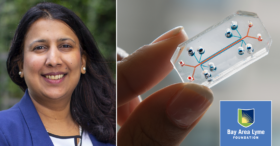
Bay Area Lyme Leading the Way series
Our 2026 LymeAid Fund-A-Need supported Girija Goyal, PhD, at Harvard’s Wyss Institute, whose groundbreaking lymph node chip models human immune responses to Lyme disease, accelerating the development of personalized therapies and potentially restoring a patient’s ability to fight back against Lyme. This technology was recently highlighted in NASA Artemis-related organ chip research.
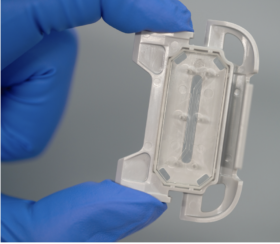
This breakthrough technology allows investigator Girija Goyal, PhD, at Harvard’s Wyss Institute to recreate key aspects of the human immune system on a tiny chip—a pioneering approach leveraging human biology rather than traditional animal models. Using her lymphoid organ chip, Dr. Goyal has identified one way Lyme bacteria appear to evade the immune system.
This is not research repurposed from another disease. It is a fundamentally new approach aimed at enabling the body’s natural ability to fight infection. It is Lyme-focused science built from the ground up and tested from the start in a human system designed by the scientist leading the work. Its promise is so significant that organizations like NASA are using similar organ-on-a-chip technologies to study human biology in space.
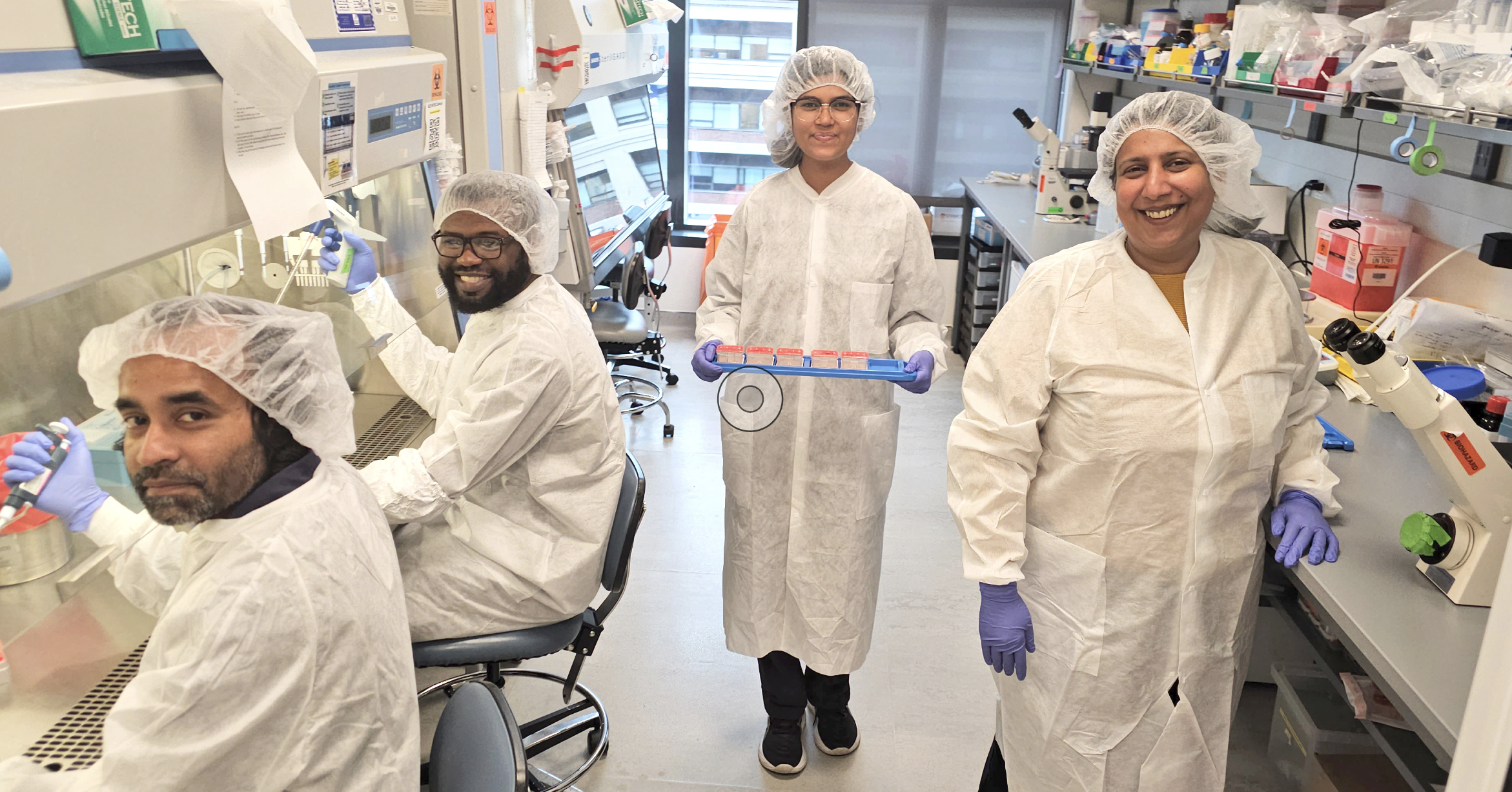
Application of this technology is also uncovering evidence of why some patients develop chronic symptoms. Using chips created from chronic Lyme patients’ blood, Dr. Goyal found biological differences between patients who recover and those who remain sick, something researchers have been trying to understand.
Dr. Goyal’s team will develop promising therapeutic solutions designed to block the immune suppression signal that helps Borrelia bacteria evade detection and help immune cells recognize and fight infection more effectively.
This funding will advance these interventions, tested in human immune cells on the chip, with evidence that targeting this pathway can restore immune function against Lyme, opening the door to different approaches to acute and chronic disease.
This blog is part of our Bay Area Lyme Leading the Way series. If you require a copy of this article in a bigger typeface and/or double-spaced layout, contact us here. Bay Area Lyme Foundation provides reliable, fact-based information about Lyme and tick-borne diseases so that prevention and the importance of early treatment are common knowledge. For more information about Bay Area Lyme, including our research and prevention programs, go to www.bayarealyme.org.