Bay Area Lyme Foundation Statement on the HHS Lyme Disease Roundtable

HHS Lyme Disease Roundtable

The December 15, 2025, HHS roundtable on Lyme disease and other tick-borne diseases placed long-overdue national attention on the millions of patients and families who have lived with an “invisible illness” for far too long. One of the clearest messages of the event was that the era of dismissing or gaslighting Lyme patients must end. This reflects what our community has endured for years.

Secretary Kennedy Convenes Lyme Disease Patients and Providers to Announce New Diagnostic Efforts

The Bay Area Lyme Foundation welcomes this federal focus on the urgent need for accurate diagnostics, rigorous patient-centered research, and better access to care, including the acknowledgment that Lyme disease qualifies as a chronic condition within Medicare care frameworks. These priorities closely align with, and have long guided, the work we have led for more than a decade.

We initiated the Lyme Disease Biobank, which is now a cornerstone resource for diagnostic and translational research across the country and has attracted significant support from the Steven and Alexandra Cohen Foundation. Through additional philanthropic investment and scientific collaboration, Bay Area Lyme has also supported or co-funded many of the research advances referenced throughout the roundtable.

Better Tests, Better Answers 

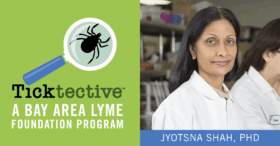
Jyotsna Shah, PhD, Ticktective

Bay Area Lyme Leading the Way Series


“The IGeneX test is far more sensitive than most commercially available tests for Lyme disease, detecting far more positive patients compared to standard two-tier ELISA or Western Blot tests,”

– Jyotsna Shah, PhD

Click here to watch or listen now

For people living with or who suspect Lyme disease, getting a clear diagnosis can feel like the hardest part. Symptoms often mimic those of other illnesses, and traditional tests miss many cases. 

In this episode of Ticktective™, Dr. Jyotsna Shah, President and Laboratory Director of IGeneX, shares with our host, Dana Parish, how her team is changing that—and how Bay Area Lyme Foundation helped make it possible. 

Dr. Shah explains how partnerships between innovative labs like IGenex, Bay Area Lyme Foundation, and our Lyme Disease Biobank are helping deliver faster, more accurate diagnostics—and new hope for patients who’ve struggled for years to find answers.

Ten Years of Data, One Clear Message: We Need to Do Better for Lyme Patients

Lyme Disease Biobank

Bay Area Lyme Leading the Way Series

By Liz Horn, PhD, MBI, Principal Investigator, Lyme Disease Biobank

“The window for effective antibiotic treatment is narrow. Miss it—because of a false negative test, because symptoms are dismissed, or because follow-up doesn’t happen—and patients can develop persistent Lyme, which can be debilitating.”

– Dr. Liz Horn

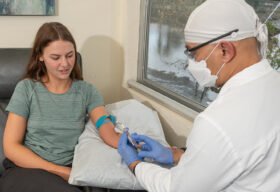
Lyme Disease Biobank patient sample

After a decade of collecting blood samples, testing the samples, tracking patient outcomes, and analyzing data from more than 800 participants, the numbers tell a powerful story about the gaps in our understanding of how we diagnose and treat early Lyme disease. And it’s made all the more urgent by this summer’s explosion in blacklegged (deer) tick populations across endemic areas.

Our latest Lyme Disease Biobank study looked at more than 250 patients with early Lyme disease on Long Island and in Central Wisconsin who provided a blood draw at enrollment and a second blood draw three months later. Published recently in Frontiers in Medicine, these 10 years of data confirm a few important points that have been known in the Lyme field for years, but the wider medical community may not be aware of.

Progress from Partnership: Reflections from the Frontlines

Meghan Bradshaw

Bay Area Lyme Leading the Way Series

Guest blog by Lyme Advocate, Meghan Bradshaw, Government Relations Manager, Center for Lyme Action

“Bay Area Lyme Foundation’s leadership, fundraising, and commitment to research and patient advocacy have been a bedrock.” 

– Meghan Bradshaw

When I look back over the past few years, I’m struck by how much has changed—for me personally, and for the broader Lyme and tick-borne disease community. And perhaps most of all, I see how partnership and persistence have turned what once felt impossible into genuine progress.

Turning Pain into Purpose as a Living Donor

Lyme Disease Biobank

One of the most powerful examples of Bay Area Lyme’s impact is Lyme Disease Biobank—a groundbreaking resource that provides researchers with high-quality, well-characterized samples to accelerate discoveries in diagnostics and treatment.

I know firsthand what it means to contribute to that effort—with my own body. As a living donor, I’ve donated multiple joints to the Biobank following joint replacement surgeries. It was, without exaggeration, a painful process. But I did it because I believe in turning my suffering into solutions—knowing that those tissues may one day help someone else get diagnosed sooner or treated more effectively.

Accelerating Breakthroughs, Advancing Hope: How Bay Area Lyme Powers Lyme Disease Research

Bay Area Lyme Science Committee

Bay Area Lyme Leading the Way Series


“Every one of our success stories amplifies the ripple effect of philanthropy done right: targeted, strategic, and driven by measurable impact.”

– Katariina Tuovinen

For more than a decade, Bay Area Lyme Foundation has been rewriting the story of Lyme and tick-borne disease research. With a mission to make Lyme disease easy to diagnose and simple to cure, the Foundation has built a national reputation as a nimble, entrepreneurial engine for scientific innovation. Since its founding in 2012, Bay Area Lyme has invested more than $31 million to support over 60 groundbreaking studies and partnerships across 56 institutions nationwide, each one helping to transform the landscape of Lyme disease diagnostics, treatments, and prevention. 

At the heart of this success lies a small but mighty force: The Bay Area Lyme Science Committee, led by Research Grant Director Katariina Tuovinen, MS, MBA, MA, together with pediatric infectious disease physician Charlotte Mao, MD, MPH, and Liz Horn, PhD, MBI, Principal Investigator of Lyme Disease Biobank. Together, this team guides a grantmaking strategy that prizes bold ideas, cross-disciplinary collaboration, and measurable impact—an approach that has introduced new talent, fresh perspectives, and innovative technologies to a field that desperately needs them.

Journal of Clinical Microbiology Studies Demonstrate Two Investigational Diagnostics Outperform Current Tests in Detecting Early Lyme Disease

Journal of Clinical Microbiology Studies Demonstrate Two Investigational Diagnostics Outperform Current Tests in Detecting Early Lyme Disease

FOR IMMEDIATE RELEASE


Journal of Clinical Microbiology Studies Demonstrate Two Investigational Diagnostics Outperform Current Tests in Detecting Early Lyme Disease

Studies utilize Bay Area Lyme Foundation’s Lyme Disease Biobank samples to point to the promise of single-tier diagnostics to potentially transform early detection


PORTOLA VALLEY, Calif., October 9, 2025 — Bay Area Lyme Foundation, the leading nonprofit funder of Lyme disease research in the US, today announced results from two independent studies published in Journal of Clinical Microbiology, conducted by researchers at Tufts University School of Medicine, and Kephera Diagnostics, respectively, demonstrating the potential of novel investigational single-tier Lyme disease tests to improve accuracy in the earliest stages of infection. Each study uses well-characterized samples from Bay Area Lyme Foundation’s Lyme Disease Biobank and demonstrated unprecedented accuracy, far exceeding the current CDC-recommended Lyme disease two-tier test, which can miss up to 70% of early-stage cases as well as later-stage cases.

“The CDC’s standard two-tier Lyme diagnostic misses the majority of early cases, delaying treatment and increasing the risk of developing persistent, debilitating symptoms for patients. The two novel single-tier assays—while not yet FDA-cleared for clinical use—point to a future where Lyme disease can be diagnosed quickly, accurately, and with a single test,” Liz Horn, PhD, MBI, a coauthor on both studies, and Principal Investigator of Lyme Disease Biobank, a Bay Area Lyme Foundation program that provides much-needed samples to approved researchers working to better understand tick-borne diseases and develop improved diagnostic tests and therapeutics. “These single tier tests, like InBios Lyme Detect™ and Kephera’s Hybrid Lyme ELISA could mark a turning point for Lyme diagnostics, giving physicians and patients more accurate tools that are urgently needed.”

The first study, evaluating the InBios Lyme Detect™ Multiplex ELISA, was conducted by Pete Gwynne, PhD, a 2022 Bay Area Lyme Emerging Leader Award (ELA) winner, and colleagues at Tufts University School of Medicine. Using samples from the Lyme Disease Biobank, this new diagnostic correctly identified all two-tier positive samples evaluated in the study, while also detecting 21 of 79 clinically diagnosed patients who were missed by following the current CDC guidance for testing using FDA-cleared standard two-tier tests (STTT) and had erythema migrans (EM) skin lesions. Importantly, the InBios test maintained >99% specificity, with only one false positive across more than 200 control and lookalike disease samples and was shown to be highly reproducible.

Bay Area Lyme Foundation Launches Bay Area Lyme Ventures as First Impact Investment Fund to Support Entrepreneurs and Companies Advancing Lyme Disease Solutions

Lyme Ventures

FOR IMMEDIATE RELEASE

Bay Area Lyme Foundation Launches Bay Area Lyme Ventures as First Impact Investment Fund to Support Entrepreneurs and Companies Advancing Lyme Disease Solutions

New venture philanthropy fund announces initial investments and will help guide game-changing Lyme diagnostics and therapeutics to commercialization

PORTOLA VALLEY, Calif., September 4, 2025 — Bay Area Lyme Foundation, a leading sponsor of Lyme disease research in the US, today announced the launch of Bay Area Lyme Ventures (Lyme Ventures), a bold new impact fund that is the first designed to attract and drive investment to promising tick-borne diagnostics and therapeutics nearing commercialization. By bringing together strategic research investments, collaborative partnerships, and patient-focused resources, Lyme Ventures aims to advance innovative diagnostics and therapeutics to fill significant gaps that exist in medical care. Today, the fund announces investments in Aces Diagnostics and LymeAlert, both of which are designed to help people bitten by ticks navigate the complicated process of getting an accurate diagnosis.

“This new chapter expands Bay Area Lyme Foundation’s commitment to accelerating innovative diagnostics and therapeutic breakthroughs, as there is an extreme scarcity of support for entrepreneurs and companies developing accurate solutions for patients and clinicians in tick-borne disease,” said Linda Giampa, who led Bay Area Lyme Foundation for the past 12 years and is now the founder and managing director of Bay Area Lyme Ventures.

Lyme Ventures will complement Bay Area Lyme Foundation’s continued commitment to funding scientific research by advancing promising discoveries into clinical development and, ultimately, through commercialization. To date, Bay Area Lyme Foundation has granted more than $30 million toward research, while Lyme Ventures has a goal of investing $5 million by 2027 into companies working to bring solutions to market. Proceeds from these philanthropic investments will fund research projects at Bay Area Lyme Foundation.

New Bay Area Lyme Foundation Study Reports That Only One-Third of Early Lyme Patients with On-Going Symptoms Followed up with their Healthcare Providers

Lyme Disease Biobank

FOR IMMEDIATE RELEASE


New Bay Area Lyme Foundation Study Reports That Only One-Third of Early Lyme Patients with On-Going Symptoms Followed up with their Healthcare Providers

The new research, published in Frontiers in Medicine, points to need for greater follow-up from medical professionals to address potential treatment failures. 

PORTOLA VALLEY, Calif., July 10, 2025—Bay Area Lyme Foundation, a leading sponsor of Lyme disease research in the US, announced the publication of new research in Frontiers in Medicine based on data from Bay Area Lyme Foundation’s Lyme Disease Biobank. This large-scale study conducted over 10 years at sites on the East Coast and the Upper Midwest demonstrates the need for improved diagnostics and increased follow-up by medical professionals for Lyme disease patients.

Only one-fifth of study participants (23%), enrolled with signs and symptoms of early Lyme, were positive by the CDC’s standard two-tiered test for Lyme disease, which supports previous research that found that it misses up to 70% of cases of early-stage Lyme disease. Further, approximately 1 in 5 patients reported ongoing symptoms at 3 months, including joint pain, fatigue, and muscle pain yet only one-third (35%) of these participants followed up with their healthcare providers about these ongoing symptoms. Due to difficulties in diagnosing Lyme disease and resulting treatment delays, as many as two million people may suffer from persistent Lyme disease, which can be debilitating.

Accurate, timely detection of Lyme disease is critical to preventing long-term complications. Moreover, follow-up from medical professionals with all patients after they complete antibiotic treatment could improve outcomes and reduce the burden of Lyme disease,” said lead author Liz Horn, PhD, MBI, Principal Investigator of Lyme Disease Biobank, a Bay Area Lyme Foundation program which helps to accelerate research by collecting, storing and providing much-needed human biological samples for use in research. “Our data also confirm the limitations of serology testing in early Lyme disease and after antibiotic treatment.”

Bay Area Lyme Foundation Announces National Winner of the 2025 Emerging Leader Award to Develop a Much-Needed Rapid, Low-Cost, Easy-to-Use Lyme Disease Test

Chao Wang, PhD

FOR IMMEDIATE RELEASE 


Bay Area Lyme Foundation Announces National Winner of the 2025 Emerging Leader Award to Develop a Much-Needed Rapid, Low-Cost, Easy-to-Use Lyme Disease Test

Winner Chao Wang of Arizona State University will receive $150,000 to evaluate a unique diagnostic that uses gold nanoparticles and has been proven in other infectious diseases 

PORTOLA VALLEY, Calif., June 12, 2025—Bay Area Lyme Foundation, a leading sponsor of Lyme disease research in the US, has given its 2025 Emerging Leader Award (ELA) to Chao Wang, PhD, associate professor in the School of Electrical, Computer and Energy Engineering at Arizona State University, faculty with ASU’s Biodesign Institute® and an expert in nanotechnology and biosensors. Wang will receive $150,000 to support his work to develop a much-needed rapid, low-cost, easy-to-use test, called Nano2RED-LD, for Lyme disease. The test aims to deliver results in as few as 30 minutes when a patient who may have Lyme disease first sees a doctor. 

There is an immense need for better Lyme disease tests. Today’s standard-of-care tests miss too many cases at all stages of Lyme disease, including as many as 70% of early Lyme cases. 

“With Lyme disease cases rising steadily across the U.S., the need for accurate and timely diagnostic tools has never been greater,” said Katariina Tuovinen, research grant director, Bay Area Lyme Foundation. “Dr. Wang’s pioneering work epitomizes the essence of this award as it applies innovation from other infectious diseases in an effort to enhance outcomes for patients affected by Lyme disease.”

Unlocking the Mysteries of Tick-borne Infections: Lyme Disease Biobank’s Tissue Collection Program Drives Research Momentum

Kirsten Stein and the Lyme Disease Biobank

BAL Leading the Way Series


“My family knows that after I die, my tissues will be donated to Lyme Disease Biobank to provide researchers with the vital material they need to solve this horrible disease. I urge anyone with chronic/persistent Lyme to register with NDRI today. Let’s end this suffering together.” 

-Kirsten Stein, Lyme Advocate

Lyme Disease Biobank®, led by Liz Horn, PhD, MBI, is central to Bay Area Lyme Foundation’s 10-year search for answers to Lyme’s most intractable questions and is the most important program in the Foundation’s mission to make Lyme disease easy to diagnose and simple to cure. 

The original Lyme Disease Biobank sample collection launched in 2014 focused on obtaining blood, urine, and serum samples from patients with early/acute Lyme disease. Once this program had been fully established, the Lyme Disease Biobank team explored adding tissue samples to the Biobank. Tissue samples could help researchers expand their investigations beyond the early stage of infection into how chronic/persistent Lyme and other tick-borne diseases impact the central nervous system, joints, and organs of Lyme patients. 

With the tissue bank objectives defined, the Biobank connected with specialist organizations to provide the critical support needed to support sample collection and make the development of a tissue bank a reality.

Post-Mortem Tissue Collection Planning

NDRILyme Disease Biobank established a key partnership with the nonprofit National Disease Research Interchange (NDRI) to provide logistics for post-mortem tissue collection for the new tissue program. The Biobank also partnered with MyLymeData.org, allowing Lyme patients registered with the Biobank to link their MyLymeData profile to their tissue donation if desired. Bringing these two resources together provides for the organizing and recovery of post-mortem (after death) tissue. It ensures samples include redacted (removes identifying information) detailed patient medical histories—an important nuance for Lyme disease researchers. 

“Although it is an emotional and difficult idea for anyone to plan to donate parts of their body to science after they have died, we believe that this decision is an important way for Lyme patients to change the course of Lyme disease research. Having access to tissues from the brain, heart, joints, and central nervous system of Lyme patients allows researchers to prove unequivocally that Lyme is present in tissue and contributes to patient suffering,” explains Linda Giampa, Executive Director, Bay Area Lyme Foundation and board member of Lyme Disease Biobank.