FOR IMMEDIATE RELEASE
Bay Area Lyme Foundation Opens Applications for 2026 Emerging Leader Awards and Research Grants
Annual program to fund two $150,000 grants to revolutionize diagnosis and treatment of tick-borne diseases, including new award focused on co-infections
PORTOLA VALLEY, Calif., October 22, 2025 – Bay Area Lyme Foundation, a leading sponsor of Lyme disease research in the US, today announced its call for applicants from academia and the private sector for the 2026 Emerging Leader Awards (ELA). These annual awards recognize innovative researchers advancing novel approaches in tick-borne disease diagnostics and treatments, while embodying the future of research leadership in this critical field.
In 2026, Bay Area Lyme Foundation will award two $150,000 ELA grants:
- Lyme Disease Award will support creative approaches to advancing diagnostics and/or therapeutics for Lyme disease, continuing the legacy started more than a decade ago.
- Tick-borne Pathogen Award is a new grant to support research on non-Borrelia tick-borne pathogens/infections occurring in the US, with preference for bacterial and parasitic pathogens. Projects may address co-infections in combination with Borrelia burgdorferi or as stand-alone investigations. Viral infections (e.g., Powassan virus, Heartland virus) are excluded from this category.
Applications are due by February 15, 2026, at 11:59pm PT. Eligible applicants include academic and private-sector researchers at the post-doctoral through associate professor level (or equivalent in industry), including those new to Lyme and tick-borne disease research. All applicants are encouraged to request samples from the Lyme Disease Biobank.
Applicants must demonstrate scientific leadership, a strong supporting rationale, and the ability to generate proof of concept within 12–24 months. While diagnostic and therapeutic approaches are of particular interest, all areas of research relevant to patients will be considered. Submissions require a research proposal and at least one supporting letter from a supervisor or Principal Investigator.
The full criteria and application can be found here. Awardees will be announced at LymeAid in May 2026.


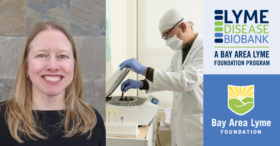
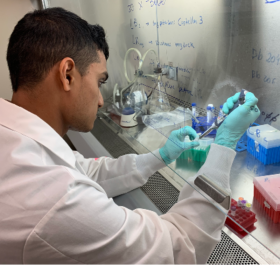
 Anna Schotthoefer, PhD, a project scientist at Marshfield Clinic Research Institute in Wisconsin, discusses the collection and analysis of a specific subset of blood and urine samples for Lyme Disease Biobank—a Bay Area Lyme Foundation program—from patients diagnosed with tick-borne diseases in the state. Marshfield Clinic serves a large population in Wisconsin and Michigan’s Upper Peninsula, which are highly endemic for Lyme disease. Her Bay Area Lyme-funded
 The
The 
 In this blog, part of our 10-year anniversary blog series, we talk with John Aucott, MD, Associate Professor of Medicine at Johns Hopkins University, Director of the Lyme Disease Research Center, about his work and how his investigations are helping us understand persistent/chronic Lyme infections. A long-term collaborator and grant recipient of Bay Area Lyme Foundation, Dr. Aucott reflects on his history with our organization, the ongoing plight of Lyme disease patients, and the slow growth in government funding for investigations into the disease. He talks about the early days of identifying the need for well-characterized samples from Lyme patients and his role in helping launch biobank programs, including his own SLICE Study Biorepository and BAL’s Lyme Disease Biobank.

 Dana Parish: