Bay Area Lyme Spotlight Series
“There are significant increases after Lyme in fibroids and in endometriosis.”
– Michal Caspi Tal, PhD
Imagine a world where Lyme disease isn’t something people fear, but something we actively prevent, or at least treat more precisely, especially for the many who suffer long after the tick bite. Dr. Michal “Mikki” Caspi Tal, immunoengineer and Associate Scientific Director at the MIT Center for Gynecology Pathology Research, is turning that possibility into reality. Her research isn’t just pushing boundaries, it’s rewriting the rules, especially in regards to women’s health.
“Nobody had looked…at what was happening to the uterus.”
– Michal Caspi Tal, PhD
Watching this incredible Ticktective™ interview with host Dana Parish is an absolute treasure trove of information—and if you or someone you know has ever wondered why some people recover from Lyme and others don’t, why symptoms linger, or why women disproportionately suffer, this is one of the most important conversations you’ll hear this year.




 “I want to leave you with hope. I think we’re going to be unstoppable because I think that these are solvable problems. These are answerable questions. I think that there are already a lot of existing tools in immunology that just need to be brought into the fight, and we can change this.”
 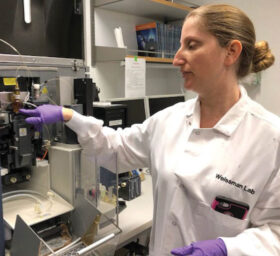 Any respectable pathogen that can establish a persistent infection needs to figure out your immune system to the point that it can evade it. The fact that it has persisted means that it was able to evade your immune clearance. And so, I got to that from a very interesting direction working on immune regulation, trying to understand these brakes on the immune response and how they impact the response to infection. The immune system has the power to kill you and obviously, nobody has any incentive for that to happen. So, there are a lot of mechanisms in place to put brakes on the immune system and reign it in. One of the huge developments in cancer over the last two decades has been reevaluating the question: can we take those brakes off? So in my postdoc, I was studying a particular checkpoint where this was turning into an exciting immuno-oncology target, and I said, ‘I want to look at how this checkpoint is used in infection.’ I realized that this checkpoint was being used to help you survive an acute infection, but created a vulnerability for pathogens to evade immune clearance and establish chronic infection much like it allows cancer cells to evade immune clearance. In an amazing collaboration with Irv Weissman, Balyn Zaro, and Jenifer Coburn we realized that the bacteria that cause Lyme disease manipulate this brake and that’s how I became fascinated with Lyme. But I also became concerned about turning off this brake in cancer patients because I was concerned about what would happen if you used this on cancer patients during an active infection. Indeed, the