Ten Years of Data, One Clear Message: We Need to Do Better for Lyme Patients

Lyme Disease Biobank

Bay Area Lyme Leading the Way Series

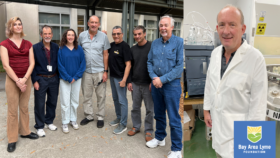
By Liz Horn, PhD, MBI, Principal Investigator, Lyme Disease Biobank

“The window for effective antibiotic treatment is narrow. Miss it—because of a false negative test, because symptoms are dismissed, or because follow-up doesn’t happen—and patients can develop persistent Lyme, which can be debilitating.”

– Dr. Liz Horn

Lyme Disease Biobank patient sample

After a decade of collecting blood samples, testing the samples, tracking patient outcomes, and analyzing data from more than 800 participants, the numbers tell a powerful story about the gaps in our understanding of how we diagnose and treat early Lyme disease. And it’s made all the more urgent by this summer’s explosion in blacklegged (deer) tick populations across endemic areas.

Our latest Lyme Disease Biobank study looked at more than 250 patients with early Lyme disease on Long Island and in Central Wisconsin who provided a blood draw at enrollment and a second blood draw three months later. Published recently in Frontiers in Medicine, these 10 years of data confirm a few important points that have been known in the Lyme field for years, but the wider medical community may not be aware of.

Chronic Infections, Fertility, & Immunity: MIT Immunoengineer Makes Groundbreaking Lyme Discoveries

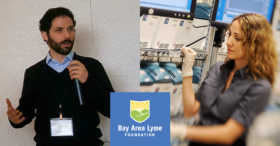
Michal Caspi Tal, PhD

Bay Area Lyme Spotlight Series


“There are significant increases after Lyme in fibroids and in endometriosis.”

– Michal Caspi Tal, PhD

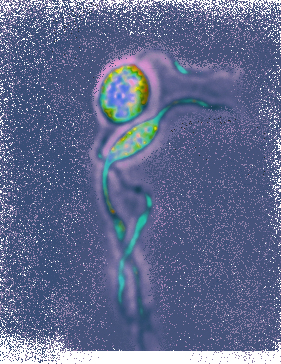
Dancing Borrelia, Mikki Tal, PhD
Borrelia burgdorferi under attack from the immune system.

Imagine a world where Lyme disease isn’t something people fear, but something we actively prevent, or at least treat more precisely, especially for the many who suffer long after the tick bite. Dr. Michal “Mikki” Caspi Tal, immunoengineer and Associate Scientific Director at the MIT Center for Gynecology Pathology Research, is turning that possibility into reality. Her research isn’t just pushing boundaries, it’s rewriting the rules, especially in regards to women’s health.

“Nobody had looked…at what was happening to the uterus.”

– Michal Caspi Tal, PhD

Watching this incredible Ticktective™ interview with host Dana Parish is an absolute treasure trove of information—and if you or someone you know has ever wondered why some people recover from Lyme and others don’t, why symptoms linger, or why women disproportionately suffer, this is one of the most important conversations you’ll hear this year.

Click here to watch or listen now

Justin Timberlake’s Lyme Diagnosis and His Struggle to Be Believed

Justin Timberlake

Bay Area Lyme Spotlights Series


Medical skepticism isn’t just cruel, it’s physically, mentally, and emotionally harmful.

When Justin Timberlake revealed his Lyme disease after weeks of criticism for low-energy performances during his recent tour, the Internet did what the Internet does: It immediately questioned whether he was telling the truth.

The skepticism was rife and merciless. Reddit threads quickly surfaced with accusations that he was making excuses, faking illness, or using Lyme as a convenient cover story. “There must be something else going on,” people assumed. “Chronic Lyme isn’t a thing,” they said.

While it’s almost expected to see anonymous Internet commenters take aim at a major celebrity going through a low point, for the millions of Americans living with Lyme disease, Timberlake’s experience is not surprising at all.

New Bay Area Lyme Foundation Study Reports That Only One-Third of Early Lyme Patients with On-Going Symptoms Followed up with their Healthcare Providers

Lyme Disease Biobank

FOR IMMEDIATE RELEASE


New Bay Area Lyme Foundation Study Reports That Only One-Third of Early Lyme Patients with On-Going Symptoms Followed up with their Healthcare Providers

The new research, published in Frontiers in Medicine, points to need for greater follow-up from medical professionals to address potential treatment failures. 

PORTOLA VALLEY, Calif., July 10, 2025—Bay Area Lyme Foundation, a leading sponsor of Lyme disease research in the US, announced the publication of new research in Frontiers in Medicine based on data from Bay Area Lyme Foundation’s Lyme Disease Biobank. This large-scale study conducted over 10 years at sites on the East Coast and the Upper Midwest demonstrates the need for improved diagnostics and increased follow-up by medical professionals for Lyme disease patients.

Only one-fifth of study participants (23%), enrolled with signs and symptoms of early Lyme, were positive by the CDC’s standard two-tiered test for Lyme disease, which supports previous research that found that it misses up to 70% of cases of early-stage Lyme disease. Further, approximately 1 in 5 patients reported ongoing symptoms at 3 months, including joint pain, fatigue, and muscle pain yet only one-third (35%) of these participants followed up with their healthcare providers about these ongoing symptoms. Due to difficulties in diagnosing Lyme disease and resulting treatment delays, as many as two million people may suffer from persistent Lyme disease, which can be debilitating.

Accurate, timely detection of Lyme disease is critical to preventing long-term complications. Moreover, follow-up from medical professionals with all patients after they complete antibiotic treatment could improve outcomes and reduce the burden of Lyme disease,” said lead author Liz Horn, PhD, MBI, Principal Investigator of Lyme Disease Biobank, a Bay Area Lyme Foundation program which helps to accelerate research by collecting, storing and providing much-needed human biological samples for use in research. “Our data also confirm the limitations of serology testing in early Lyme disease and after antibiotic treatment.”

Pathogens and Persistence: The Chronic Disease Drivers

Dr Steven Phillips Ticktective

BAL “Quick Bites” Series


“I’ve always said that the FDA has been captured by the pharmaceutical industry. They don’t have our best interests at heart. You shouldn’t be funded by the people you’re supposed to be regulating.”

– Steven Phillips, MD

ChronicTicktective host, Dana Parish, talks with her longtime collaborator and co-author of Chronic, Dr. Steven Phillips, a Yale-trained internal medicine doctor who specializes in treating patients with complex, chronic illnesses, often driven by underlying infections like Lyme, Bartonella, Babesia, and now, COVID. In this podcast episode, Phillips discusses the importance of getting to the root cause of mystery autoimmune illnesses, rather than just suppressing symptoms. He states that many chronic infections can drive autoimmune conditions, including Lyme disease, and that Lyme tests are often inaccurate, with a sensitivity of around 50%. Phillips discusses how he recommends treating suspected tick bites to prevent the development of chronic Lyme disease and his use of a multi-antibiotic approach and pulsed antibiotic therapy to target persistent infections. He also discusses his experiences treating COVID-19, using a multi-modal approach including doxycycline, Paxlovid, Metformin, and other drugs and supplements, and the reactivation of infections like Bartonella in Long COVID patients. They also discuss how the chemical and pharmaceutical industries’ interests do not necessarily align with patients trying to get well. The interview highlights Dr. Phillips’s expertise in treating complex chronic infections and his holistic, evidence-based approach to patient care.

If Pain Had a Sound: The Hunt for Relief is Riddled with Hope and Madness

Katie Liljedahl's Lyme story

Written by: Katie Liljedahl, Lyme patient

BAL Spotlights Series


Katie’s journey with Lyme disease, as recounted three years ago, highlights the ongoing challenges faced by those affected by this debilitating illness. Despite her perseverance and a wonderful support system, Katie continues to grapple with intermittent flares. However, amidst these struggles, Katie has found a new home and a new love, demonstrating resilience in the face of adversity. Her story serves as a poignant reminder of the urgent need to improve Lyme disease diagnosis and treatment, ensuring that others do not endure similar hardships. By amplifying voices like Katie’s, we strive together towards a future where Lyme disease is easy to diagnose and simple to cure, allowing individuals to reclaim their lives and pursue their passions without the burden of infection-associated chronic illness. 

Spine strangled, muscles on fire, bones buzzing
I will migrate within you
I am relentless
My address is your body
This is the kind of pain that rages silently in
the caverns of marrow and suffocates hope.
It gyrates and bangs clamors and rattles
A parasite upon the soul~
it drowns out the voice of God.

– Katie’s journal; August 16, 2012

Principal Investigator, Dr. Felicia Chow, Talks about the New Lyme Clinical Trials Center at UCSF

UCSF Parnassus campus San Francisco

BAL Leading the Way Series


“I was seeing more and more patients here at UCSF who hadn’t traveled to Massachusetts, New Jersey, or other places endemic for Lyme, but rather had just been in the California Bay Area or on West Coast trips to places that we don’t consider—at least by the classic maps—as being endemic Lyme areas.”

– Felicia Chow, MD, Associate Professor of Neurology and Medicine at University of California, San Francisco

Felicia Chow, MD

There’s been much excitement in the Lyme community regarding the founding and development of the Lyme Clinical Trials Network since it was first announced. With a $1m seminal grant from Bay Area Lyme Foundation, UCSF joined the Clinical Trials Network to further study and develop better treatments for patients with Lyme and other tick-borne diseases. The Network aims to address the need for high quality, innovative clinical trials to develop evidence-based treatments for patients with persistent Lyme symptoms following initial antibiotic treatment—a population that has grown to more than two million Americans and continues to increase. We sat down with Principal Investigator, Dr. Felicia Chow, to learn more about plans for this California Clinical Trials Network node, and her role as Director of the UCSF Neuro-Infectious Diseases Clinic

Dr. Chow is a neurologist specializing in infectious diseases. This means she’s particularly interested in how pathogens like bacteria, viruses, and parasites, invade the nervous system and cause neurological damage and/or symptoms. Her expertise is in managing conditions such as brain abscesses, neurocysticercosis (a parasitic infection of the brain), neurosyphilis, and neurological complications associated with HIV. Additionally, she is well-versed in infectious causes of meningitis, encephalitis, and myelitis.

Research Funded by Bay Area Lyme Foundation Identifies New Investigational Therapy Regimen Capable of Irreversibly Damaging Lyme Bacteria in Laboratory Tests 

Tim Haystead, PhD

FOR IMMEDIATE RELEASE


Research Funded by Bay Area Lyme Foundation Identifies New Investigational Therapy Regimen Capable of Irreversibly Damaging Lyme Bacteria in Laboratory Tests  

Inspired by research that targets cancer tumors, these new findings in Lyme could also lead to novel R&D strategies for other diseases 

PORTOLA VALLEY, Calif. November 1, 2023—Bay Area Lyme Foundation, a leading sponsor of Lyme disease research in the US, today announced the development of a potential new drug, HS-291, that targets and destroys Borrelia burgdorferi, the bacterium that causes Lyme disease. Published in the peer-reviewed journal Cell Chemical Biology, this laboratory study represents a novel paradigm shift for anti-microbial treatment research as it is the first to target and inhibit Borrelia burgdorferi HtpG (high temperature protein G), a specific type of enzyme within the bacteria that causes Lyme disease— a condition affecting nearly 500,000 new patients annually. The research was conducted at Duke University School of Medicine, with collaboration from University of North Carolina, Tulane University, and Stanford University, and HS-291 is currently in preclinical stage testing at UC Davis. 

“As Lyme disease is currently treated with broad spectrum antibiotics and there are no targeted treatments, we are particularly excited about this discovery, and hopeful that our novel Lyme disease therapeutic HS-291 will specifically destroy the Lyme bacterium without off-target effects or antibiotic resistance,” said Timothy Haystead, PhD, professor of Pharmacology and Cancer Biology, Duke University School of Medicine, Bay Area Lyme Foundation grantee, and co-lead author. “This research has been an incredible opportunity to leverage knowledge from oncology to Lyme disease in order to design an investigational therapeutic that could one day benefit hundreds of thousands of patients with Lyme.” 

This new discovery has implications beyond Lyme disease as it demonstrates that using the drug HS-291 to deliver cellular toxins to HtpG, a type of non-essential enzyme that assists the folding or unfolding of large and complex proteins, greatly expands what can be considered druggable within any pathogen and opens a whole new area of infectious disease research.  

A Broader Definition of Health Through Ancestral Learning, Diet and Better Understanding of the Human Body

Chris Kresser

Ticktective Podcast Transcript


In this podcast episode, host Lia Gaertner interviews Chris Kresser, a renowned expert in functional medicine and ancestral health. Kresser shares his personal health journey, which involved struggling with chronic illness and eventually finding his way to functional medicine. He discusses the importance of zooming in and zooming out in managing chronic illness, as well as the broader definition of health as human flourishing. Kresser also talks about his approach to diet, which involves giving himself permission to eat a variety of foods while prioritizing those that make him feel good. He emphasizes the importance of the ecosystem in managing chronic illness, focusing on factors such as gut health, lifestyle, stress management, and finding joy and fulfillment in life. Kresser concludes by offering advice to individuals with Lyme disease and chronic illness, highlighting the significance of addressing the entire ecosystem rather than solely focusing on the pathogen.


Lia Gaertner: Welcome to the Ticktective podcast and video series, a program of the Bay Area Lyme Foundation, where our mission is to make Lyme disease easy to diagnose and simple to cure. I’m your host, Lia Gaertner, director of Education and outreach. Lyme disease is the most common vector-borne disease in the USA and is a global issue. This show includes interviews with the researchers we fund, as well as other interesting people in the Lyme scientific community. We are a nonprofit foundation based in Silicon Valley. Thanks to a generous grant that covers all of our overhead, 100% of all donations go directly to support, research and prevention programs. You can find out more or donate@bayarealyme.org.

Lia Gaertner: Thank you, Chris Kresser, for joining me on the Ticktective™ video and podcast series.

Chris Kresser: Thanks for having me, Lia. It’s a pleasure.

The Paleo Cure by Chris KresserLia Gaertner: Chris Kresser is a renowned expert leading clinician and top educator in the fields of functional medicine and ancestral health. He is the author of the New York Times bestselling book, The Paleo Cure, as well as the book Unconventional Medicine. Chris is the co-founder and educational director of the California Center for Functional Medicine and the founder of the Kresser Institute. Chris regularly shares his evidence-based insights from trusted sources and world-renowned health practitioners and coaches through his blogs, webcast interviews, and his own podcast, Revolution Health Radio. So, Chris, during your decade-long struggle with chronic illness, you learned firsthand where healthcare mattered most and where it came up short. After seeking the help of more than 30 healthcare practitioners and ultimately having to learn and implement behavior changes on your own with limited support, you emerged with your health and a vision and drive for changing and improving the practice and education of functional medicine. Can you please tell us about your health journey?

Chris Kresser: I’ll be brief because it was long and arduous, but I took off to travel around the world for a couple of years in my early twenties, and I was doing a lot of surfing. I was in a little village on Sumbawa, which is an island in Indonesia, and a bunch of the people there who were surfing at that break got exposed to a waterborne pathogen, actually several pathogens. There was a stagnant pool of water near the river mouth there, and locals dug a trench to drain that pool into the river mouth. And all of that water where cows had been defecating went out into the surf break, which are often located right at the river mouth. And unbeknownst to a lot of us who were there surfing, we were exposed to it and I would say 70-80% of the people there got quite sick.

I took some antibiotics that I had in my medical kit and the acute phase of it passed relatively quickly. But as I continued to travel after that, I went to the Maldives and was there for a few months and I was in South Africa and Reunion Island, Mauritius, and Madagascar. After about six, seven months, I started feeling really sick and it became clear to me that it wasn’t something that was just temporary that was going to go away. So, I made my way back to Australia and that was where I started to seek medical care. And then when I didn’t make much progress, I decided to go back home to the US and although most of the doctors and other practitioners I saw meant very well and did their best to help me, it was pretty clear that the medical system was not set up to deal with those kinds of problems.
Research funded by Bay Area Lyme Foundation provides most comprehensive and geographically widespread whole genome sequencing of Lyme bacteria

Jacob Lemieux, MD, DPhil and Pardis Sabeti, MD, DPhil

FOR IMMEDIATE RELEASE


Research funded by Bay Area Lyme Foundation provides most comprehensive and geographically widespread whole genome sequencing of Lyme bacteria

Results may help inform future research and how physicians treat Lyme disease 

PORTOLA VALLEY, Calif., August 31, 2023—Bay Area Lyme Foundation, a leading sponsor of Lyme disease research in the US, today announced the results of the most comprehensive whole genome sequencing study of Borrelia burgdorferi, the bacteria that causes Lyme disease—a condition affecting nearly 500,000 new patients annually. Published in the peer-reviewed journal PLOS Pathogens, the study is the first to define the connection between genomic markers and symptom severity, confirming that RST1 OspC type A strains, which are the most common type of Borrelia bacterial strains found in the Northeast, are associated with more disseminated infection and thus more severe Lyme disease. These new discoveries will help inform physicians that different strains of the Lyme disease bacteria in the US may cause more severe Lyme disease symptoms, which may include joint swelling, debilitating fatigue, memory loss, headaches and serious inflammation of the heart and brain.

“Dissemination from the site of inoculation to organs such as the heart, brain and joints is a key step in the development of severe Lyme disease. Up until now, the bacterial genes and plasmids associated with dissemination in humans had not yet been identified,” said first author Jacob Lemieux, MD, DPhil, Bay Area Lyme Foundation Emerging Leader Award winner, an infectious disease staff physician at Massachusetts General Hospital and Assistant Professor at Harvard Medical School and an Associate Member of the Broad Institute of MIT and Harvard. “This work provides important clues into the bacterial genetic basis of dissemination and therefore suggests candidates for further study, including proteins to target for therapeutics and vaccines aimed at preventing dissemination.”

The new study also identifies the genetic changes that distinguish more virulent strains, including an enlarged genome size, a unique set of plasmids, and an expanded set of surface-exposed lipid-modified proteins called lipoproteins.

Pardis Sabeti, MD, DPhil, professor at Harvard University, Institute member of the Broad Institute of MIT and Harvard, a Howard Hughes Medical Investigator and co-lead author added, “This research will lay the foundation for developing sensitive diagnostics for Lyme disease and help physicians refine treatment plans, arming them with a better understanding of Lyme disease bacterial strains and their clinical manifestations.”