New Bay Area Lyme Foundation Study Shows Common FDA-Cleared Lyme Tests Miss 64-78% of Early Cases, Underscores Urgent Need for Improved Diagnostics

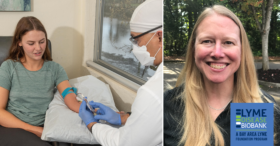
Liz Horn and Lyme Disease Biobank

FOR IMMEDIATE RELEASE


New Bay Area Lyme Foundation Study Shows Common FDA-Cleared Lyme Tests Miss 64-78% of Early Cases, Underscores Urgent Need for Improved Diagnostics

Research published in the Journal of Clinical Microbiology

PORTOLA VALLEY, Calif., April 21, 2026Bay Area Lyme Foundation, a national nonprofit and leading sponsor of tick-borne disease research in the US, today announced the publication of new research in the Journal of Clinical Microbiology based on data from its Lyme Disease Biobank. The study found that the commonly used FDA-cleared diagnostic testing methods available to providers and major national diagnostic laboratories are highly insensitive and miss 64-78% of early Lyme disease cases, including those who present with the characteristic erythema migrans (EM) Lyme rash.

“This study demonstrates that common two-tiered Lyme tests, utilized for decades, often fail to detect early Lyme disease and are leaving patients behind, highlighting a critical need for improved medical education on the limitations of current diagnostics,” said Liz Horn, PhD, MBI, Principal Investigator of Lyme Disease Biobank and lead author of the study. “Our findings also add to the evidence that improved diagnostics, ideally those that directly detect the bacteria that cause Lyme disease, are urgently needed.”

This large-scale, head-to-head study comparing 2 standard two-tiered testing (STTT) and 2 modified two-tiered testing (MTTT) diagnostic algorithms (the commonly used Lyme disease diagnostic algorithms) confirms that the sensitivity of two-tiered testing algorithms is low among patients with early infection. For the 107 early Lyme disease cases evaluated, the various testing algorithms missed 64-78% of early Lyme cases. Overall, only 39% (42/107) of participants with early Lyme disease were STTT or MTTT positive by any of the 4 algorithms.
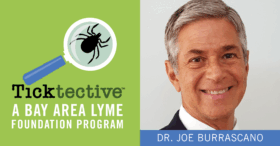
Dr. Joe Burrascano: A Masterclass on Tick-Borne Illness

Dr Joe Burrascano

Ticktective Podcast Transcript

In this episode of Ticktective™, host Dana Parish interviews Joe Burrascano, MD. Dr. Burrascano is a pioneer in the field of Lyme disease, having treated patients since the early days of the illness in the 1980s and 1990s. He co-founded the International Lyme and Associated Diseases Society (ILADS) to help train clinicians in treating Lyme and associated tick-borne diseases. Dr. Burrascano discusses the challenges in diagnosing and treating Lyme, including issues with the limited testing criteria and the chronic, multisystemic nature of the disease. He outlines his approach to treating early Lyme with a “hybrid” antibiotic regimen, as well as the use of pulsed and cycling antibiotic therapies for chronic cases. He also highlights the importance of addressing underlying health factors like immune dysfunction, toxin buildup, and co-infections like Bartonella and mold toxicity in chronic Lyme patients. Dr. Burrascano emphasizes the need for a holistic, patient-centered approach to managing complex, persistent tick-borne illnesses.

“If you have something that’s every part of your body is bothering you, and it comes and goes and it moves around, of course, you’re going to be labeled as a little bit cuckoo. It’s not. It’s Lyme disease.”

– Joe Burrascano, MD

Dana Parish: Welcome to the Ticktective Podcast, a program of the Bay Area Lyme Foundation, where our mission is to make Lyme disease easy to diagnose and simple to cure. I’m your host, Dana Parish, and I’m the co-author of the book Chronic, and I sit on the advisory board of Bay Area Lyme Foundation. This program offers insightful interviews with scientists, clinicians, patients, and other interesting people. We’re a nonprofit based in Silicon Valley, and thanks to a generous grant that covers a hundred percent of our overhead, all of your donations go directly to our research and prevention programs. For more information about Lyme disease, please visit us@bayarealyme.org.